












Catenation of carbon in LaC2 predicted under high pressure
Literature Information
Publication Date
2016-04-28
DOI
10.1039/C6CP01484D
Impact Factor
3.676
Authors
Chuanxun Su, Jurong Zhang, Guangtao Liu, Xin Wang, Hui Wang, Yanming Ma
View Original
Abstract
Carbon has the capability of forming various bonding states that affect the structures and properties of transition metal carbides. In this work, structural search was performed to explore the structural diversity of LaC2 at pressures of 0.0–30.0 GPa. Five stable structures of LaC2 reveal a variety of carbon structural units ranging from a dimer to bent C3, zigzag C4 and armchair polymer chains. A series of pressure-induced structural transformations are predicted, I4/mmm (i.e. experimental α phase) → C2/c → Pnma → Pmma, which involve the catenation of carbon from a dimer to zigzag C4 units and further to armchair polymer chains. The bent C3 unit appears in a novel Immm structure. This structure is the theoretical ground state of LaC2 under ambient conditions, but is kinetically inaccessible from the experimental α phase. LaC2 becomes thermodynamically metastable relative to La2C3 + diamond above 17.1 GPa, and eventually decomposes into constituent elements above 35.6 GPa. The presented results indicate that catenation of carbon can be realized even in simple inorganic compounds under nonambient conditions.
Related Literature
A novel high temperature vinylpyridine-based phthalonitrile polymer with a low melting point and good mechanical properties
Haifeng Wang, Jian Wang, Huimin Guo, Xinggang Chen, Xiaoyan Yu, Yuanhui Ma, Kimiyoshi Naito, Zhenjiang Zhang
2018-01-24
Paper
DOI: 10.1039/C7PY01990D
Electron beam lithography of poly(glycidol) nanogels for immobilization of a three-enzyme cascade
Jacob N. Lockhart, Anthony B. Hmelo, Eva Harth
2018-01-17
Paper
DOI: 10.1039/C7PY01904A
Thermoresponsive laterally-branched polythiophene phenylene derivative as water-soluble temperature sensor
Victor R. De la Rosa, David Barker, Richard Hoogenboom
2017-06-21
Paper
DOI: 10.1039/C7PY00919D
Transiently malleable multi-healable hydrogel nanocomposites based on responsive boronic acid copolymers
Adérito J. R. Amaral, Mina Emamzadeh, George Pasparakis
2018-01-10
Paper
DOI: 10.1039/C7PY01202K
Effect of conjugation length and metal-backbone interactions on charge transport properties of conducting metallopolymers
Minh T. Nguyen, Richard A. Jones, Bradley J. Holliday
2017-06-13
Paper
DOI: 10.1039/C7PY00673J
Schizophrenic poly(ε-caprolactone)s: synthesis, self-assembly and fluorescent decoration
Jun Zhang, Yan Xiao, Xueli Luo, Lianlei Wen, Andreas Heise, Meidong Lang
2017-04-12
Paper
DOI: 10.1039/C7PY00461C
Preparation of graphene/poly(2-acryloxyethyl ferrocenecarboxylate) nanocomposite via a “grafting-onto” strategy
Yan Deng, Wenbin Liu, Yongjun Li, Xiaoyu Huang
2017-12-04
Paper
DOI: 10.1039/C7PY01932G
Novel cyclodextrin-based pH-sensitive supramolecular host–guest assembly for staining acidic cellular organelles
Gabriela Pricope, Elena Laura Ursu, Monica Sardaru, Corneliu Cojocaru, Lilia Clima, Narcisa Marangoci, Ramona Danac, Ionel I. Mangalagiu, Mariana Pinteala, Alexandru Rotaru
2017-11-14
Paper
DOI: 10.1039/C7PY01668A
Compartmentalization of an ABC triblock copolymer single-chain nanoparticle via coordination-driven orthogonal self-assembly
Zhigang Cui, Hui Cao, Yi Ding, Pan Gao, Xinhua Lu, Yuanli Cai
2017-05-26
Paper
DOI: 10.1039/C7PY00582B
You might also like
Compound Q&A
What precautions should be taken when handling 4-(2-Furylmethyl)thiomorpholine 1,1-dioxide (CAS: 79206-94-3)?
When handling 4-(2-Furylmethyl)thiomorpholine 1,1-dioxide (CAS: 79206-94-3), it ...
79206-94-34-(2-Furylmethyl)thi...
Compound Q&A
What precautions should be taken when handling 4-Chloro-N-[2-(4-morpholinyl)ethyl]benzamide (CAS: 71320-77-9)?
When handling 4-Chloro-N-[2-(4-morpholinyl)ethyl]benzamide (CAS: 71320-77-9), it...
71320-77-94-Chloro-N-[2-(4-mor...
Compound Q&A
How should waste containing 2-[2-(2-Methoxyethoxy)ethoxy]ethyl 4-methylbenzenesulfonate (CAS: 62921-74-8) be handled?
Waste containing this compound (CAS: 62921-74-8) should be handled according to ...
62921-74-82-[2-(2-Methoxyethox...
Compound Q&A
How should waste containing (S)-Methyl 2-amino-3-cyclohexylpropanoate be handled?
Waste containing (S)-Methyl 2-amino-3-cyclohexylpropanoate should be collected i...
40056-18-6(S)-Methyl 2-amino-3...
Compound Q&A
How is 5-({4-[(2S,4R)-4-Hydroxy-2-methyltetrahydro-2H-pyran-4-yl]-2-thienyl}sulfanyl)-1-methyl-1,3-dihydro-2H-indol-2-one (CAS: 166882-70-8) typically synthesized?
This compound can be synthesized using a multi-step process involving the conjug...
166882-70-85-({4-[(2S,4R)-4-Hyd...
Compound Q&A
Are there alternatives to (2E)-3-(3,4-Dichlorophenyl)acrylic acid (CAS: 7312-27-8) in synthesis?
There are several alternatives to (2E)-3-(3,4-Dichlorophenyl)acrylic acid in syn...
7312-27-8(2E)-3-(3,4-Dichloro...
Compound Q&A
How should Ethyl 6-(2-nitrophenyl)imidazo[2,1-b][1,3]thiazole-3-carboxylate (CAS: 925437-84-9) be stored?
Ethyl 6-(2-nitrophenyl)imidazo[2,1-b][1,3]thiazole-3-carboxylate (CAS: 925437-84...
925437-84-9Ethyl 6-(2-nitrophen...
Compound Q&A
How should waste containing 2-(1,3-Thiazol-2-yl)ethanamine (CAS: 18453-07-1) be handled?
Waste containing 2-(1,3-Thiazol-2-yl)ethanamine (CAS: 18453-07-1) should be coll...
18453-07-12-(1,3-Thiazol-2-yl)...
Compound Q&A
How is Methyl 5-iodo-2-methylbenzoate (CAS: 103440-54-6) typically synthesized?
Methyl 5-iodo-2-methylbenzoate can be synthesized through the iodination of meth...
103440-54-6Methyl 5-iodo-2-meth...
Compound Q&A
How is 5-Chloro[1,2,4]triazolo[1,5-a]pyridine (CAS: 1427399-34-5) typically synthesized?
5-Chloro[1,2,4]triazolo[1,5-a]pyridine is commonly synthesized via the condensat...
1427399-34-55-Chloro[1,2,4]triaz...
Source Journal
Physical Chemistry Chemical Physics

CiteScore:
5.5
Self-citation Rate:
10.3%
Articles per Year:
3036
Physical Chemistry Chemical Physics (PCCP) is an international journal co-owned by 19 physical chemistry and physics societies from around the world. This journal publishes original, cutting-edge research in physical chemistry, chemical physics and biophysical chemistry. To be suitable for publication in PCCP, articles must include significant innovation and/or insight into physical chemistry; this is the most important criterion that reviewers and Editors will judge against when evaluating submissions. The journal has a broad scope and welcomes contributions spanning experiment, theory, computation and data science. Topical coverage includes spectroscopy, dynamics, kinetics, statistical mechanics, thermodynamics, electrochemistry, catalysis, surface science, quantum mechanics, quantum computing and machine learning. Interdisciplinary research areas such as polymers and soft matter, materials, nanoscience, energy, surfaces/interfaces, and biophysical chemistry are welcomed if they demonstrate significant innovation and/or insight into physical chemistry. Joined experimental/theoretical studies are particularly appreciated when complementary and based on up-to-date approaches.
Recommended Compounds
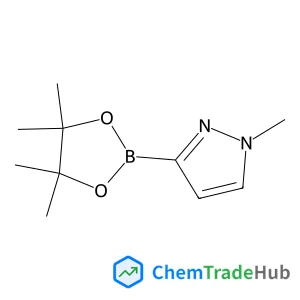
1-Methyl-3-(4,4,5,5-tetramethyl-1,3,2-dioxaborolan-2-yl)-1H-pyrazole
CAS Number:
1020174-04-2
Molecular Formula:
C10H17BN2O2

Recommended Suppliers



Disclaimer
This page provides academic journal information for reference and research purposes only. We are not affiliated with any journal publishers and do not handle publication submissions. For publication-related inquiries, please contact the respective journal publishers directly.
If you notice any inaccuracies in the information displayed, please contact us at support@chemtradehub.com. We will promptly review and address your concerns.