![9-Ethyl-3-{(E)-[ethyl(2-methylphenyl)hydrazono]methyl}-9H-carbazole structure](https://static.chemtradehub.com/structs/127/1274948-12-7-301f.webp "9-Ethyl-3-{(E)-[ethyl(2-methylphenyl)hydrazono]methyl}-9H-carbazole structure")
9-Ethyl-3-{(E)-[ethyl(2-methylphenyl)hydrazono]methyl}-9H-carbazole
CAS Number:
1274948-12-7
Molecular Formula:
C24H25N3
Min Zeng, Xiange Peng, Jianjun Liao, Guizhen Wang, Yanfang Li, Jianbao Li, Yong Qin, Joshua Wilson, Aimin Song
While TiO2 nanotube arrays cosensitized with CdS and PbS quantum dots can achieve water splitting under visible light excitation, the use of quantum dots is limited by the relatively slow interfacial hole transfer rate and low internal quantum efficiencies in the visible region. Al2O3 overcoating by atomic layer deposition (ALD) can drastically enhance the photoelectrochemical performance of the quantum dot-sensitized TiO2 nanotube arrays. 30 ALD cycles of the Al2O3 overlayer can achieve a good balance between surface coverage and charge transfer resistance. The resulting maximum photocurrent density of 5.19 mA cm-2 under simulated solar illumination shows a 52 times improvement over the pure TiO2 nanotube arrays, and more significantly, a 60% enhancement over bare quantum dot-sensitized TiO2 nanotube arrays. The incident photon-to-current conversion efficiency can reach the record value of 83% at 350 nm and remain above 30% up to 450 nm. A systematic examination of the role of the ALD Al2O3 overlayer indicates that surface recombination passivation, catalytic improvement in interfacial charge transfer kinetics, and chemical stabilization might synergistically enhance the photoelectrochemical performance in the visible region. These results provide a physical insight into the facile surface treatment, which could be applied to develop and optimize high-performance photoelectrodes for artificial photosynthesis.
Xiaohui Li, Zhijun Hu
DOI: 10.1039/C7PY00378A
DOI: 10.1039/C4PY00829D
Ruixue Chang, Heng An, Xu Li, Ruyi Zhou, Jianglei Qin, Yuelan Tian, Kuilin Deng
DOI: 10.1039/C6PY02122K
Chao Yin, Wenli Song, Rongcui Jiang, Wenbo Hu, Qingming Shen, Xiang Li, Jie Li, Quli Fan
DOI: 10.1039/C4PY00376D
Mariem Bouzrati-Zerelli, Nicolas Zivic, Frédéric Dumur, Didier Gigmes, Bernadette Graff, Jean Pierre Fouassier, Jacques Lalevée
DOI: 10.1039/C7PY00202E
Parvesh Wadhwani, Rouven Müller
DOI: 10.1039/C6PY02108E
Mariolino Carta, Matthew Croad, Keith Bugler, Kadhum J. Msayib, Neil B. McKeown
DOI: 10.1039/C4PY00608A
Xue Jiang, Guolin Lu, Huang Xiaoyu
DOI: 10.1039/C6PY02004F
Siddharth Chanpuriya, Marc A. Hillmyer, Frank S. Bates
DOI: 10.1039/C4PY00614C
Yilin Zhang, Liguo Xu, Rongrong Hu, Kam Sing Wong, William A. Goddard, III
DOI: 10.1039/C7PY00154A
4-Amino-3-bromophenol (CAS: 74440-80-5) falls under the classification of a haza...
(17beta)-3-Oxoestr-4-en-17-yl acetate should be stored in a cool, dry place away...
2-[(2,2-Diethoxyethyl)disulfanyl]-1,1-diethoxyethane (CAS: 76505-71-0) is a colo...
The market and research for 1-(β-D-ribofuranosyl)-1H-imidazo[4,5-c]pyridin-4-ami...
Waste containing Conjugated Estrogen (CAS: 12126-59-9) should be collected and d...
The market for Bis(2,2,2-trifluoroethyl) (methoxycarbonylmethyl)phosphonate (CAS...
There are several alternatives to 3,4'-Di-O-methylellagic acid (CAS: 57499-59-9)...
2-Chloro-N,N-dimethylpyridin-4-amine (CAS: 59047-70-0) is regulated under the Gl...
Cerium(3+);oxygen(2-);vanadium(5+) (CAS: 13597-19-8) is a complex inorganic comp...
7-Chloro-1-iodoisoquinoline (CAS: 1203579-27-4) is generally considered safe whe...

Physical Chemistry Chemical Physics (PCCP) is an international journal co-owned by 19 physical chemistry and physics societies from around the world. This journal publishes original, cutting-edge research in physical chemistry, chemical physics and biophysical chemistry. To be suitable for publication in PCCP, articles must include significant innovation and/or insight into physical chemistry; this is the most important criterion that reviewers and Editors will judge against when evaluating submissions. The journal has a broad scope and welcomes contributions spanning experiment, theory, computation and data science. Topical coverage includes spectroscopy, dynamics, kinetics, statistical mechanics, thermodynamics, electrochemistry, catalysis, surface science, quantum mechanics, quantum computing and machine learning. Interdisciplinary research areas such as polymers and soft matter, materials, nanoscience, energy, surfaces/interfaces, and biophysical chemistry are welcomed if they demonstrate significant innovation and/or insight into physical chemistry. Joined experimental/theoretical studies are particularly appreciated when complementary and based on up-to-date approaches.
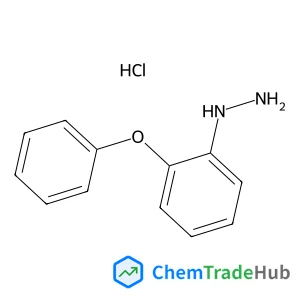
![4-{2-[(9H-Fluoren-9-ylmethoxy)carbonyl]hydrazino}benzoic acid structure](https://static.chemtradehub.com/structs/214/214475-53-3-bf36.webp "4-{2-[(9H-Fluoren-9-ylmethoxy)carbonyl]hydrazino}benzoic acid structure")