


Enhancement of island size by dynamic substrate disorder in simulations of graphene growth
Literature Information
Publication Date
2016-05-10
DOI
10.1039/C6CP00788K
Impact Factor
3.676
Authors
Gwilym Enstone, Gavin R. Bell
View Original
Abstract
We demonstrate a new mechanism in the early stages of sub-monolayer epitaxial island growth, using Monte Carlo simulations motivated by experimental observations on the growth of graphene on copper foil. In our model, the substrate is “dynamically rough”, by which we mean (i) the interaction strength between Cu and C varies randomly from site to site, and (ii) these variable strengths themselves migrate from site to site. The dynamic roughness provides a simple representation of the near-molten state of the Cu substrate in the case of real graphene growth. Counterintuitively, the graphene island size increases when dynamic roughness is included, compared to a static and smooth substrate. We attribute this effect to destabilisation of small graphene islands by fluctuations in the substrate, allowing them to break up and join larger islands which are more stable against roughness. In the case of static roughness, when process (ii) is switched off, island growth is strongly inhibited and the scale-free behaviour of island size distributions, present in the smooth-static and rough-dynamic cases, is destroyed. The effects of the dynamic substrate roughness cannot be mimicked by parameter changes in the static cases.
Recommended Journals

Heteroatom Chemistry

Journal of Asian Natural Products Research

Electroanalysis

Journal of the Indian Institute of Science

Bioorganic & Medicinal Chemistry Letters

Main Group Chemistry

Biocatalysis and Biotransformation

Medicinal Chemistry Research

Chinese Journal of Chemistry

Critical Reviews in Solid State and Materials Sciences
Related Literature
Diastereoselective construction of the benzannulated spiroketal core of chaetoquadrins enabled by a regiodivergent cascade
Shengxiang Qiu, Hongxin Liu, Haibo Tan
2020-05-26
Research Article
DOI: 10.1039/D0QO00484G
Acid–base controlled multiple conformation and aromaticity switches in tren-capped hexaphyrins
Stéphane Le Gac, Elsa Caytan, Vincent Dorcet, Bernard Boitrel
2019-03-20
Communication
DOI: 10.1039/C9OB00489K
Catalytic asymmetric cycloaddition reactions of enoldiazo compounds
Kostiantyn O. Marichev, Michael P. Doyle
2019-03-22
Review Article
DOI: 10.1039/C9OB00478E
Reaction condition controlled nickel(ii)-catalyzed C–C cross-coupling of alcohols
Meng-Juan Zhang, David J. Young, Hai-Yan Li
2019-03-20
Paper
DOI: 10.1039/C9OB00418A
Determination of association constants and FRET in hydrazide-based molecular duplex strands
Shi-Chang Gao, Kang Wan, Xu Fang, Yong-Xue Li, Min Xue, Yong Yang
2020-07-20
Research Article
DOI: 10.1039/D0QO00746C
A far-red to NIR emitting ultra-sensitive probe for the detection of endogenous HOCl in zebrafish and the RAW 264.7 cell line
Vijay Natarajan, Natesan Thirumalaivasan, Shu-Pao Wu, Velmathi Sivan
2019-03-12
Paper
DOI: 10.1039/C9OB00143C
Remote C(sp3)–H vinylation via radical-mediated consecutive fission of C–H and C–C bonds
Tao Niu, Shan Yang, Xinxin Wu
2020-09-02
Research Article
DOI: 10.1039/D0QO00952K
Enzymatic and non-enzymatic crosslinks found in collagen and elastin and their chemical synthesis
Rafea Naffa
2020-08-04
Review Article
DOI: 10.1039/D0QO00624F
Recent advances in organocatalytic asymmetric oxa-Michael addition triggered cascade reactions
Yu Wang, Da-Ming Du
2020-08-14
Review Article
DOI: 10.1039/D0QO00631A
Detection and identification of O-GlcNAc-modified proteins using 6-azido-6-deoxy-N-acetyl-galactosamine
Jianshuang Guo, Guoqiang Zhang, Jing Ma, Caili Zhao, Qingqing Xue, Jiyan Wang, Wenjie Liu, Kaihui Liu, Haifeng Wang, Ning Liu, Qitao Song, Jing Li
2019-04-06
Paper
DOI: 10.1039/C9OB00516A
You might also like
Compound Q&A
Is 2-(2-chloroacetamido)-3-phenylpropanoic acid (CAS: 7765-11-9) safe?
2-(2-Chloroacetamido)-3-phenylpropanoic acid (CAS: 7765-11-9) is generally consi...
7765-11-92-(2-chloroacetamido...
Compound Q&A
Is 2-(Benzyloxy)-5-bromobenzoic acid (CAS: 62176-31-2) safe?
2-(Benzyloxy)-5-bromobenzoic acid can be handled safely if appropriate precautio...
62176-31-22-(Benzyloxy)-5-brom...
Compound Q&A
What is (4-Methyl-1,2,5-oxadiazol-3-yl)methanamine hydrochloride (CAS: 1159825-48-5)?
(4-Methyl-1,2,5-oxadiazol-3-yl)methanamine hydrochloride is a chemical compound ...
1159825-48-5(4-Methyl-1,2,5-oxad...
Compound Q&A
What is 2-(5-Hexylthiophen-2-yl)-4,4,5,5-tetramethyl-1,3,2-dioxaborolane (CAS: 917985-54-7)?
2-(5-Hexylthiophen-2-yl)-4,4,5,5-tetramethyl-1,3,2-dioxaborolane (CAS: 917985-54...
917985-54-72-(5-Hexylthiophen-2...
Compound Q&A
Are there alternatives to 4-(8-Methyl-9H-1,3-dioxolo[4,5-h][2,3]benzodiazepin-5-yl)benzenamine (CAS: 102771-26-6) in synthesis?
While 4-(8-Methyl-9H-1,3-dioxolo[4,5-h][2,3]benzodiazepin-5-yl)benzenamine (CAS:...
102771-26-64-(8-Methyl-9H-1,3-d...
Compound Q&A
What is the market or research trend for tert-butyl 3-hydroxy-4,5,7,8-tetrahydro-2H-pyrazolo[3,4-d]azepine-6-carboxylate (CAS: 851376-80-2)?
The market for tert-butyl 3-hydroxy-4,5,7,8-tetrahydro-2H-pyrazolo[3,4-d]azepine...
851376-80-2tert-butyl 3-hydroxy...
Compound Q&A
How should waste containing 3,5-Diamino-1H-pyrazole-4-carbonitrile (CAS: 6844-58-2) be handled?
Waste containing 3,5-Diamino-1H-pyrazole-4-carbonitrile (CAS: 6844-58-2) should ...
6844-58-23,5-Diamino-1H-pyraz...
Compound Q&A
How is (6-Fluoro-3-pyridinyl)boronic acid (CAS: 351019-18-6) typically synthesized?
(6-Fluoro-3-pyridinyl)boronic acid can be synthesized through the reaction of 6-...
351019-18-6(6-Fluoro-3-pyridiny...
Compound Q&A
What industries use Dibenzyl carbonimidoylbiscarbamate (CAS: 10065-79-9)?
Dibenzyl carbonimidoylbiscarbamate (CAS: 10065-79-9) finds applications in vario...
10065-79-9Dibenzyl carbonimido...
Compound Q&A
What is the market or research trend for (beta,beta,2,3,4,5,6-~2~H_7_)Phenylalanine (CAS: 74228-83-4)?
The market for (beta,beta,2,3,4,5,6-~2~H_7_)Phenylalanine (CAS: 74228-83-4) is g...
74228-83-4(beta,beta,2,3,4,5,6...
Source Journal
Physical Chemistry Chemical Physics

CiteScore:
5.5
Self-citation Rate:
10.3%
Articles per Year:
3036
Physical Chemistry Chemical Physics (PCCP) is an international journal co-owned by 19 physical chemistry and physics societies from around the world. This journal publishes original, cutting-edge research in physical chemistry, chemical physics and biophysical chemistry. To be suitable for publication in PCCP, articles must include significant innovation and/or insight into physical chemistry; this is the most important criterion that reviewers and Editors will judge against when evaluating submissions. The journal has a broad scope and welcomes contributions spanning experiment, theory, computation and data science. Topical coverage includes spectroscopy, dynamics, kinetics, statistical mechanics, thermodynamics, electrochemistry, catalysis, surface science, quantum mechanics, quantum computing and machine learning. Interdisciplinary research areas such as polymers and soft matter, materials, nanoscience, energy, surfaces/interfaces, and biophysical chemistry are welcomed if they demonstrate significant innovation and/or insight into physical chemistry. Joined experimental/theoretical studies are particularly appreciated when complementary and based on up-to-date approaches.
Recommended Compounds
![Ethyl ({[(2-methyl-2-propanyl)oxy]carbonyl}amino)(2-pyridinyl)acetate structure](https://static.chemtradehub.com/structs/313/313490-90-3-dd15.webp "Ethyl ({[(2-methyl-2-propanyl)oxy]carbonyl}amino)(2-pyridinyl)acetate structure")
Ethyl ({[(2-methyl-2-propanyl)oxy]carbonyl}amino)(2-pyridinyl)acetate
CAS Number:
313490-90-3
Molecular Formula:
C14H20N2O4
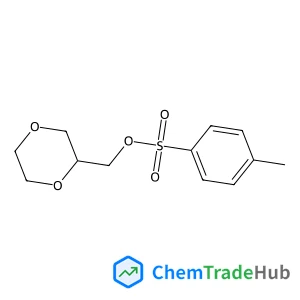
(S)-(1,4-Dioxan-2-yl)methyl 4-methylbenzenesulfonate
CAS Number:
917882-64-5
Molecular Formula:
C12H16O5S
![(1S)-1,5-Anhydro-2-O-alpha-L-arabinopyranosyl-1-[5-hydroxy-7-({6-O-[3-(4-hydroxy-3-methoxyphenyl)propanoyl]-beta-D-glucopyranosyl}oxy)-2-(4-hydroxyphenyl)-4-oxo-4H-chromen-6-yl]-D-glucitol structure](https://static.chemtradehub.com/structs/225/2252345-81-4-bcff.webp "(1S)-1,5-Anhydro-2-O-alpha-L-arabinopyranosyl-1-[5-hydroxy-7-({6-O-[3-(4-hydroxy-3-methoxyphenyl)propanoyl]-beta-D-glucopyranosyl}oxy)-2-(4-hydroxyphenyl)-4-oxo-4H-chromen-6-yl]-D-glucitol structure")
Recommended Suppliers







Disclaimer
This page provides academic journal information for reference and research purposes only. We are not affiliated with any journal publishers and do not handle publication submissions. For publication-related inquiries, please contact the respective journal publishers directly.
If you notice any inaccuracies in the information displayed, please contact us at support@chemtradehub.com. We will promptly review and address your concerns.