













Numerical density-to-potential inversions in time-dependent density functional theory
Literature Information
Publication Date
2016-03-17
DOI
10.1039/C6CP00312E
Impact Factor
3.676
Authors
Daniel S. Jensen
View Original
Abstract
We treat the density-to-potential inverse problem of time-dependent density functional theory as an optimization problem with a partial differential equation constraint. The unknown potential is recovered from a target density by applying a multilevel optimization method controlled by error estimates. We employ a classical optimization routine using gradients efficiently computed by the discrete adjoint method. The inverted potential has both a real and imaginary part to reduce reflections at the boundaries and other numerical artifacts. We demonstrate this method on model one-dimensional systems. The method can be straightforwardly extended to a variety of numerical solvers of the time-dependent Kohn–Sham equations and to systems in higher dimensions.
Related Literature
Mixtures of the 1-ethyl-3-methylimidazolium acetate ionic liquid with different inorganic salts: insights into their interactions
Filipe S. Oliveira, Eurico J. Cabrita, Smilja Todorovic, Carlos E. S. Bernardes, Jennifer L. Hodgson, Douglas R. MacFarlane, Luís P. N. Rebelo, Isabel M. Marrucho
2015-12-21
Paper
DOI: 10.1039/C5CP06937H
Nuclear quantum tunnelling in enzymatic reactions – an enzymologist's perspective
Linus O. Johannissen, Sam Hay, Nigel S. Scrutton
2015-03-27
Perspective
DOI: 10.1039/C5CP00614G
Micromechanical measurements of the effect of surfactants on cyclopentane hydrate shell properties
Erika P. Brown, Carolyn A. Koh
2015-11-20
Paper
DOI: 10.1039/C5CP06071K
In situ 2D-extraction of DNA wheels by 3D through-solution transport
Keitel Cervantes-Salguero, Waka Nakanishi, Ibuki Kawamata, Kosuke Minami, Hirokazu Komatsu, Satoshi Murata
2015-11-16
Communication
DOI: 10.1039/C5CP05765E
Structure prediction of the solid forms of methanol: an ab initio random structure searching approach
Tzu-Jen Lin, Cheng-Rong Hsing, Ching-Ming Wei, Jer-Lai Kuo
2015-12-14
Paper
DOI: 10.1039/C5CP06583F
Probing the effects of 2D confinement on hydrogen dynamics in water and ice adsorbed in graphene oxide sponges
Giovanni Romanelli, Xuan Zhang, Kian Ping Loh, Carla Andreani
2015-10-30
Paper
DOI: 10.1039/C5CP05240H
Two equivalent methyl internal rotations in 2,5-dimethylthiophene investigated by microwave spectroscopy
Vinh Van, Wolfgang Stahl, Ha Vinh Lam Nguyen
2015-09-29
Communication
DOI: 10.1039/C5CP03513A
X-ray diffraction and high-resolution TEM observations of biopolymer nanoskin-covered metallic copper fine particles: preparative conditions and surface oxidation states
Tetsu Yonezawa, Yoshiki Uchida, Hiroki Tsukamoto
2015-11-11
Paper
DOI: 10.1039/C5CP06107E
Relationship between vesicle size and steric hindrance influences vesicle rupture on solid supports
2015-12-15
Paper
DOI: 10.1039/C5CP06786C
You might also like
Compound Q&A
How should waste containing (6-Bromo-2-naphthyl)oxy](dimethyl)(2-methyl-2-propanyl)silane be handled?
Waste containing (6-Bromo-2-naphthyl)oxy](dimethyl)(2-methyl-2-propanyl)silane (...
100751-65-3[(6-Bromo-2-naphthyl...
Compound Q&A
How is 7-Fluoro-4-isoquinolinecarboxylic acid (CAS: 1841081-40-0) typically synthesized?
7-Fluoro-4-isoquinolinecarboxylic acid can be synthesized via a multi-step proce...
1841081-40-07-Fluoro-4-isoquinol...
Compound Q&A
What are the physical and chemical properties of 2,3,5,6-Tetrabromothieno[3,2-b]thiophene (CAS: 124638-53-5)?
2,3,5,6-Tetrabromothieno[3,2-b]thiophene is a crystalline compound with a high m...
124638-53-52,3,5,6-Tetrabromoth...
Compound Q&A
Is 1-[4-(Benzylamino)-7,8-dihydro-5H-pyrano[4,3-d]pyrimidin-2-yl]-2-methyl-1H-indole-4-carboxamide (CAS: 1542705-92-9) safe?
1-[4-(Benzylamino)-7,8-dihydro-5H-pyrano[4,3-d]pyrimidin-2-yl]-2-methyl-1H-indol...
1542705-92-91-[4-(Benzylamino)-7...
Compound Q&A
What is the market or research trend for imidazo[5,1-d]-1,2,3,5-tetrazine-8-carboxylic acid, 3,4-dihydro-3-methyl-4-oxo- (CAS: 113942-30-6)?
The market for imidazo[5,1-d]-1,2,3,5-tetrazine-8-carboxylic acid, 3,4-dihydro-3...
113942-30-6Imidazo[5,1-d]-1,2,3...
Compound Q&A
What is 3-(Triisopropylsilyl)propiolaldehyde (CAS: 163271-80-5)?
3-(Triisopropylsilyl)propiolaldehyde is a synthetic organic compound with the CA...
163271-80-53-(Triisopropylsilyl...
Compound Q&A
What regulatory guidelines apply to 6-Nitro-2H-1,4-benzoxazin-3(4H)-one (CAS: 81721-87-1)?
6-Nitro-2H-1,4-benzoxazin-3(4H)-one (CAS: 81721-87-1) is subject to various regu...
81721-87-16-Nitro-2H-1,4-benzo...
Compound Q&A
How should waste containing (3-Fluorophenyl)(4-{[(2-methyl-2-propanyl)oxy]carbonyl}-1-piperazinyl)acetic acid (CAS: 885272-91-3) be handled?
Waste containing (3-Fluorophenyl)(4-{[(2-methyl-2-propanyl)oxy]carbonyl}-1-piper...
885272-91-3(3-Fluorophenyl)(4-{...
Compound Q&A
What are the physical and chemical properties of N,N'-4,4'-Biphenyldiyldiisonicotinamide (CAS: 55119-40-9)?
N,N'-4,4'-Biphenyldiyldiisonicotinamide is a white crystalline solid with a mole...
55119-40-9N,N'-4,4'-Biphenyldi...
Compound Q&A
What industries use 6-Bromo-8-fluoro-2-quinazolinol (CAS: 1036756-15-6)?
6-Bromo-8-fluoro-2-quinazolinol is primarily used in the pharmaceutical industry...
1036756-15-66-Bromo-8-fluoro-2-q...
Source Journal
Physical Chemistry Chemical Physics

CiteScore:
5.5
Self-citation Rate:
10.3%
Articles per Year:
3036
Physical Chemistry Chemical Physics (PCCP) is an international journal co-owned by 19 physical chemistry and physics societies from around the world. This journal publishes original, cutting-edge research in physical chemistry, chemical physics and biophysical chemistry. To be suitable for publication in PCCP, articles must include significant innovation and/or insight into physical chemistry; this is the most important criterion that reviewers and Editors will judge against when evaluating submissions. The journal has a broad scope and welcomes contributions spanning experiment, theory, computation and data science. Topical coverage includes spectroscopy, dynamics, kinetics, statistical mechanics, thermodynamics, electrochemistry, catalysis, surface science, quantum mechanics, quantum computing and machine learning. Interdisciplinary research areas such as polymers and soft matter, materials, nanoscience, energy, surfaces/interfaces, and biophysical chemistry are welcomed if they demonstrate significant innovation and/or insight into physical chemistry. Joined experimental/theoretical studies are particularly appreciated when complementary and based on up-to-date approaches.
Recommended Compounds
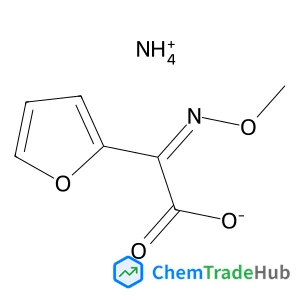
Ammonium (Z)-2-(furan-2-yl)-2-(methoxyimino)acetate
CAS Number:
97148-39-5
Molecular Formula:
C7H10N2O4
Recommended Suppliers







Disclaimer
This page provides academic journal information for reference and research purposes only. We are not affiliated with any journal publishers and do not handle publication submissions. For publication-related inquiries, please contact the respective journal publishers directly.
If you notice any inaccuracies in the information displayed, please contact us at support@chemtradehub.com. We will promptly review and address your concerns.