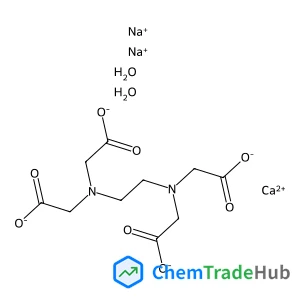
EthylenediaminetetraaceticacidcalciumDisodiumsalthydrate
CAS Number:
23411-34-9
Molecular Formula:
C10H16CaN2Na2O10
The first page of this article is displayed as the abstract.
Luisa Haya, Iñaki Osante, Ana M. Mainar, Carlos Cativiela, Jose S. Urieta
DOI: 10.1039/C3CP50743B
Yongli Shen, Qingsen Meng, Shouying Huang, Jinlong Gong, Xinbin Ma
DOI: 10.1039/C3CP51092A
Shigeaki Obata, Yukihiro Shimoi
DOI: 10.1039/C3CP44150D
Philipp Ectors, Dirk Zahn
DOI: 10.1039/C3CP44279A
Haiyang Zhao, Liguang Wu, Zhijun Zhou, Lin Zhang, Huanlin Chen
DOI: 10.1039/C3CP50955A
Janine Seeliger, Kathrin Estel, Nelli Erwin, Roland Winter
DOI: 10.1039/C3CP44412K
DOI: 10.1039/C3CP50689D
Megan Murray Gessel, Nichole E. LaPointe, Thanh D. Do, Michael T. Bowers, Stuart C. Feinstein
DOI: 10.1039/C3CP00063J
Artur Braun, Rolf Erni, Ulrich Müller, Max Döbeli, Edwin C. Constable
DOI: 10.1039/C3CP52179F
Ling Ge, Leonardo Bernasconi, Patricia Hunt
DOI: 10.1039/C3CP50652E
1H-Indazole-6-carbonitrile finds applications in pharmaceuticals, where it serve...
Waste containing Dioctyl (2E)-2-butenedioate (CAS: 2997-85-5) should be collecte...
Sodium [(1,2-benzoxazol-3-ylmethyl)sulfonyl]azanide is primarily used in pharmac...
Dimethyl 4-(4,4,5,5-tetramethyl-1,3,2-dioxaborolan-2-yl)-2,6-pyridinedicarboxyla...
Waste containing 2-Fluoro-6-hydrazinopyridine (CAS: 80714-39-2) should be manage...
6-Formyl-2-pyridinecarboxylic acid is an organic compound with the molecular for...
Research trends for this compound indicate a focus on its potential applications...
9H-Tribenzo[b,d,f]azepine is typically synthesized via a multi-step process invo...
1-Cyclopropyl-7-ethoxy-6-fluoro-8-methoxy-4-oxo-1,4-dihydro-3-quinolinecarboxyli...
Waste containing Methyl 3-oxo-1,2,3,4-tetrahydro-6-quinoxalinecarboxylate (CAS: ...

Physical Chemistry Chemical Physics (PCCP) is an international journal co-owned by 19 physical chemistry and physics societies from around the world. This journal publishes original, cutting-edge research in physical chemistry, chemical physics and biophysical chemistry. To be suitable for publication in PCCP, articles must include significant innovation and/or insight into physical chemistry; this is the most important criterion that reviewers and Editors will judge against when evaluating submissions. The journal has a broad scope and welcomes contributions spanning experiment, theory, computation and data science. Topical coverage includes spectroscopy, dynamics, kinetics, statistical mechanics, thermodynamics, electrochemistry, catalysis, surface science, quantum mechanics, quantum computing and machine learning. Interdisciplinary research areas such as polymers and soft matter, materials, nanoscience, energy, surfaces/interfaces, and biophysical chemistry are welcomed if they demonstrate significant innovation and/or insight into physical chemistry. Joined experimental/theoretical studies are particularly appreciated when complementary and based on up-to-date approaches.