


![1-[3-(4-Morpholinylsulfonyl)phenyl]methanamine structure](https://static.chemtradehub.com/structs/933/933989-32-3-51af.webp "1-[3-(4-Morpholinylsulfonyl)phenyl]methanamine structure")
Efficient bioconversion of crude glycerol from biodiesel to optically pure d-lactate by metabolically engineered Escherichia coli
Literature Information
Publication Date
2013-11-06
DOI
10.1039/C3GC41769G
Impact Factor
10.182
Authors
Kang-ming Tian, Dan-dan Niu, Govender Algasan, Suren Singh, Zheng-xiang Wang
View Original
Abstract
Biodiesel has attracted considerable attention as one of the best choices among alternative and renewable fuels. Large quantities of crude glycerol are produced as a main co-product with increasing biodiesel production. Currently, the problem of waste glycerol utilization needs to be crucially addressed, not only for environmental protection but also for the economy of the biodiesel industry. In this paper, the use of crude glycerol for the production of D-lactate by engineered Escherichia coli was investigated. Engineered E. coli B0013-070 with a homolactic pathway for D-lactate synthesis by elimination of byproduct pathways (ethanol, succinate, formate and acetate) could convert 20 g L−1 of crude glycerol to 13.6 g L−1 of D-lactate with a yield of 0.67 g g−1 glycerol. Overexpression of D-lactate dehydrogenase by a low-copy vector in E. coli B0013-070 resulted in the increased production and yield of D-lactate, in which 14.5 g L−1 of D-lactate was produced with a yield of 0.72 g g−1 glycerol from crude glycerol. The effect of temperature on D-lactate fermentation by the engineered strain E. coli B0013-070-pTHldhA was also investigated, and 34 °C and 40 °C were found to be the optimal temperatures for cell growth and lactate production, respectively. The engineered strain B0013-070-pTHldhA produced 100.3 g L−1 of D-lactate with 99.97% optical purity from 531.5 g of crude glycerol with an overall productivity of 2.78 g L−1 h−1 and a yield of 75.4 g per 100 g glycerol (0.77 mol mol−1) using two phase fermentation combined with a temperature shifting strategy in a 7 L bioreactor. In summary, this paper shows that crude glycerol could be directly converted to D-lactate without any prior purification.
Recommended Journals

NDT & E International

Biocatalysis and Biotransformation

Topics in Catalysis

Main Group Chemistry

Polycyclic Aromatic Compounds

Bioorganic & Medicinal Chemistry

Chinese Journal of Chemistry

Critical Reviews in Solid State and Materials Sciences

Journal of Chemical Sciences

Journal of the Indian Institute of Science
Related Literature
A colorimetric and fluorescent dual probe for palladium in aqueous medium and live cell imaging
Jin-wu Yan, Xiao-lin Wang, Qi-feng Tan, Pei-fen Yao, Jia-heng Tan, Lei Zhang
2016-03-11
Communication
DOI: 10.1039/C6AN00204H
Profiling embryonic stem cell differentiation by MALDI TOF mass spectrometry: development of a reproducible and robust sample preparation workflow
Rachel E. Heap, Anna Segarra-Fas, Alasdair P. Blain, Greg M. Findlay, Matthias Trost
2019-09-30
Paper
DOI: 10.1039/C9AN00771G
Electrochemical redox signaling of hemoglobin in human whole blood and its relevance to anemia and thalassemia diagnosis
Khairunnisa Amreen, Annamalai Senthil Kumar
2016-02-15
Communication
DOI: 10.1039/C5AN02646F
Development of a ratiometric two-photon fluorescent probe for imaging of hydrogen peroxide in ischemic brain injury
Baoping Zhai, Wei Hu, Ruilin Hao, Wenjing Ni, Zhihong Liu
2019-08-21
Paper
DOI: 10.1039/C9AN01326A
Electrochemical enzyme-linked immunosorbent assay (e-ELISA) for parasitic nematode Ostertagia ostertagi (brown stomach worm) infections in dairy cattle
Baljit Singh, Evangelia Flampouri, Eithne Dempsey
2019-08-15
Paper
DOI: 10.1039/C9AN00982E
Immunoassay for tumor markers in human serum based on Si nanoparticles and SiC@Ag SERS-active substrate
Lu Zhou, Jun Zhou, Zhao Feng, Fuyan Wang, Shushen Xie, Shizhong Bu
2016-03-15
Paper
DOI: 10.1039/C6AN00003G
A novel fluorescent-colorimetric probe for Al3+ and Zn2+ ion detection with different response and applications in F− detection and cell imaging
Jiaxin Fu, Yongxin Chang, Bai Li, Huihui Mei, Li Yang
2019-08-08
Paper
DOI: 10.1039/C9AN01295H
Portable paper sensors for the detection of heavy metals based on light transmission-improved quantification of colorimetric assays
Jing Wu, Hua Tang, Minghui He, Guangxue Chen, Junfei Tian
2019-09-06
Paper
DOI: 10.1039/C9AN01131E
SERS monitoring of the Fenton degradation reaction based on microfluidic droplets and alginate microparticles
Shuai Yue, Wenqi Ye, Zhangrun Xu
2019-08-19
Paper
DOI: 10.1039/C9AN01077G
You might also like
Compound Q&A
What are the main uses of 1-(3-Aminophenyl)-3-[(3R)-1-(3,3-dimethyl-2-oxobutyl)-2-oxo-5-(2-pyridinyl)-2,3-dihydro-1H-1,4-benzodiazepin-3-yl]urea (CAS: 155412-88-7)?
This compound is mainly used as an intermediate in the synthesis of antipsychoti...
155412-88-71-(3-Aminophenyl)-3-...
Compound Q&A
How should waste containing 1-(D-Ribofuranosyl)-1,4-dihydro-3-pyridinecarboxamide (CAS: 19132-12-8) be handled?
Waste containing 1-(D-Ribofuranosyl)-1,4-dihydro-3-pyridinecarboxamide (CAS: 191...
19132-12-81-(D-Ribofuranosyl)-...
Compound Q&A
What regulatory guidelines apply to 2-Methyl-2-propanyl 3-bromo-3-(hydroxymethyl)-1-azetidinecarboxylate (CAS: 2007919-81-3)?
2-Methyl-2-propanyl 3-bromo-3-(hydroxymethyl)-1-azetidinecarboxylate (CAS: 20079...
2007919-81-32-Methyl-2-propanyl ...
Compound Q&A
What is N-(4-Chloro-2-pyridinyl)acetamide (CAS: 245056-66-0)?
N-(4-Chloro-2-pyridinyl)acetamide (CAS: 245056-66-0) is a chemical compound with...
245056-66-0N-(4-Chloro-2-pyridi...
Compound Q&A
What is 5-Chloro-2-hydroxybenzoic acid (CAS: 321-14-2)?
5-Chloro-2-hydroxybenzoic acid, also known as 5-chlorosalicylic acid, is an arom...
321-14-25-Chloro-2-hydroxybe...
Compound Q&A
What precautions should be taken when handling 1,1-Dichloro-1-fluoroethane (CAS: 1717-00-6)?
When handling 1,1-Dichloro-1-fluoroethane (CAS: 1717-00-6), it is important to u...
1717-00-61,1-Dichloro-1-fluor...
Compound Q&A
What are the physical and chemical properties of Fmoc-(2S,3R)-3-phenylpyrrolidine-2-carboxylic acid (CAS: 281655-32-1)?
Fmoc-(2S,3R)-3-phenylpyrrolidine-2-carboxylic acid is a white crystalline solid ...
281655-32-1Fmoc-(2S,3R)-3-pheny...
Compound Q&A
What are the main uses of 4-Amino-5-bromo-2-pyridinecarboxylic acid (CAS: 1363381-01-4)?
4-Amino-5-bromo-2-pyridinecarboxylic acid is primarily used as a precursor in th...
1363381-01-44-Amino-5-bromo-2-py...
Compound Q&A
What precautions should be taken when handling (S)-tert-butyl 2-((2-(4-bromophenyl)-2-oxoethyl)carbamoyl)pyrrolidine-1-carboxylate (CAS: 1007881-98-2)?
Handling this compound should be done with personal protective equipment (PPE) i...
1007881-98-2(S)-tert-butyl 2-((2...
Compound Q&A
What precautions should be taken when handling 8-bromo-2,2-dimethyl-3,4-dihydro-2H-1,4-benzoxazin-3-one (CAS: 688363-73-7)?
When handling 8-bromo-2,2-dimethyl-3,4-dihydro-2H-1,4-benzoxazin-3-one, use prop...
688363-73-78-bromo-2,2-dimethyl...
Source Journal
Green Chemistry

CiteScore:
16.1
Self-citation Rate:
7.5%
Articles per Year:
944
Green Chemistry provides a unique forum for the publication of innovative research on the development of alternative green and sustainable technologies. The scope of Green Chemistry is based on, but not limited to, the definition proposed by Anastas and Warner (Green Chemistry: Theory and Practice, P T Anastas and J C Warner, Oxford University Press, Oxford, 1998). Green chemistry is the utilisation of a set of principles that reduces or eliminates the use or generation of hazardous substances in the design, manufacture and application of chemical products. Green Chemistry is at the frontiers of this continuously-evolving interdisciplinary science and publishes research that attempts to reduce the environmental impact of the chemical enterprise by developing a technology base that is inherently non-toxic to living things and the environment. Submissions on all aspects of research relating to the endeavour are welcome. The journal publishes original and significant cutting-edge research that is likely to be of wide general appeal. To be published, work must present a significant advance in green chemistry. Papers must contain a comparison with existing methods and demonstrate advantages over those methods before publication can be considered. For more information please see this Editorial. Coverage includes the following, but is not limited to: Design (e.g. biomimicry, design for degradation/recycling/reduced toxicity…) Reagents & Feedstocks (e.g. renewables, CO2, solvents, auxiliary agents, waste utilization…) Synthesis (e.g. organic, inorganic, synthetic biology…) Catalysis (e.g. homogeneous, heterogeneous, enzyme, whole cell…) Process (e.g. process design, intensification, separations, recycling, efficiency…) Energy (e.g. renewable energy, fuels, photovoltaics, fuel cells, energy storage, energy carriers…) Applications (e.g. electronics, dyes, consumer products, coatings, pharmaceuticals, preservatives, building materials, chemicals for industry/agriculture/mining…) Impact (e.g. safety, metrics, LCA, sustainability, (eco)toxicology…) Green chemistry is, by definition, a continuously-evolving frontier. Therefore, the inclusion of a particular material or technology does not, of itself, guarantee that a paper is suitable for the journal. To be suitable, the novel advance should have the potential for reduced environmental impact relative to the state of the art. Green Chemistry does not normally deal with research associated with 'end-of-pipe' or remediation issues.
Recommended Compounds
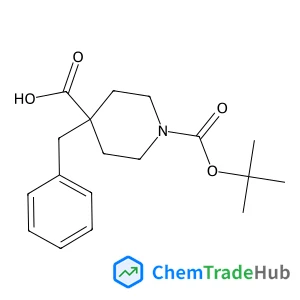
4-Benzyl-1-(tert-butoxycarbonyl)piperidine-4-carboxylic acid
CAS Number:
170838-87-6
Molecular Formula:
C18H25NO4
![2,6-Bis({(2R)-2-[hydroxy(diphenyl)methyl]-1-pyrrolidinyl}methyl)-4-methylphenol structure](https://static.chemtradehub.com/structs/877/877395-58-9-70bf.webp "2,6-Bis({(2R)-2-[hydroxy(diphenyl)methyl]-1-pyrrolidinyl}methyl)-4-methylphenol structure")
2,6-Bis({(2R)-2-[hydroxy(diphenyl)methyl]-1-pyrrolidinyl}methyl)-4-methylphenol
CAS Number:
877395-58-9
Molecular Formula:
C43H46N2O3
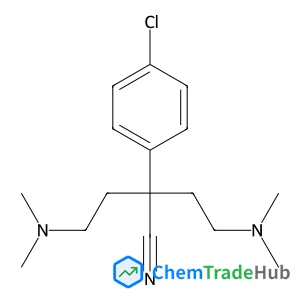
2-(4-Chlorophenyl)-4-(dimethylamino)-2-(2-(dimethylamino)ethyl)butanenitrile
CAS Number:
1246816-57-8
Molecular Formula:
C16H24ClN3
Recommended Suppliers



Disclaimer
This page provides academic journal information for reference and research purposes only. We are not affiliated with any journal publishers and do not handle publication submissions. For publication-related inquiries, please contact the respective journal publishers directly.
If you notice any inaccuracies in the information displayed, please contact us at support@chemtradehub.com. We will promptly review and address your concerns.