![Methyl 4-({[(2-methyl-2-propanyl)oxy]carbonyl}amino)bicyclo[2.2.2]octane-1-carboxylate structure](https://static.chemtradehub.com/structs/943/943845-74-7-b7e5.webp "Methyl 4-({[(2-methyl-2-propanyl)oxy]carbonyl}amino)bicyclo[2.2.2]octane-1-carboxylate structure")
Methyl 4-({[(2-methyl-2-propanyl)oxy]carbonyl}amino)bicyclo[2.2.2]octane-1-carboxylate
CAS Number:
943845-74-7
Molecular Formula:
C15H25NO4
Solid supported platinum(0) (SS-Pt) nanoparticles were developed as a heterogeneous catalyst following a reduction/deposition method and characterized by SEM, TEM, EDX and XRD analysis. The SS-Pt catalyst was applied in the chemo-selective reduction of nitroarenes to N-arylhydroxylamines using hydrazine hydrate as a hydrogen source. A wide variety of reducible functional groups such as halides, carboxylic acids, esters, amides, nitriles, keto, alkenes, alkynes and N-benzyl were well tolerated under the reaction conditions. This process was further successfully employed in 10 g scale reactions. N-Arylhydroxylamines were further applied for catalyst free synthesis of azoxybenzenes. Moreover, use of PEG-400 as cheap reaction medium, additive free methodology and the recyclability of SS-Pt catalyst up to ten times without significant loss of catalytic activity evidently follow the principles of green chemistry.

Organic Preparations and Procedures International

Pharmacological Reviews

European Journal of Wood and Wood Products

Proceedings of the National Academy of Sciences of the United States of America

Molecular Pharmacology

Science

Journal of Medicinal Chemistry

Helvetica Chimica Acta

Journal of Heterocyclic Chemistry

Planta Medica
Zhiyu Liu, Zexin Wang, Erteng Jia, Tinglan Ouyang, Min Pan, Jiafeng Lu, Qinyu Ge, Yunfei Bai
DOI: 10.1039/C9AN00935C
Lijia Zhang, Zhongbin Luo, Lingshan Su, Dianping Tang
DOI: 10.1039/C9AN01395D
Danyang Ma, Lini Dong, Ming Zhou, Liande Zhu
DOI: 10.1039/C5AN02506K
Jin-wu Yan, Xiao-lin Wang, Qi-feng Tan, Pei-fen Yao, Jia-heng Tan, Lei Zhang
DOI: 10.1039/C6AN00204H
Huayna Terraschke, Laura Ruiz Arana, Patric Lindenberg, Wolfgang Bensch
DOI: 10.1039/C6AN00075D
Meina Wang, Baozhan Zheng, Feng Yang, Juan Du, Yong Guo, Jianyuan Dai, Lei Yan
DOI: 10.1039/C5AN02643A
Yoon-Tae Kang, Emma Purcell, Thomas Hadlock, Ting-Wen Lo, Anusha Mutukuri, Shruti Jolly, Sunitha Nagrath
DOI: 10.1039/C9AN01235D
Baljit Singh, Evangelia Flampouri, Eithne Dempsey
DOI: 10.1039/C9AN00982E
Seonhwa Park, Yu Mi Shin, Jeongwook Seo, Ji-Joon Song, Haesik Yang
DOI: 10.1039/C6AN00251J
When handling 4-(2-Furylmethyl)thiomorpholine 1,1-dioxide (CAS: 79206-94-3), it ...
When handling 4-Chloro-N-[2-(4-morpholinyl)ethyl]benzamide (CAS: 71320-77-9), it...
Waste containing this compound (CAS: 62921-74-8) should be handled according to ...
Waste containing (S)-Methyl 2-amino-3-cyclohexylpropanoate should be collected i...
This compound can be synthesized using a multi-step process involving the conjug...
There are several alternatives to (2E)-3-(3,4-Dichlorophenyl)acrylic acid in syn...
Ethyl 6-(2-nitrophenyl)imidazo[2,1-b][1,3]thiazole-3-carboxylate (CAS: 925437-84...
Waste containing 2-(1,3-Thiazol-2-yl)ethanamine (CAS: 18453-07-1) should be coll...
Methyl 5-iodo-2-methylbenzoate can be synthesized through the iodination of meth...
5-Chloro[1,2,4]triazolo[1,5-a]pyridine is commonly synthesized via the condensat...

Green Chemistry provides a unique forum for the publication of innovative research on the development of alternative green and sustainable technologies. The scope of Green Chemistry is based on, but not limited to, the definition proposed by Anastas and Warner (Green Chemistry: Theory and Practice, P T Anastas and J C Warner, Oxford University Press, Oxford, 1998). Green chemistry is the utilisation of a set of principles that reduces or eliminates the use or generation of hazardous substances in the design, manufacture and application of chemical products. Green Chemistry is at the frontiers of this continuously-evolving interdisciplinary science and publishes research that attempts to reduce the environmental impact of the chemical enterprise by developing a technology base that is inherently non-toxic to living things and the environment. Submissions on all aspects of research relating to the endeavour are welcome. The journal publishes original and significant cutting-edge research that is likely to be of wide general appeal. To be published, work must present a significant advance in green chemistry. Papers must contain a comparison with existing methods and demonstrate advantages over those methods before publication can be considered. For more information please see this Editorial. Coverage includes the following, but is not limited to: Design (e.g. biomimicry, design for degradation/recycling/reduced toxicity…) Reagents & Feedstocks (e.g. renewables, CO2, solvents, auxiliary agents, waste utilization…) Synthesis (e.g. organic, inorganic, synthetic biology…) Catalysis (e.g. homogeneous, heterogeneous, enzyme, whole cell…) Process (e.g. process design, intensification, separations, recycling, efficiency…) Energy (e.g. renewable energy, fuels, photovoltaics, fuel cells, energy storage, energy carriers…) Applications (e.g. electronics, dyes, consumer products, coatings, pharmaceuticals, preservatives, building materials, chemicals for industry/agriculture/mining…) Impact (e.g. safety, metrics, LCA, sustainability, (eco)toxicology…) Green chemistry is, by definition, a continuously-evolving frontier. Therefore, the inclusion of a particular material or technology does not, of itself, guarantee that a paper is suitable for the journal. To be suitable, the novel advance should have the potential for reduced environmental impact relative to the state of the art. Green Chemistry does not normally deal with research associated with 'end-of-pipe' or remediation issues.
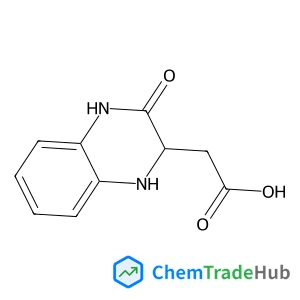
![5-Methyl-4,5,6,7-tetrahydropyrazolo[1,5-a]pyrazin-2-amine structure](https://static.chemtradehub.com/structs/122/1227210-33-4-8d64.webp "5-Methyl-4,5,6,7-tetrahydropyrazolo[1,5-a]pyrazin-2-amine structure")