


Metal-free arylations via photochemical activation of the Ar–OSO2R bond in aryl nonaflates
Literature Information
Publication Date
2013-07-22
DOI
10.1039/C3GC41009A
Impact Factor
10.182
Authors
Carlotta Raviola, Veronica Canevari, Stefano Protti, Angelo Albini, Maurizio Fagnoni
View Original
Abstract
The photolysis of electron-rich aryl nonaflates (ArONfs) in protic media was investigated and heterolysis of the Ar–OS bond (from 3ArONf) took place. The reaction generated a triplet phenyl cation that added to π-bond nucleophiles. This metal-free arylation method was made further useful by adopting in situ preparation of ArONf from the corresponding phenol.
Recommended Journals

Critical Reviews in Solid State and Materials Sciences

Main Group Chemistry

Journal of Asian Natural Products Research

NDT & E International

Acta Metallurgica Sinica-English Letters

Medicinal Chemistry Research

Biocatalysis and Biotransformation

Journal of the Indian Institute of Science

Bioorganic & Medicinal Chemistry Letters

Topics in Catalysis
Related Literature
A colorimetric probe for the real-time naked eye detection of cyanide and hydroxide ions in tap water: experimental and theoretical studies
Veikko Uahengo, Johannes Naimhwaka, Likius S. Daniel, Ateeq Rahman, Mohamed I. Elzagheid, Ping Cai
2019-09-18
Paper
DOI: 10.1039/C9AN01481K
A sensitive magnetic nanoparticle-based immunoassay of phosphorylated acetylcholinesterase using protein cage templated lead phosphate for signal amplification with graphite furnace atomic absorption spectrometry detection
Pei Liang, Caiyan Kang, Enjian Yang, Xiaoxiao Ge, Dan Du, Yuehe Lin
2016-02-23
Paper
DOI: 10.1039/C5AN02656C
Facile preparation of a cationic COF functionalized magnetic nanoparticle and its use for the determination of nine hydroxylated polycyclic aromatic hydrocarbons in smokers’ urine
Yanhao Zhang, Guangrui Zhang, Jiying Liu, Wuduo Zhao, Wenjing Zhang, Kai Hu, Fuwei Xie, Shusheng Zhang
2019-08-23
Paper
DOI: 10.1039/C9AN01188A
Sequential sandwich immunoassay for simultaneous detection in trace samples using single-channel surface plasmon resonance
Yinqiang Xia, Peiqian Zhang, Hui Yuan, Renliang Huang, Zhimin He
2019-08-21
Paper
DOI: 10.1039/C9AN01183H
Re-designing ferritin nanocages for mercuric ion detection
Yingjie Wang, Hai Chen, Jiachen Zang, Xiuqing Zhang, Guanghua Zhao
2019-08-19
Paper
DOI: 10.1039/C9AN01110B
Efficient enantiorecognition of amino acids under a stimuli-responsive system: synthesis, characterization and application of electroactive rotaxane
Datong Wu, Fei Pan, Gao-Chao Fan, Ziming Zhu, Li Gao, Yongxin Tao, Yong Kong
2019-09-23
Paper
DOI: 10.1039/C9AN01692A
Electrochemical redox signaling of hemoglobin in human whole blood and its relevance to anemia and thalassemia diagnosis
Khairunnisa Amreen, Annamalai Senthil Kumar
2016-02-15
Communication
DOI: 10.1039/C5AN02646F
Fullerenes in asphaltenes and other carbonaceous materials: natural constituents or laser artifacts
Vanessa G. Santos, Marcos A. Pudenzi, Clécio F. Klitzke, Heliara L. Nascimento, Rosana C. L. Pereira, Wagner L. Bastos, Marcos N. Eberlin
2016-01-07
Paper
DOI: 10.1039/C5AN02333E
A highly selective and sensitive fluorescent sensor based on Tb3+-functionalized MOFs to determine arginine in urine: a potential application for the diagnosis of cystinuria
Ruixue Cui, Yongyan Wan, Guanfeng Ji, Zhiliang Liu
2019-08-24
Paper
DOI: 10.1039/C9AN01204D
Target-controlled in situ formation of G-quadruplex DNAzyme for a sensitive visual assay of telomerase activity
Yaocai Wang, Luzhu Yang, Yanjun Wang, Wei Liu, Baoxin Li, Yan Jin
2019-08-09
Paper
DOI: 10.1039/C9AN01271K
You might also like
Compound Q&A
What are the main uses of 1-(3-Aminophenyl)-3-[(3R)-1-(3,3-dimethyl-2-oxobutyl)-2-oxo-5-(2-pyridinyl)-2,3-dihydro-1H-1,4-benzodiazepin-3-yl]urea (CAS: 155412-88-7)?
This compound is mainly used as an intermediate in the synthesis of antipsychoti...
155412-88-71-(3-Aminophenyl)-3-...
Compound Q&A
How should waste containing 1-(D-Ribofuranosyl)-1,4-dihydro-3-pyridinecarboxamide (CAS: 19132-12-8) be handled?
Waste containing 1-(D-Ribofuranosyl)-1,4-dihydro-3-pyridinecarboxamide (CAS: 191...
19132-12-81-(D-Ribofuranosyl)-...
Compound Q&A
What regulatory guidelines apply to 2-Methyl-2-propanyl 3-bromo-3-(hydroxymethyl)-1-azetidinecarboxylate (CAS: 2007919-81-3)?
2-Methyl-2-propanyl 3-bromo-3-(hydroxymethyl)-1-azetidinecarboxylate (CAS: 20079...
2007919-81-32-Methyl-2-propanyl ...
Compound Q&A
What is N-(4-Chloro-2-pyridinyl)acetamide (CAS: 245056-66-0)?
N-(4-Chloro-2-pyridinyl)acetamide (CAS: 245056-66-0) is a chemical compound with...
245056-66-0N-(4-Chloro-2-pyridi...
Compound Q&A
What is 5-Chloro-2-hydroxybenzoic acid (CAS: 321-14-2)?
5-Chloro-2-hydroxybenzoic acid, also known as 5-chlorosalicylic acid, is an arom...
321-14-25-Chloro-2-hydroxybe...
Compound Q&A
What precautions should be taken when handling 1,1-Dichloro-1-fluoroethane (CAS: 1717-00-6)?
When handling 1,1-Dichloro-1-fluoroethane (CAS: 1717-00-6), it is important to u...
1717-00-61,1-Dichloro-1-fluor...
Compound Q&A
What are the physical and chemical properties of Fmoc-(2S,3R)-3-phenylpyrrolidine-2-carboxylic acid (CAS: 281655-32-1)?
Fmoc-(2S,3R)-3-phenylpyrrolidine-2-carboxylic acid is a white crystalline solid ...
281655-32-1Fmoc-(2S,3R)-3-pheny...
Compound Q&A
What are the main uses of 4-Amino-5-bromo-2-pyridinecarboxylic acid (CAS: 1363381-01-4)?
4-Amino-5-bromo-2-pyridinecarboxylic acid is primarily used as a precursor in th...
1363381-01-44-Amino-5-bromo-2-py...
Compound Q&A
What precautions should be taken when handling (S)-tert-butyl 2-((2-(4-bromophenyl)-2-oxoethyl)carbamoyl)pyrrolidine-1-carboxylate (CAS: 1007881-98-2)?
Handling this compound should be done with personal protective equipment (PPE) i...
1007881-98-2(S)-tert-butyl 2-((2...
Compound Q&A
What precautions should be taken when handling 8-bromo-2,2-dimethyl-3,4-dihydro-2H-1,4-benzoxazin-3-one (CAS: 688363-73-7)?
When handling 8-bromo-2,2-dimethyl-3,4-dihydro-2H-1,4-benzoxazin-3-one, use prop...
688363-73-78-bromo-2,2-dimethyl...
Source Journal
Green Chemistry

CiteScore:
16.1
Self-citation Rate:
7.5%
Articles per Year:
944
Green Chemistry provides a unique forum for the publication of innovative research on the development of alternative green and sustainable technologies. The scope of Green Chemistry is based on, but not limited to, the definition proposed by Anastas and Warner (Green Chemistry: Theory and Practice, P T Anastas and J C Warner, Oxford University Press, Oxford, 1998). Green chemistry is the utilisation of a set of principles that reduces or eliminates the use or generation of hazardous substances in the design, manufacture and application of chemical products. Green Chemistry is at the frontiers of this continuously-evolving interdisciplinary science and publishes research that attempts to reduce the environmental impact of the chemical enterprise by developing a technology base that is inherently non-toxic to living things and the environment. Submissions on all aspects of research relating to the endeavour are welcome. The journal publishes original and significant cutting-edge research that is likely to be of wide general appeal. To be published, work must present a significant advance in green chemistry. Papers must contain a comparison with existing methods and demonstrate advantages over those methods before publication can be considered. For more information please see this Editorial. Coverage includes the following, but is not limited to: Design (e.g. biomimicry, design for degradation/recycling/reduced toxicity…) Reagents & Feedstocks (e.g. renewables, CO2, solvents, auxiliary agents, waste utilization…) Synthesis (e.g. organic, inorganic, synthetic biology…) Catalysis (e.g. homogeneous, heterogeneous, enzyme, whole cell…) Process (e.g. process design, intensification, separations, recycling, efficiency…) Energy (e.g. renewable energy, fuels, photovoltaics, fuel cells, energy storage, energy carriers…) Applications (e.g. electronics, dyes, consumer products, coatings, pharmaceuticals, preservatives, building materials, chemicals for industry/agriculture/mining…) Impact (e.g. safety, metrics, LCA, sustainability, (eco)toxicology…) Green chemistry is, by definition, a continuously-evolving frontier. Therefore, the inclusion of a particular material or technology does not, of itself, guarantee that a paper is suitable for the journal. To be suitable, the novel advance should have the potential for reduced environmental impact relative to the state of the art. Green Chemistry does not normally deal with research associated with 'end-of-pipe' or remediation issues.
Recommended Compounds
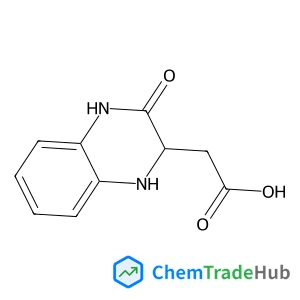
(3-Oxo-1,2,3,4-tetrahydro-2-quinoxalinyl)acetic acid
CAS Number:
136584-14-0
Molecular Formula:
C10H10N2O3
![Pyrazolo[1,5-a]pyridine-3-carbothioamide structure](https://static.chemtradehub.com/structs/885/885275-44-5-aae0.webp "Pyrazolo[1,5-a]pyridine-3-carbothioamide structure")

Recommended Suppliers








Disclaimer
This page provides academic journal information for reference and research purposes only. We are not affiliated with any journal publishers and do not handle publication submissions. For publication-related inquiries, please contact the respective journal publishers directly.
If you notice any inaccuracies in the information displayed, please contact us at support@chemtradehub.com. We will promptly review and address your concerns.