












A novel DNA tetrahedron–hairpin probe for in situ “off–on” fluorescence imaging of intracellular telomerase activity
Literature Information
Publication Date
2016-03-08
DOI
10.1039/C6AN00241B
Impact Factor
4.616
Authors
Qiu-Mei Feng, Meng-Jiao Zhu, Ting-Ting Zhang, Jing-Juan Xu, Hong-Yuan Chen
View Original
Abstract
A novel three-dimensionally structured DNA probe is reported to realize in situ “off–on” imaging of intracellular telomerase activity. The probe consists of a DNA tetrahedron and a hairpin DNA on one of the vertices of the DNA tetrahedron. It is composed of four modified DNA segments: S1–Au nanoparticle (NP) inserting a telomerase strand primer (TSP) and S2–S4, three Cy5 dye modified DNA segments. Fluorescence of Cy5 at three vertices of the DNA tetrahedron is quenched by the Au NP at the other vertex due to the effective fluorescence resonance energy transfer (FRET) (“off” state). When the probe meets telomerase, the hairpin structure changes to rod-like through complementary hybridization with the telomerase-triggered stem elongation product, resulting in a large distance between the Au NP and Cy5 and the recovery of Cy5 fluorescence (“on” state). The molar ratio of 3 : 1 between the reporter (Cy5) and the target related TSP makes the probe show high sensitivity and recovery efficiency of Cy5 in the presence of telomerase extracted from HeLa cells. Given the functional and compact nanostructure, the mechanically stable and noncytotoxic nature of the DNA tetrahedron, this FRET-based probe provides more opportunities for biosensing, molecular imaging and drug delivery.
Related Literature
Electron localization in niobium doped CaMnO3 due to the energy difference of electronic states of Mn and Nb
Yi Li, Jian Liu, Ji-Chao Li, Yu-Fei Chen, Xin-Miao Zhang, Xue-Jin Wang, Fu-Ning Wang, Wen-Bin Su, Lan-Ling Zhao, Chun-Lei Wang
2018-07-23
Paper
DOI: 10.1039/C8CP02783H
A honeycomb-like monolayer of HfO2 and the calculation of static dielectric constant eliminating the effect of vacuum spacing
Junhui Weng, Shang-Peng Gao
2018-09-17
Paper
DOI: 10.1039/C8CP04743J
Dynamic micellar oligomers of amyloid beta peptides play a crucial role in their aggregation mechanisms
Bertrand Morel, Maria Paz Carrasco, Samuel Jurado, Carmen Marco, Francisco Conejero-Lara
2018-07-23
Paper
DOI: 10.1039/C8CP02685H
Catalytic CO oxidation on B-doped and BN co-doped penta-graphene: a computational study
Ranganathan Krishnan, Shiuan-Yau Wu, Hsin-Tsung Chen
2018-09-20
Paper
DOI: 10.1039/C8CP04745F
Noble gas hydrides in the triplet state: HNgCCO+ (Ng = He, Ne, Ar, Kr, and Xe)
Arijit Gupta, Rishabh Gupta
2018-07-13
Paper
DOI: 10.1039/C8CP03516D
In-plane thermal transport in black phosphorene/graphene layered heterostructures: a molecular dynamics study
Ting Liang, Ping Zhang, Peng Yuan, Siping Zhai
2018-08-06
Paper
DOI: 10.1039/C8CP02831A
Laser and electron beam-induced formation of Ag/Cr structures on Ag2CrO4
Lemos P. S., Silva G. S., Roca R. A., Assis M., Torres-Mendieta R., Beltrán-Mir H., Mínguez-Vega G., Cordoncillo E., Andrés J., Longo E.
2019-02-07
Paper
DOI: 10.1039/C8CP07263A
Significant effects of vibrational excitation of reactant in K + H2 → H + KH reaction based on a new neural network potential energy surface
Jiuchuang Yuan, Zhixin Duan, Shufen Wang, Jianyong Liu, Keli Han
2018-07-16
Paper
DOI: 10.1039/C8CP03310B
Tannic acid capped gold nanoparticles: capping agent chemistry controls the redox activity
Alex L. Suherman, Giorgia Zampardi, Hatem M. A. Amin, Neil P. Young, Richard G. Compton
2019-02-04
Paper
DOI: 10.1039/C9CP00056A
You might also like
Compound Q&A
What precautions should be taken when handling 4-(2-Furylmethyl)thiomorpholine 1,1-dioxide (CAS: 79206-94-3)?
When handling 4-(2-Furylmethyl)thiomorpholine 1,1-dioxide (CAS: 79206-94-3), it ...
79206-94-34-(2-Furylmethyl)thi...
Compound Q&A
What precautions should be taken when handling 4-Chloro-N-[2-(4-morpholinyl)ethyl]benzamide (CAS: 71320-77-9)?
When handling 4-Chloro-N-[2-(4-morpholinyl)ethyl]benzamide (CAS: 71320-77-9), it...
71320-77-94-Chloro-N-[2-(4-mor...
Compound Q&A
How should waste containing 2-[2-(2-Methoxyethoxy)ethoxy]ethyl 4-methylbenzenesulfonate (CAS: 62921-74-8) be handled?
Waste containing this compound (CAS: 62921-74-8) should be handled according to ...
62921-74-82-[2-(2-Methoxyethox...
Compound Q&A
How should waste containing (S)-Methyl 2-amino-3-cyclohexylpropanoate be handled?
Waste containing (S)-Methyl 2-amino-3-cyclohexylpropanoate should be collected i...
40056-18-6(S)-Methyl 2-amino-3...
Compound Q&A
How is 5-({4-[(2S,4R)-4-Hydroxy-2-methyltetrahydro-2H-pyran-4-yl]-2-thienyl}sulfanyl)-1-methyl-1,3-dihydro-2H-indol-2-one (CAS: 166882-70-8) typically synthesized?
This compound can be synthesized using a multi-step process involving the conjug...
166882-70-85-({4-[(2S,4R)-4-Hyd...
Compound Q&A
Are there alternatives to (2E)-3-(3,4-Dichlorophenyl)acrylic acid (CAS: 7312-27-8) in synthesis?
There are several alternatives to (2E)-3-(3,4-Dichlorophenyl)acrylic acid in syn...
7312-27-8(2E)-3-(3,4-Dichloro...
Compound Q&A
How should Ethyl 6-(2-nitrophenyl)imidazo[2,1-b][1,3]thiazole-3-carboxylate (CAS: 925437-84-9) be stored?
Ethyl 6-(2-nitrophenyl)imidazo[2,1-b][1,3]thiazole-3-carboxylate (CAS: 925437-84...
925437-84-9Ethyl 6-(2-nitrophen...
Compound Q&A
How should waste containing 2-(1,3-Thiazol-2-yl)ethanamine (CAS: 18453-07-1) be handled?
Waste containing 2-(1,3-Thiazol-2-yl)ethanamine (CAS: 18453-07-1) should be coll...
18453-07-12-(1,3-Thiazol-2-yl)...
Compound Q&A
How is Methyl 5-iodo-2-methylbenzoate (CAS: 103440-54-6) typically synthesized?
Methyl 5-iodo-2-methylbenzoate can be synthesized through the iodination of meth...
103440-54-6Methyl 5-iodo-2-meth...
Compound Q&A
How is 5-Chloro[1,2,4]triazolo[1,5-a]pyridine (CAS: 1427399-34-5) typically synthesized?
5-Chloro[1,2,4]triazolo[1,5-a]pyridine is commonly synthesized via the condensat...
1427399-34-55-Chloro[1,2,4]triaz...
Source Journal
Analyst

CiteScore:
7.8
Self-citation Rate:
5.6%
Articles per Year:
653
Analyst publishes analytical and bioanalytical research that reports premier fundamental discoveries and inventions, and the applications of those discoveries, unconfined by traditional discipline barriers.
Recommended Compounds

2-(4-Chlorophenyl)-4-(dimethylamino)-2-(2-(dimethylamino)ethyl)butanenitrile
CAS Number:
1246816-57-8
Molecular Formula:
C16H24ClN3
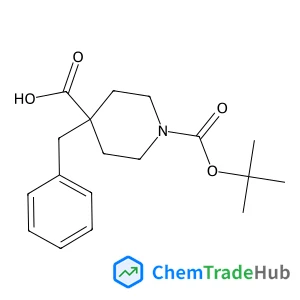
4-Benzyl-1-(tert-butoxycarbonyl)piperidine-4-carboxylic acid
CAS Number:
170838-87-6
Molecular Formula:
C18H25NO4

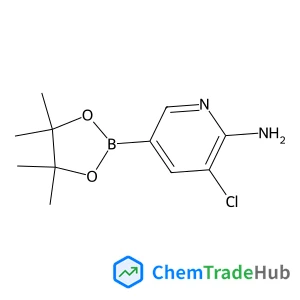
3-Chloro-5-(4,4,5,5-tetramethyl-1,3,2-dioxaborolan-2-yl)-2-pyridinamine
CAS Number:
1032758-99-8
Molecular Formula:
C11H16BClN2O2
Recommended Suppliers






Disclaimer
This page provides academic journal information for reference and research purposes only. We are not affiliated with any journal publishers and do not handle publication submissions. For publication-related inquiries, please contact the respective journal publishers directly.
If you notice any inaccuracies in the information displayed, please contact us at support@chemtradehub.com. We will promptly review and address your concerns.