












Significant effects of vibrational excitation of reactant in K + H2 → H + KH reaction based on a new neural network potential energy surface
Literature Information
Publication Date
2018-07-16
DOI
10.1039/C8CP03310B
Impact Factor
3.676
Authors
Jiuchuang Yuan, Zhixin Duan, Shufen Wang, Jianyong Liu, Keli Han
View Original
Abstract
The study of K + H2 collision has a long experimental history, but there have been few theoretical studies due to lack of a global potential energy surface (PES). In this study, a new global PES for the ground state of KH2 system was constructed based on numerous ab initio points, using the permutation invariant polynomial neural network method. The root mean square error (RMSE) of PES is very small (5.64 meV). On the new PES, time-dependent quantum wave packet (TDWP) and quasiclassical trajectory (QCT) calculations were carried out to study the dynamics of the K(2S) + H2(X1Σ+g) → H(2S) + KH(X1Σ+) reaction. Dynamics results show that (i) the K + H2(v = 0) → H + KH reaction scarcely occurred, (ii) the K + H2(v = 1) → H + KH reaction took place in small quantities, and (iii) the K + H2(v = 2) → H + KH reaction occurred in large quantities. This indicates that vibrational energy of the reactant is significantly more effective at promoting the reaction than the translational energy. This characteristic stems from a major physical model in reactive collisions: the vibrationally excited H2 molecule and K atom collide first in a T-geometric configuration and the vibrational motion of the H2 molecule helps separate the two H atoms a large distance after the collision. At a large H–H distance, a broad well exists on the PES, so the heavy K atom could pull back the light H atom to initiate the reaction. Similar to the reactive channel, vibrational excitation of the reactant also has a significant effect on the collision-induced dissociation channel.
Related Literature
O–H bond activation of β,γ-unsaturated oximes via hydrogen atom transfer (HAT) and photoredox dual catalysis
Chen Zhu, Xiangyu Chen, Huifeng Yue, Tengfei Ji, Yiqiao Ma, Yuanyuan Cao, Rajesh Kancherla, Magnus Rueping
2023-11-30
Edge Article
DOI: 10.1039/D3SC04410F
Manipulating the crystal plane angle within the primary particle arrangement for the radial ordered structure in a Ni-rich cathode
Ting Chen, Chuyao Wen, Chen Wu, Lang Qiu, Zhenguo Wu, Jiayang Li, Yanfang Zhu, Haoyu Li, Qingquan Kong, Yang Song, Fang Wan, Mingzhe Chen, Ismael Saadoune, Benhe Zhong, Shixue Dou, Yao Xiao
2023-11-27
Edge Article
DOI: 10.1039/D3SC05461F
Cobalt-catalyzed decarboxylative difluoroalkylation of nitrophenylacetic acid salts
Ebbin Joseph, Ian Smith, Jon A. Tunge
2023-11-16
Edge Article
DOI: 10.1039/D3SC05583C
A copper(ii) peptide helicate selectively cleaves DNA replication foci in mammalian cells
Ana Alcalde-Ordóñez, Natalia Barreiro-Piñeiro, Bríonna McGorman, Jacobo Gómez-González, David Bouzada, Francisco Rivadulla, M. Eugenio Vázquez, Andrew Kellett, José Martínez-Costas, Miguel Vázquez López
2023-10-27
Edge Article
DOI: 10.1039/D3SC03303A
Native mass spectrometry of proteoliposomes containing integral and peripheral membrane proteins
Yun Zhu, Sangho D. Yun, Tianqi Zhang, Jing-Yuan Chang, Lauren Stover, Arthur Laganowsky
2023-11-21
Edge Article
DOI: 10.1039/D3SC04938H
A salt-concentrated electrolyte for aqueous ammonium-ion hybrid batteries
Jianming Meng, Jing Wang, Peng Hei, Chang Liu, Mengxue Li, Yulai Lin
2023-11-29
Edge Article
DOI: 10.1039/D3SC05318K
1,2-Disubstituted bicyclo[2.1.1]hexanes as saturated bioisosteres of ortho-substituted benzene
Aleksandr Denisenko, Pavel Garbuz, Yelyzaveta Makovetska, Dmytro Lesyk, Rodion Korzh, Iryna V. Sadkova, Pavel K. Mykhailiuk
2023-10-27
Edge Article
DOI: 10.1039/D3SC05121H
Advances in CO2 activation by frustrated Lewis pairs: from stoichiometric to catalytic reactions
Yara van Ingen, Tribani Boruah, Adam McLauchlan, Thomas Wirth, Rebecca L. Melen
2023-11-09
Review Article
DOI: 10.1039/D3SC03907B
You might also like
Compound Q&A
What precautions should be taken when handling 4-(2-Furylmethyl)thiomorpholine 1,1-dioxide (CAS: 79206-94-3)?
When handling 4-(2-Furylmethyl)thiomorpholine 1,1-dioxide (CAS: 79206-94-3), it ...
79206-94-34-(2-Furylmethyl)thi...
Compound Q&A
What precautions should be taken when handling 4-Chloro-N-[2-(4-morpholinyl)ethyl]benzamide (CAS: 71320-77-9)?
When handling 4-Chloro-N-[2-(4-morpholinyl)ethyl]benzamide (CAS: 71320-77-9), it...
71320-77-94-Chloro-N-[2-(4-mor...
Compound Q&A
How should waste containing 2-[2-(2-Methoxyethoxy)ethoxy]ethyl 4-methylbenzenesulfonate (CAS: 62921-74-8) be handled?
Waste containing this compound (CAS: 62921-74-8) should be handled according to ...
62921-74-82-[2-(2-Methoxyethox...
Compound Q&A
How should waste containing (S)-Methyl 2-amino-3-cyclohexylpropanoate be handled?
Waste containing (S)-Methyl 2-amino-3-cyclohexylpropanoate should be collected i...
40056-18-6(S)-Methyl 2-amino-3...
Compound Q&A
How is 5-({4-[(2S,4R)-4-Hydroxy-2-methyltetrahydro-2H-pyran-4-yl]-2-thienyl}sulfanyl)-1-methyl-1,3-dihydro-2H-indol-2-one (CAS: 166882-70-8) typically synthesized?
This compound can be synthesized using a multi-step process involving the conjug...
166882-70-85-({4-[(2S,4R)-4-Hyd...
Compound Q&A
Are there alternatives to (2E)-3-(3,4-Dichlorophenyl)acrylic acid (CAS: 7312-27-8) in synthesis?
There are several alternatives to (2E)-3-(3,4-Dichlorophenyl)acrylic acid in syn...
7312-27-8(2E)-3-(3,4-Dichloro...
Compound Q&A
How should Ethyl 6-(2-nitrophenyl)imidazo[2,1-b][1,3]thiazole-3-carboxylate (CAS: 925437-84-9) be stored?
Ethyl 6-(2-nitrophenyl)imidazo[2,1-b][1,3]thiazole-3-carboxylate (CAS: 925437-84...
925437-84-9Ethyl 6-(2-nitrophen...
Compound Q&A
How should waste containing 2-(1,3-Thiazol-2-yl)ethanamine (CAS: 18453-07-1) be handled?
Waste containing 2-(1,3-Thiazol-2-yl)ethanamine (CAS: 18453-07-1) should be coll...
18453-07-12-(1,3-Thiazol-2-yl)...
Compound Q&A
How is Methyl 5-iodo-2-methylbenzoate (CAS: 103440-54-6) typically synthesized?
Methyl 5-iodo-2-methylbenzoate can be synthesized through the iodination of meth...
103440-54-6Methyl 5-iodo-2-meth...
Compound Q&A
How is 5-Chloro[1,2,4]triazolo[1,5-a]pyridine (CAS: 1427399-34-5) typically synthesized?
5-Chloro[1,2,4]triazolo[1,5-a]pyridine is commonly synthesized via the condensat...
1427399-34-55-Chloro[1,2,4]triaz...
Source Journal
Physical Chemistry Chemical Physics

CiteScore:
5.5
Self-citation Rate:
10.3%
Articles per Year:
3036
Physical Chemistry Chemical Physics (PCCP) is an international journal co-owned by 19 physical chemistry and physics societies from around the world. This journal publishes original, cutting-edge research in physical chemistry, chemical physics and biophysical chemistry. To be suitable for publication in PCCP, articles must include significant innovation and/or insight into physical chemistry; this is the most important criterion that reviewers and Editors will judge against when evaluating submissions. The journal has a broad scope and welcomes contributions spanning experiment, theory, computation and data science. Topical coverage includes spectroscopy, dynamics, kinetics, statistical mechanics, thermodynamics, electrochemistry, catalysis, surface science, quantum mechanics, quantum computing and machine learning. Interdisciplinary research areas such as polymers and soft matter, materials, nanoscience, energy, surfaces/interfaces, and biophysical chemistry are welcomed if they demonstrate significant innovation and/or insight into physical chemistry. Joined experimental/theoretical studies are particularly appreciated when complementary and based on up-to-date approaches.
Recommended Compounds

![2,6-Di(thiophen-2-yl)dithieno[3,2-b:2',3'-d]thiophene structure](https://static.chemtradehub.com/structs/910/910788-24-8-5b70.webp "2,6-Di(thiophen-2-yl)dithieno[3,2-b:2',3'-d]thiophene structure")
2,6-Di(thiophen-2-yl)dithieno[3,2-b:2',3'-d]thiophene
CAS Number:
910788-24-8
Molecular Formula:
C16H8S5
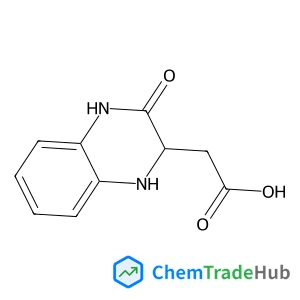
(3-Oxo-1,2,3,4-tetrahydro-2-quinoxalinyl)acetic acid
CAS Number:
136584-14-0
Molecular Formula:
C10H10N2O3
Recommended Suppliers





Disclaimer
This page provides academic journal information for reference and research purposes only. We are not affiliated with any journal publishers and do not handle publication submissions. For publication-related inquiries, please contact the respective journal publishers directly.
If you notice any inaccuracies in the information displayed, please contact us at support@chemtradehub.com. We will promptly review and address your concerns.