


Rhodium catalysed conversion of carbenes into ketenes and ketene imines using PNN pincer complexes
Literature Information
Publication Date
2015-10-15
DOI
10.1039/C5QO00287G
Impact Factor
5.281
Authors
Z. Tang, S. Mandal, N. D. Paul, M. Lutz, P. Li, J. I. van der Vlugt, B. de Bruin
View Original
Abstract
Ketene synthesis involving catalytic carbonylation of carbenes is an interesting alternative to traditional synthetic protocols, offering milder conditions to diversified products. Analogous catalytic ketene imine production from carbenes and isocyanides is also a promising reaction. However, both methods are underdeveloped. Rhodium carbonyl complexes B and E, based on (6-(phosphinomethyl)pyridin-2-yl)methan-sec-amine type PNN ligand scaffolds, reveal good catalytic activities in ketene and ketene imine production using ethyl diazoacetate (EDA, 1) or sodium 2-benzylidene-1-tosylhydrazin-1-ide (5) as the carbene precursors, as demonstrated by in situ amide/imidamide and β-lactam synthesis. DFT calculations suggest that diazo activation is the rate-determining step and that NH-deprotonation of the ligand produces a more active rhodium complex. The ketene formation step likely proceeds via an outer-sphere CO insertion mechanism. Subsequent stepwise and concerted [2 + 2] cyclization mechanisms have comparable barriers. The complexes are the first rhodium catalysts reported for catalytic ketene/ketene imine production from carbenoids. The higher affinity of rhodium for binding ketene or ketene imine intermediates as compared to other reported metal catalysts (i.e. Pd, Co) may provide opportunities for future enantioselective reactions when using chiral ligands.
Recommended Journals

Journal of the Indian Institute of Science

Critical Reviews in Solid State and Materials Sciences

Journal of Asian Natural Products Research

Journal of Chemical Sciences

Chinese Journal of Chemistry

Electroanalysis

Bioorganic & Medicinal Chemistry Letters

Acta Metallurgica Sinica-English Letters

Biocatalysis and Biotransformation

Colloid Journal
Related Literature
Radical-triggered base-free 1,3-C → C migrations: chemodivergent synthesis of cyclic imines from N-allyl enamines
Baihui Zheng, Junsheng Zhi, Nan Wang, Dandan Zhang, Hisashi Shimakoshi, Yifei Li, Qun Liu, Ling Pan
2023-12-19
Research Article
DOI: 10.1039/D3QO01849K
Atroposelective synthesis of N–N axially chiral pyrrolyl(aza)-quinolinone by de novo ring formation
Qiwen Huang, Yanze Li, Cun Yang, Wendan Wu, Jingjie Hai, Xinyao Li
2023-12-04
Research Article
DOI: 10.1039/D3QO01877F
Electrochemical selenocyclization of 2-ethynylanilines with diselenides: facile and efficient access to 3-selenylindoles
Mingyu Zhang, Zhenyu Luo, Xinye Tang, Linmin Yu, Jinglin Pei, Junlei Wang, Caicai Lu
2023-10-25
Paper
DOI: 10.1039/D3OB01502E
A deconstruction–reconstruction strategy to access 1-naphthol derivatives: application to the synthesis of aristolactam scaffolds
Jeong Min Bak, Moonyeong Song, Inji Shin, Hee Nam Lim
2023-10-27
Paper
DOI: 10.1039/D3OB01603J
A catalyst-free cross-coupling of isocyanates and triarylboranes for secondary amide synthesis
You-Wei Wu, Mu-Xiang Chen, Yan Li, Lu-Min Hu, Lili Zhao, Zhenhua Jia, Xuefei Zhao, Xu-Hong Hu
2023-11-23
Research Article
DOI: 10.1039/D3QO01617J
A de novo synthesis of the bisindole alkaloid geissolosimine: collective synthesis of geissoschizoline, akuammicine, (16S)-deshydroxymethylstemmadenine and Aspidospermatan alkaloids
Jiahang Yan, Yanxia Zhen, Pengyan Wang, Yimeng Han, Huanhuan Zou, Junhan Chen, Weigang He
2023-12-04
Research Article
DOI: 10.1039/D3QO01898A
An umpolung strategy for chemoselective metal-free [4 + 2] annulation of azlactones: access to tetrahydro-β-carbolin 1,3-diketone frameworks
Meng Wang, Ze-Hong Zheng, Mu-Qiu Chen, Gu Zhan, Jie Wang, Qian-Qian Yang, Wei Huang
2023-12-12
Research Article
DOI: 10.1039/D3QO01184D
Practical synthesis and divergent optimization of halichonine B for the discovery of novel pharmaceutical leads
Shengxin Sun, Juan Yang, Shengkun Li
2023-12-04
Research Article
DOI: 10.1039/D3QO01816D
Solvent- and catalyst-dependent palladium-catalyzed switchable chemodivergent cascade cyclizations of trimethylenemethanes with ortho-formyl cinnamates
Shuyuan Liang, Liangjian Tang, Ying Chen, Xueqiu Huang, Xueqin Wei
2023-11-30
Research Article
DOI: 10.1039/D3QO01525D
You might also like
Compound Q&A
How should 2-Methylbenzene-1,4-diamine dihydrochloride (CAS: 615-45-2) be stored?
2-Methylbenzene-1,4-diamine dihydrochloride (CAS: 615-45-2) should be stored in ...
615-45-22-Methylbenzene-1,4-...
Compound Q&A
Is (1S,4S)-2,5-Diazabicyclo[2.2.1]heptane dihydrobromide (CAS: 132747-20-7) safe?
(1S,4S)-2,5-Diazabicyclo[2.2.1]heptane dihydrobromide is generally considered sa...
132747-20-7(1S,4S)-2,5-Diazabic...
Compound Q&A
What industries use (6-Chloropyridazin-3-YL)methanamine (CAS: 871826-15-2)?
(6-Chloropyridazin-3-YL)methanamine finds applications in the pharmaceutical ind...
871826-15-2(6-Chloropyridazin-3...
Compound Q&A
What are the main uses of 2-Fluoro-3-methylphenol (CAS: 77772-72-6)?
2-Fluoro-3-methylphenol is primarily used in the synthesis of pharmaceuticals, p...
77772-72-62-Fluoro-3-methylphe...
Compound Q&A
What precautions should be taken when handling 3-Methoxy-4-nitrobenzonitrile (CAS: 177476-75-4)?
When handling 3-Methoxy-4-nitrobenzonitrile, it is important to wear appropriate...
177476-75-43-Methoxy-4-nitroben...
Compound Q&A
What precautions should be taken when handling 1,3-Oxazolo[4,5-b]pyridine-2(3H)-thione (CAS: 211949-57-4)?
When handling 1,3-Oxazolo[4,5-b]pyridine-2(3H)-thione (CAS: 211949-57-4), it is ...
211949-57-4[1,3]Oxazolo[4,5-b]p...
Compound Q&A
What regulatory guidelines apply to 4-Ethynylbenzamide (CAS: 90347-86-7)?
4-Ethynylbenzamide (CAS: 90347-86-7) falls under various regulatory guidelines i...
90347-86-74-Ethynylbenzamide
Compound Q&A
What are the main uses of 3-(2-Ethylphenyl)-2-thioxo-4-imidazolidinone (CAS: 186822-57-1)?
3-(2-Ethylphenyl)-2-thioxo-4-imidazolidinone is primarily used as an intermediat...
186822-57-13-(2-Ethylphenyl)-2-...
Compound Q&A
What is (2-Fluoro-6-methoxyphenyl)acetic acid (CAS: 500912-19-6)?
(2-Fluoro-6-methoxyphenyl)acetic acid, also known as 4-fluoro-3-methoxybenzoic a...
500912-19-6(2-Fluoro-6-methoxyp...
Compound Q&A
What is the market or research trend for 2-[4-(Hydroxymethyl)phenoxy]ethanol (CAS: 102196-18-9)?
Market trends for 2-[4-(Hydroxymethyl)phenoxy]ethanol (CAS: 102196-18-9) indicat...
102196-18-92-[4-(Hydroxymethyl)...
Source Journal
Organic Chemistry Frontiers

CiteScore:
7.8
Self-citation Rate:
8.7%
Articles per Year:
724
Organic Chemistry Frontiers publishes high-quality research from across organic chemistry. Emphases are placed on studies that make significant contributions to the field of organic chemistry by reporting either new or significantly improved protocols or methodologies. Topics include, but are not limited to the following: Organic synthesis Development of synthetic methodologies Catalysis Natural products Functional organic materials Supramolecular and macromolecular chemistry Physical and computational organic chemistry
Recommended Compounds

(2S)-2-(Fluoromethyl)piperidine hydrochloride (1:1)
CAS Number:
886216-73-5
Molecular Formula:
C6H13ClFN
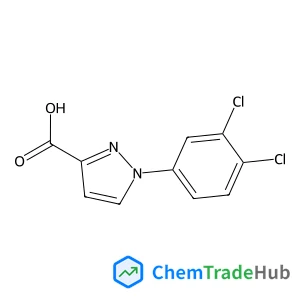
1-(3,4-Dichlorophenyl)-1H-pyrazole-3-carboxylic acid
CAS Number:
1152949-12-6
Molecular Formula:
C10H6Cl2N2O2
![2-Methylbenzo[h]quinoline structure](https://static.chemtradehub.com/structs/605/605-88-9-ac43.webp "2-Methylbenzo[h]quinoline structure")
Recommended Suppliers






Disclaimer
This page provides academic journal information for reference and research purposes only. We are not affiliated with any journal publishers and do not handle publication submissions. For publication-related inquiries, please contact the respective journal publishers directly.
If you notice any inaccuracies in the information displayed, please contact us at support@chemtradehub.com. We will promptly review and address your concerns.