


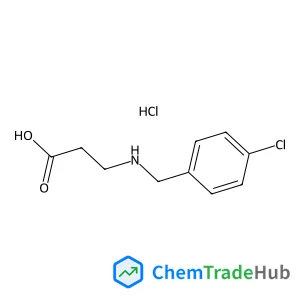
N-(4-Chlorobenzyl)-beta-alanine hydrochloride (1:1)
CAS Number:
1172479-10-5
Molecular Formula:
C10H13Cl2NO2
Meng Wang, Ze-Hong Zheng, Mu-Qiu Chen, Gu Zhan, Jie Wang, Qian-Qian Yang, Wei Huang
A series of tetrahydro-β-carbolin 1,3-diketone frameworks can be synthesized under mild conditions utilizing azlactones and indole-2-ylamides. This highly efficient [4 + 2] annulation further broadens the application of azlactones derived from amino acids via the umpolung strategy in organic synthesis, featuring good compatibility. Furthermore, control experiments indicate that the addition of the oxidant DDQ could complete the homocoupling of azlactones without a metal mediator. Moreover, DFT computational calculations were performed to further elucidate the chemoselectivity of the reaction and a plausible mechanism is proposed to explain the reaction process.

Lab on a Chip

Angewandte Chemie International Edition

Environmental Toxicology and Pharmacology

Photochemical & Photobiological Sciences

Journal of Enzyme inhibition and Medicinal Chemistry

Faraday Discussions

Current Pharmaceutical Biotechnology

Advanced Engineering Materials

Foundations of Chemistry

European Journal of Organic Chemistry
Helga Dögg Flosadóttir, Hannes Jónsson, Snorri Th. Sigurdsson, Oddur Ingólfsson
DOI: 10.1039/C1CP21298B
I. D. Seymour, A. Chroneos, J. A. Kilner, R. W. Grimes
DOI: 10.1039/C1CP21471C
Anmin Zheng, Shing-Jong Huang, Feng Deng
DOI: 10.1039/C1CP20417C
Pedro B. Coto, Luis Serrano-Andrés, Thomas Gustavsson, Takashige Fujiwara, Edward C. Lim
DOI: 10.1039/C1CP21089K
Bounphanh Tonpheng, Junchun Yu, Ove Andersson
DOI: 10.1039/C1CP20785G
Andrea Sabatié-Gogova, Eric Renault, Gilles Montavon, Nicolas Galland
DOI: 10.1039/C1CP20512A
V. Brites, K. Franzreb, J. N. Harvey, S. G. Sayres, M. W. Ross, D. E. Blumling, A. W. Castleman, Jr., M. Hochlaf
DOI: 10.1039/C1CP21566C
Yoshinobu Akinaga, Jaewoon Jung, Seiichiro Ten-no
DOI: 10.1039/C1CP21001G
Andrew Das Arulsamy, Zlatko Kregar, Kristina Eleršič, Martina Modic, Uma Shankar Subramani
DOI: 10.1039/C1CP20138G
Kelei Zhuo, Yujuan Chen, Jing Chen, Guangyue Bai, Jianji Wang
DOI: 10.1039/C1CP20948E
2-Methylbenzene-1,4-diamine dihydrochloride (CAS: 615-45-2) should be stored in ...
(1S,4S)-2,5-Diazabicyclo[2.2.1]heptane dihydrobromide is generally considered sa...
(6-Chloropyridazin-3-YL)methanamine finds applications in the pharmaceutical ind...
2-Fluoro-3-methylphenol is primarily used in the synthesis of pharmaceuticals, p...
When handling 3-Methoxy-4-nitrobenzonitrile, it is important to wear appropriate...
When handling 1,3-Oxazolo[4,5-b]pyridine-2(3H)-thione (CAS: 211949-57-4), it is ...
4-Ethynylbenzamide (CAS: 90347-86-7) falls under various regulatory guidelines i...
3-(2-Ethylphenyl)-2-thioxo-4-imidazolidinone is primarily used as an intermediat...
(2-Fluoro-6-methoxyphenyl)acetic acid, also known as 4-fluoro-3-methoxybenzoic a...
Market trends for 2-[4-(Hydroxymethyl)phenoxy]ethanol (CAS: 102196-18-9) indicat...

Organic Chemistry Frontiers publishes high-quality research from across organic chemistry. Emphases are placed on studies that make significant contributions to the field of organic chemistry by reporting either new or significantly improved protocols or methodologies. Topics include, but are not limited to the following: Organic synthesis Development of synthetic methodologies Catalysis Natural products Functional organic materials Supramolecular and macromolecular chemistry Physical and computational organic chemistry
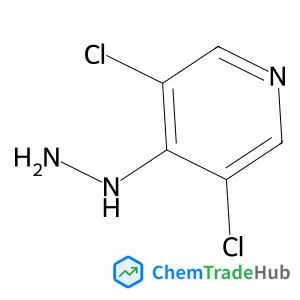
![[(5-Methyl-1,3,4-thiadiazol-2-yl)sulfanyl]acetic acid structure](https://static.chemtradehub.com/structs/509/50918-26-8-4ce8.webp "[(5-Methyl-1,3,4-thiadiazol-2-yl)sulfanyl]acetic acid structure")
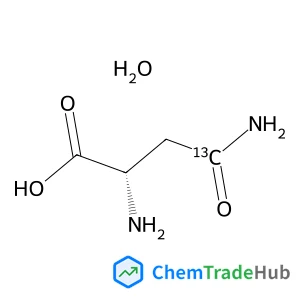
![2-(7,7-Difluorobicyclo[4.1.0]hept-1-yl)ethanamine structure](https://static.chemtradehub.com/structs/209/2098065-08-6-ff24.webp "2-(7,7-Difluorobicyclo[4.1.0]hept-1-yl)ethanamine structure")




