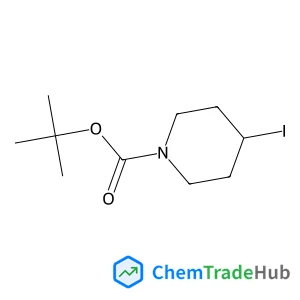
2-Methyl-2-propanyl 4-iodo-1-piperidinecarboxylate
CAS Number:
301673-14-3
Molecular Formula:
C10H18INO2
Xiu-Qin Dong, Qingyang Zhao, Caiyou Chen, Xumu Zhang
Asymmetric catalysis has grown rapidly and made considerable progress in the last few decades, but there still remain significantly unachievable reactions through either organocatalysis or transition-metal catalysis alone. The concept of combination of transition-metal catalysis with organocatalysis emerged as a powerful strategy for developing asymmetric catalysis, and has attracted great attention. In order to avoid the incompatibility existing in catalysts, substrates, intermediates and solvents through combining transition-metal catalysis and organocatalysis, it is urgently necessary to develop a new catalytic strategy to resolve these problems. Therefore, we are devoted to designing a series of novel bifunctional catalysts based upon the synergistic activation strategy via cooperating transition metal-catalysis and organocatalysis through a covalent bond forming a bifunctional molecule. In this review, this momentous strategy is illustrated with several recent outstanding examples and prospective promising applications, with the aim of elaborating the synthetic utilities and potentialities of this concept as a powerful tool in organic synthesis.
Ville R. I. Kaila, Robert Send, Dage Sundholm
DOI: 10.1039/C3CP00058C
George Opletal, Rong P. Wang, Salvy P. Russo
DOI: 10.1039/C3CP43364A
Kateryna Sykina, Guang Yang, Claire Roiland, Laurent Le Pollès, Eric Le Fur, Chris J. Pickard, Bruno Bureau, Eric Furet
DOI: 10.1039/C3CP41689E
Shi Yin, Zhechen Wang, Elliot R. Bernstein
DOI: 10.1039/C3CP50183C
Mahasin Alam Sk, Man-Fai Ng, Lin Huang, Kok Hwa Lim
DOI: 10.1039/C3CP43530J
Stephen J. Jenkins
DOI: 10.1039/C3CP42658K
Jingying Shi, Donge Wang, Can Li
DOI: 10.1039/C3CP50295C
Samantha G. Rosenberg, Michael Barclay, D. Howard Fairbrother
DOI: 10.1039/C3CP43902J
Zheng Wang, Jungang Hou, Chao Yang, Shuqiang Jiao, Kai Huang, Hongmin Zhu
DOI: 10.1039/C2CP44326K
R. Moradi, S. A. Sebt, Roya Sadeghi, F. Karimi, A. Bahari, H. Arabi
DOI: 10.1039/C3CP00033H
Waste containing (6-Bromo-2-naphthyl)oxy](dimethyl)(2-methyl-2-propanyl)silane (...
7-Fluoro-4-isoquinolinecarboxylic acid can be synthesized via a multi-step proce...
2,3,5,6-Tetrabromothieno[3,2-b]thiophene is a crystalline compound with a high m...
1-[4-(Benzylamino)-7,8-dihydro-5H-pyrano[4,3-d]pyrimidin-2-yl]-2-methyl-1H-indol...
The market for imidazo[5,1-d]-1,2,3,5-tetrazine-8-carboxylic acid, 3,4-dihydro-3...
3-(Triisopropylsilyl)propiolaldehyde is a synthetic organic compound with the CA...
6-Nitro-2H-1,4-benzoxazin-3(4H)-one (CAS: 81721-87-1) is subject to various regu...
Waste containing (3-Fluorophenyl)(4-{[(2-methyl-2-propanyl)oxy]carbonyl}-1-piper...
N,N'-4,4'-Biphenyldiyldiisonicotinamide is a white crystalline solid with a mole...
6-Bromo-8-fluoro-2-quinazolinol is primarily used in the pharmaceutical industry...

Organic Chemistry Frontiers publishes high-quality research from across organic chemistry. Emphases are placed on studies that make significant contributions to the field of organic chemistry by reporting either new or significantly improved protocols or methodologies. Topics include, but are not limited to the following: Organic synthesis Development of synthetic methodologies Catalysis Natural products Functional organic materials Supramolecular and macromolecular chemistry Physical and computational organic chemistry
![N-[(E)-Phenylmethylene]benzenesulfonamide structure](https://static.chemtradehub.com/structs/139/13909-34-7-8167.webp "N-[(E)-Phenylmethylene]benzenesulfonamide structure")