












Palladium-catalyzed oxidative direct arylation polymerization (Oxi-DArP) of an ester-functionalized thiophene
Literature Information
Publication Date
2016-01-19
DOI
10.1039/C5PY01973G
Impact Factor
5.582
Authors
Nemal S. Gobalasingham, Sangtaik Noh, Barry C. Thompson
View Original
Abstract
Poly(hexyl thiophene-3-carboxylate), an alkyl ester side-chain functionalized thiophene polymer herein referred to as poly(3-hexylesterthiophene) (P3HET), is synthesized via a novel palladium-catalyzed oxidative dehydrogenative polycondensation method. The ester promotes the generation of high molecular weight polymers as a directing group, enabling direct hetero C–H/C–H coupling and bypassing the functionalization requirements of traditional direct arylation (halogenation) and transition metal-catalyzed cross-coupling (halogenation and metalation) methods. Despite lacking functional groups in the 2- and 5-position, these unique reaction conditions achieve good regioregularity (around 85%) through the utilization of a phosphine ligand. To evaluate this new polymerization method, poly(hexyl thiophene-3-carboxlates) and poly(3-hexylthiophene) polymers are synthesized via Oxi-DArP, traditional DArP, and Stille polycondensation and subsequently characterized by electrochemical HOMO determination, UV-Vis, GIXRD, and space-charge limited current (SCLC) hole mobilities. High quality polymers via Oxi-DArP were only acquired when the ester functional group was present, whereas molecular weight, regioregularity, and yields suffered with 3-hexylthiophene. Optimized Oxi-DArP P3HET exhibited absorption coefficients, electrochemical HOMO levels, and semi-crystallinity comparable to DArP and Stille P3HET. This work expands on an emerging synthetic method and develops attractively simple and mild conditions toward the generation of high quality polymers promoted by carbonyl directing groups.
Recommended Journals
Related Literature
Surface photochemistry on confined systems: UV-laser-induced photodesorption of NO from Pd-nanostructures on Al2O3
Margarethe Kampling, Katharina Al-Shamery, Hans-Joachim Freund, Markus Wilde, Katsuyuki Fukutani, Yoshitada Murata
2002-05-09
Paper
DOI: 10.1039/B201357F
Electropolymerization of 2-methoxyaniline. Polymerization kinetics and phenazine insertion at low monomer concentration
F. A. Viva, E. M. Andrade, M. I. Florit, F. V. Molina
2002-04-26
Paper
DOI: 10.1039/B110705D
Scanning tunneling microscopy study of WS2nanotubes
Luana Scheffer, R. Rosentzveig, A. Margolin, G. Seifert, S. R. Cohen, R. Tenne
2002-05-01
Communication
DOI: 10.1039/B201244H
Microspectroscopy at a moving reduction front in zirconia solid electrolyte
B. Luerßen, J. Janek, S. Günther, M. Kiskinova, R. Imbihl
2002-05-14
Paper
DOI: 10.1039/B109893D
Interaction between probe molecules and zeolites. Part II:Interpretation of the IR spectra of CO and N2 adsorbed in NaY and NaRbY
A. V. Larin, D. P. Vercauteren, C. Lamberti, S. Bordiga, A. Zecchina
2002-04-29
Paper
DOI: 10.1039/B107242K
Reactions of chemically activated C9H9 species. Part I. The product distribution of the reaction of phenyl radicals with propyne
Luc Vereecken, Holger F. Bettinger, Jozef Peeters
2002-04-22
Paper
DOI: 10.1039/B109452A
Study of the nanoparticle/matrix interactions in Y2O3–SiO2 samples
2002-04-25
Paper
DOI: 10.1039/B110996K
Fragmentations and reactions of three isotopically labelled dimethyl methylphosphonate ions produced by electrospray ionisation in an ion trap mass spectrometer
J. D. Barr, A. J. Bell, D. O. Konn, J. Murrell, C. M. Timperley, M. J. Waters, P. Watts
2002-05-03
Paper
DOI: 10.1039/B111192M
Site selective hydroxylation of the MgO surface
O. Diwald, M. Sterrer, E. Knözinger
2002-05-14
Paper
DOI: 10.1039/B110334B
You might also like
Compound Q&A
How should waste containing (6-Bromo-2-naphthyl)oxy](dimethyl)(2-methyl-2-propanyl)silane be handled?
Waste containing (6-Bromo-2-naphthyl)oxy](dimethyl)(2-methyl-2-propanyl)silane (...
100751-65-3[(6-Bromo-2-naphthyl...
Compound Q&A
How is 7-Fluoro-4-isoquinolinecarboxylic acid (CAS: 1841081-40-0) typically synthesized?
7-Fluoro-4-isoquinolinecarboxylic acid can be synthesized via a multi-step proce...
1841081-40-07-Fluoro-4-isoquinol...
Compound Q&A
What are the physical and chemical properties of 2,3,5,6-Tetrabromothieno[3,2-b]thiophene (CAS: 124638-53-5)?
2,3,5,6-Tetrabromothieno[3,2-b]thiophene is a crystalline compound with a high m...
124638-53-52,3,5,6-Tetrabromoth...
Compound Q&A
Is 1-[4-(Benzylamino)-7,8-dihydro-5H-pyrano[4,3-d]pyrimidin-2-yl]-2-methyl-1H-indole-4-carboxamide (CAS: 1542705-92-9) safe?
1-[4-(Benzylamino)-7,8-dihydro-5H-pyrano[4,3-d]pyrimidin-2-yl]-2-methyl-1H-indol...
1542705-92-91-[4-(Benzylamino)-7...
Compound Q&A
What is the market or research trend for imidazo[5,1-d]-1,2,3,5-tetrazine-8-carboxylic acid, 3,4-dihydro-3-methyl-4-oxo- (CAS: 113942-30-6)?
The market for imidazo[5,1-d]-1,2,3,5-tetrazine-8-carboxylic acid, 3,4-dihydro-3...
113942-30-6Imidazo[5,1-d]-1,2,3...
Compound Q&A
What is 3-(Triisopropylsilyl)propiolaldehyde (CAS: 163271-80-5)?
3-(Triisopropylsilyl)propiolaldehyde is a synthetic organic compound with the CA...
163271-80-53-(Triisopropylsilyl...
Compound Q&A
What regulatory guidelines apply to 6-Nitro-2H-1,4-benzoxazin-3(4H)-one (CAS: 81721-87-1)?
6-Nitro-2H-1,4-benzoxazin-3(4H)-one (CAS: 81721-87-1) is subject to various regu...
81721-87-16-Nitro-2H-1,4-benzo...
Compound Q&A
How should waste containing (3-Fluorophenyl)(4-{[(2-methyl-2-propanyl)oxy]carbonyl}-1-piperazinyl)acetic acid (CAS: 885272-91-3) be handled?
Waste containing (3-Fluorophenyl)(4-{[(2-methyl-2-propanyl)oxy]carbonyl}-1-piper...
885272-91-3(3-Fluorophenyl)(4-{...
Compound Q&A
What are the physical and chemical properties of N,N'-4,4'-Biphenyldiyldiisonicotinamide (CAS: 55119-40-9)?
N,N'-4,4'-Biphenyldiyldiisonicotinamide is a white crystalline solid with a mole...
55119-40-9N,N'-4,4'-Biphenyldi...
Compound Q&A
What industries use 6-Bromo-8-fluoro-2-quinazolinol (CAS: 1036756-15-6)?
6-Bromo-8-fluoro-2-quinazolinol is primarily used in the pharmaceutical industry...
1036756-15-66-Bromo-8-fluoro-2-q...
Source Journal
Polymer Chemistry

CiteScore:
8.6
Self-citation Rate:
7.3%
Articles per Year:
457
Polymer Chemistry welcomes submissions in all areas of polymer science that have a strong focus on macromolecular chemistry. Manuscripts may cover a broad range of fields, yet no direct application focus is required.
Recommended Compounds
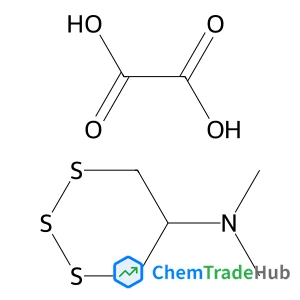
Oxalic acid compound with cyclohexylsulfamothioic O-acid (11)
CAS Number:
31895-22-4
Molecular Formula:
C7H13NO4S3
![2-{[4-(2-Methoxyethyl)phenoxy]methyl}oxirane structure](https://static.chemtradehub.com/structs/567/56718-70-8-f037.webp "2-{[4-(2-Methoxyethyl)phenoxy]methyl}oxirane structure")
Recommended Suppliers




Disclaimer
This page provides academic journal information for reference and research purposes only. We are not affiliated with any journal publishers and do not handle publication submissions. For publication-related inquiries, please contact the respective journal publishers directly.
If you notice any inaccuracies in the information displayed, please contact us at support@chemtradehub.com. We will promptly review and address your concerns.