


Synthesis of amphiphilic block-type macromolecular brushes with cleavable pendant chains and fabrication of micelle-templated polymer nanocapsules
Literature Information
Publication Date
2015-12-28
DOI
10.1039/C5PY01940K
Impact Factor
5.582
Authors
Guangda Han, Yuanyuan Ju, Hanying Zhao
View Original
Abstract
Nanocapsules composed of cross-linked membranes and empty voids have found wide applications as drug delivery carriers, sensors and nanosized reactors. In this research, a new method for the fabrication of functional nanocapsules is proposed. Poly(oligo(ethylene glycol) monomethyl ether methacrylate)-block-(poly(tert-butyl methacrylate)-graft-poly(2-(dimethylamino)ethyl methacrylate)) (POEGMA-b-(PtBMA-g-PDMAEMA)) brush polymers were synthesized by two-step reversible addition–fragmentation chain transfer polymerization and atom transfer radical polymerization. The pendant PDMAEMA chains were grafted to the backbones through disulfide bonds. In acidic water, the brush polymer chains self-assembled into micelles with PtBMA cores and POEGMA/PDMAEMA mixed coronae. Upon cross-linking of PDMAEMA chains and cleavage of the disulfides with tri-n-butylphosphine, hydrophilic nanocapsules were obtained. The brush polymers were analyzed by gel permeation chromatography and 1H NMR. The sizes and the morphologies of the micelles and the nanocapsules were characterized by transmission electron microscopy, atomic force microscopy and dynamic light scattering. The thiol groups on the inner walls of the nanocapsules undergo a thiol–ene reaction with fluorescein O-methacrylate (FMA). The photoluminescence results demonstrate that FMA molecules are able to pass through the membranes and functionalization of the nanocapsules can be performed.
Recommended Journals

Lab on a Chip

Environmental Toxicology and Pharmacology

Green Chemistry

Journal of Enzyme inhibition and Medicinal Chemistry

Foundations of Chemistry

Journal of Medical Biochemistry

Current Pharmaceutical Biotechnology

Coloration Technology

European Journal of Organic Chemistry

Angewandte Chemie International Edition
Related Literature
Nanocrystal-constructed mesoporous CoFe2O4 nanowire arrays aligned on flexible carbon fabric as integrated anodes with enhanced lithium storage properties
Bo Wang, Songmei Li, Xiaoyu Wu, Bin Li, Jianhua Liu, Mei Yu
2015-07-15
Paper
DOI: 10.1039/C5CP03042K
A facile one-pot synthesis of blue and red luminescent thiol stabilized gold nanoclusters: a thorough optical and microscopy study
Nabin Kumar Pal, Carola Kryschi
2015-07-08
Paper
DOI: 10.1039/C5CP01773D
Different behaviour of molecules in dark SERS state on colloidal Ag nanoparticles estimated by truncated power law analysis of blinking SERS
Daichi Araki, Tamitake Itoh, Yukihiro Ozaki
2014-12-16
Paper
DOI: 10.1039/C4CP05070C
Composition-dependent band gaps and indirect–direct band gap transitions of group-IV semiconductor alloys
Zhen Zhu, Jiamin Xiao, Haibin Sun, Yue Hu, Ronggen Cao, Yin Wang, Li Zhao, Jun Zhuang
2015-07-15
Paper
DOI: 10.1039/C5CP02558C
Structural characterization of gas-phase cysteine and cysteine methyl ester complexes with zinc and cadmium dications by infrared multiple photon dissociation spectroscopy
Rebecca A. Coates, Christopher P. McNary, Georgia C. Boles, Giel Berden, P. B. Armentrout
2015-04-09
Paper
DOI: 10.1039/C5CP01500F
An operando surface enhanced Raman spectroscopy (SERS) study of carbon deposition on SOFC anodes
Xiaxi Li, Mingfei Liu, Dong Ding, Lawrence A. Bottomley, Soojin Park, Meilin Liu
2015-01-07
Communication
DOI: 10.1039/C4CP05176A
Tandem mass spectrometry and infrared spectroscopy as a tool to identify peptide oxidized residues
2015-08-10
Paper
DOI: 10.1039/C5CP03223G
The charge/discharge mechanism and electrochemical performance of CuV2O6 as a new anode material for Li-ion batteries
Jianjun Ma, Jicheng Zhang
2015-07-29
Paper
DOI: 10.1039/C5CP03435C
Prospects for plasmonic hot spots in single molecule SERS towards the chemical imaging of live cells
Darya Radziuk, Helmuth Moehwald
2015-01-08
Perspective
DOI: 10.1039/C4CP04946B
Surface-enhanced spectroscopies
Rudolf Holze, Sebastian Schlücker
2015-03-05
Editorial
DOI: 10.1039/C5CP90032H
You might also like
Compound Q&A
Is 2-(2-chloroacetamido)-3-phenylpropanoic acid (CAS: 7765-11-9) safe?
2-(2-Chloroacetamido)-3-phenylpropanoic acid (CAS: 7765-11-9) is generally consi...
7765-11-92-(2-chloroacetamido...
Compound Q&A
Is 2-(Benzyloxy)-5-bromobenzoic acid (CAS: 62176-31-2) safe?
2-(Benzyloxy)-5-bromobenzoic acid can be handled safely if appropriate precautio...
62176-31-22-(Benzyloxy)-5-brom...
Compound Q&A
What is (4-Methyl-1,2,5-oxadiazol-3-yl)methanamine hydrochloride (CAS: 1159825-48-5)?
(4-Methyl-1,2,5-oxadiazol-3-yl)methanamine hydrochloride is a chemical compound ...
1159825-48-5(4-Methyl-1,2,5-oxad...
Compound Q&A
What is 2-(5-Hexylthiophen-2-yl)-4,4,5,5-tetramethyl-1,3,2-dioxaborolane (CAS: 917985-54-7)?
2-(5-Hexylthiophen-2-yl)-4,4,5,5-tetramethyl-1,3,2-dioxaborolane (CAS: 917985-54...
917985-54-72-(5-Hexylthiophen-2...
Compound Q&A
Are there alternatives to 4-(8-Methyl-9H-1,3-dioxolo[4,5-h][2,3]benzodiazepin-5-yl)benzenamine (CAS: 102771-26-6) in synthesis?
While 4-(8-Methyl-9H-1,3-dioxolo[4,5-h][2,3]benzodiazepin-5-yl)benzenamine (CAS:...
102771-26-64-(8-Methyl-9H-1,3-d...
Compound Q&A
What is the market or research trend for tert-butyl 3-hydroxy-4,5,7,8-tetrahydro-2H-pyrazolo[3,4-d]azepine-6-carboxylate (CAS: 851376-80-2)?
The market for tert-butyl 3-hydroxy-4,5,7,8-tetrahydro-2H-pyrazolo[3,4-d]azepine...
851376-80-2tert-butyl 3-hydroxy...
Compound Q&A
How should waste containing 3,5-Diamino-1H-pyrazole-4-carbonitrile (CAS: 6844-58-2) be handled?
Waste containing 3,5-Diamino-1H-pyrazole-4-carbonitrile (CAS: 6844-58-2) should ...
6844-58-23,5-Diamino-1H-pyraz...
Compound Q&A
How is (6-Fluoro-3-pyridinyl)boronic acid (CAS: 351019-18-6) typically synthesized?
(6-Fluoro-3-pyridinyl)boronic acid can be synthesized through the reaction of 6-...
351019-18-6(6-Fluoro-3-pyridiny...
Compound Q&A
What industries use Dibenzyl carbonimidoylbiscarbamate (CAS: 10065-79-9)?
Dibenzyl carbonimidoylbiscarbamate (CAS: 10065-79-9) finds applications in vario...
10065-79-9Dibenzyl carbonimido...
Compound Q&A
What is the market or research trend for (beta,beta,2,3,4,5,6-~2~H_7_)Phenylalanine (CAS: 74228-83-4)?
The market for (beta,beta,2,3,4,5,6-~2~H_7_)Phenylalanine (CAS: 74228-83-4) is g...
74228-83-4(beta,beta,2,3,4,5,6...
Source Journal
Polymer Chemistry

CiteScore:
8.6
Self-citation Rate:
7.3%
Articles per Year:
457
Polymer Chemistry welcomes submissions in all areas of polymer science that have a strong focus on macromolecular chemistry. Manuscripts may cover a broad range of fields, yet no direct application focus is required.
Recommended Compounds
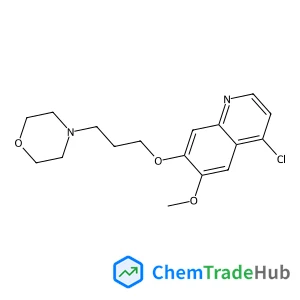
4-(3-((4-Chloro-6-methoxyquinolin-7-yl)oxy)propyl)morpholine
CAS Number:
205448-32-4
Molecular Formula:
C17H21ClN2O3
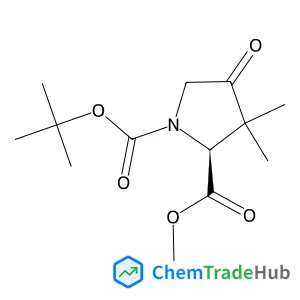
2-Methyl 1-(2-methyl-2-propanyl) (2S)-3,3-dimethyl-4-oxo-1,2-pyrrolidinedicarboxylate
CAS Number:
478698-30-5
Molecular Formula:
C13H21NO5
![4,10-Dihydroxy-3H-pyrano[3,4,5-kl]xanthen-3-one structure](https://static.chemtradehub.com/structs/125/1259330-61-4-de48.webp "4,10-Dihydroxy-3H-pyrano[3,4,5-kl]xanthen-3-one structure")
Recommended Suppliers





Disclaimer
This page provides academic journal information for reference and research purposes only. We are not affiliated with any journal publishers and do not handle publication submissions. For publication-related inquiries, please contact the respective journal publishers directly.
If you notice any inaccuracies in the information displayed, please contact us at support@chemtradehub.com. We will promptly review and address your concerns.