












Towards development of a versatile and efficient strategy for fabrication of GO based polymer nanocomposites
Literature Information
Publication Date
2015-08-31
DOI
10.1039/C5PY01238D
Impact Factor
5.582
Authors
Qing Wan, Liucheng Mao, Meiying Liu, Ke Wang, Guangjian Zeng, Dazhuang Xu, Hongye Huang, Xiaoyong Zhang, Yen Wei
View Original
Abstract
Surface modification of graphene oxide (GO) with polymers is of particular importance for its applications. Although much progress has been made in the surface modification of GO, the surface modification of GO with synthetic polymers in aqueous solution has demonstrated to be problematic. In the present work, we report for the first time a versatile and effective method for the surface modification of GO with synthetic polymers in aqueous solution taking advantage of mussel inspired chemistry. Poly(ethylene glycol) methyl ether methacrylate and itaconic anhydride (IA) monomers were chosen to prepare hydrophilic polymers (poly(IA-co-PEGMA)) via free radical living polymerization. These hydrophilic polymers were further reacted with dopamine through ring-opening reaction between IA and dopamine, which could be highly efficiently attached to the GO surface via mussel inspired chemistry using dopamine as the adhesion component. The successful modification of GO with polymers was confirmed by using a series of characterization techniques. The resulting GO–polymer nanocomposites displayed great dispersibility in aqueous and organic solutions, making them promising for various applications. Compared with previous methods, the biomimic strategy described in this work could facilely and effectively immobilize synthetic polymers on GO in aqueous solution at room temperature and under an air atmosphere. More importantly, this strategy could also be utilized for the fabrication of almost any polymer nanocomposite because of the designability and applicability of living polymerization, and the versatility and strong adhesion of dopamine.
Related Literature
Synthesis of hydrogels viaring-opening metathesispolymerization: factors affecting gelation
Ahmad E. Madkour, Joshua M. Grolman, Gregory N. Tew
2010-11-01
Paper
DOI: 10.1039/C0PY00151A
Singular thermosensitivity of polymethyl methacrylate/poly-N-isopropylacrylamide conetworks prepared by a facile synthetic route
Inmaculada Aranaz, Sergio Carrasco, Myriam G. Tardajos, Carlos Elvira, Helmut Reinecke, Daniel López, Alberto Gallardo
2010-11-18
Paper
DOI: 10.1039/C0PY00313A
Chemical modification of pectin: environmental friendly process for new potential material development
Luca Monfregola, Marilisa Leone, Vittoria Vittoria, Pietro Amodeo, Stefania De Luca
2011-02-14
Communication
DOI: 10.1039/C0PY00341G
Dixanthate-terminated poly(butylene terephthalate). A novel RAFT/MADIX agent for the synthesis of well-defined triblock copolymers resulting from consecutive step- and chain-growthpolymerization processes
Stéphane Mazières, Caroll Vergelati, Cécile Corriol, Mathias Destarac
2011-08-26
Paper
DOI: 10.1039/C1PY00270H
Propylenedioxythiophene (ProDOT)–phenylenecopolymers allow a yellow-to-transmissive electrochrome
Chad M. Amb, Justin A. Kerszulis, Emily J. Thompson, Aubrey L. Dyer, John R. Reynolds
2011-02-01
Communication
DOI: 10.1039/C0PY00405G
Controlled stereoselective polymerization of lactide monomers by group 4 metal initiators that contain an (OSSO)-type tetradentate bis(phenolate) ligand
Jean-Charles Buffet, Ashley N. Martin, Moshe Kol, Jun Okuda
2011-08-15
Paper
DOI: 10.1039/C1PY00266J
Synthesis of highly porous borazine-linked polymers and their application to H2, CO2, and CH4 storage
Karl T. Jackson, Mohammad G. Rabbani, Thomas E. Reich, Hani M. El-Kaderi
2011-10-17
Communication
DOI: 10.1039/C1PY00374G
Multi-end functionalised polymer additives synthesised by living anionic polymerisation—the impact of additive molecular structure upon surface properties
Lian R. Hutchings, Richard L. Thompson
2011-01-20
Paper
DOI: 10.1039/C0PY00362J
Polymers with molecular weight dependent LCSTs are essential for cooperative behaviour
Nga Sze Ieong, Muhammad Hasan, Daniel J. Phillips, Yussif Saaka, Rachel K. O'Reilly, Matthew I. Gibson
2012-01-23
Paper
DOI: 10.1039/C2PY00604A
You might also like
Compound Q&A
What is 3-Fluoro-2-methylbenzylamine (CAS: 771573-36-5)?
3-Fluoro-2-methylbenzylamine is an organic compound with the CAS number 771573-3...
771573-36-53-Fluoro-2-methylben...
Compound Q&A
Is Tert-butyl 2-(oxetan-3-ylidene)acetate (CAS: 1207175-03-8) safe?
Tert-butyl 2-(oxetan-3-ylidene)acetate is considered safe for its intended uses ...
1207175-03-8Tert-butyl 2-(oxetan...
Compound Q&A
What precautions should be taken when handling 4-Acetyl-2-fluorobenzonitrile (CAS: 214760-18-6)?
Proper personal protective equipment (PPE) such as gloves, goggles, and a lab co...
214760-18-64-Acetyl-2-fluoroben...
Compound Q&A
How is 2-Ethyl-4-methyl-1,3-thiazole (CAS: 15679-12-6) typically synthesized?
2-Ethyl-4-methyl-1,3-thiazole is commonly synthesized via the reaction of thiour...
15679-12-62-Ethyl-4-methyl-1,3...
Compound Q&A
How should 5',5''-([2,2'-Bithiophene]-5,5'-diyl)bis(([1,1':3',1''-terphenyl]-4,4''-dicarboxylic acid)) (CAS: 1227780-71-3) be stored?
This compound should be stored in a cool, dry place away from direct sunlight an...
1227780-71-35',5''''-([2,2'-Bith...
Compound Q&A
What regulatory guidelines apply to L-Lysine Acetate Salt (CAS: 52315-92-1)?
L-Lysine Acetate Salt (CAS: 52315-92-1) is subject to various regulatory guideli...
52315-92-1L-LYSINE ACETATE SAL...
Compound Q&A
Is 6-Fluoro-3-hydroxy-2-pyrazinecarboxamide (CAS: 259793-96-9) safe?
6-Fluoro-3-hydroxy-2-pyrazinecarboxamide (CAS: 259793-96-9) is generally conside...
259793-96-96-Fluoro-3-hydroxy-2...
Compound Q&A
What are the physical and chemical properties of 1,1'-Sulfonylbis(1H-imidazole) (CAS: 7189-69-7)?
1,1'-Sulfonylbis(1H-imidazole) is a crystalline solid with a molecular weight of...
7189-69-71,1'-Sulfonylbis(1H-...
Compound Q&A
What industries use 4-methyl-7-nitro-1H-indole-3-carbonitrile (CAS: 289483-82-5)?
4-Methyl-7-nitro-1H-indole-3-carbonitrile (CAS: 289483-82-5) is primarily used i...
289483-82-54-methyl-7-nitro-1H-...
Compound Q&A
How should waste containing 5-Bromo-3-indolyl-beta-galactoside (CAS: 97753-82-7) be handled?
Waste containing 5-Bromo-3-indolyl-beta-galactoside (CAS: 97753-82-7) should be ...
97753-82-75-Bromo-3-indolyl-be...
Source Journal
Polymer Chemistry

CiteScore:
8.6
Self-citation Rate:
7.3%
Articles per Year:
457
Polymer Chemistry welcomes submissions in all areas of polymer science that have a strong focus on macromolecular chemistry. Manuscripts may cover a broad range of fields, yet no direct application focus is required.
Recommended Compounds
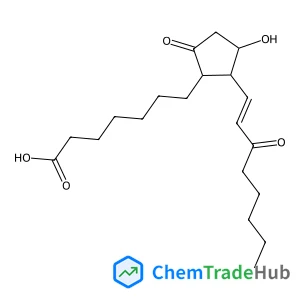
(11alpha,13E)-11-Hydroxy-9,15-dioxoprost-13-en-1-oic acid
CAS Number:
22973-19-9
Molecular Formula:
C20H32O5
![Benzyl spiro[indole-3,4'-piperidine]-1(2H)-carboxylate hydrochloride (1:1) structure](https://static.chemtradehub.com/structs/159/159635-46-8-8de0.webp "Benzyl spiro[indole-3,4'-piperidine]-1(2H)-carboxylate hydrochloride (1:1) structure")
Benzyl spiro[indole-3,4'-piperidine]-1(2H)-carboxylate hydrochloride (1:1)
CAS Number:
159635-46-8
Molecular Formula:
C20H23ClN2O2
Recommended Suppliers






Disclaimer
This page provides academic journal information for reference and research purposes only. We are not affiliated with any journal publishers and do not handle publication submissions. For publication-related inquiries, please contact the respective journal publishers directly.
If you notice any inaccuracies in the information displayed, please contact us at support@chemtradehub.com. We will promptly review and address your concerns.