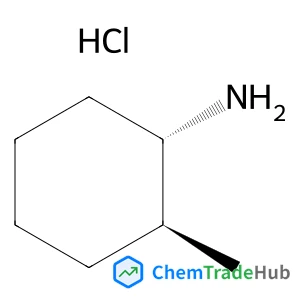
(1R,2R)-2-Methylcyclohexanamine hydrochloride (1:1)
CAS Number:
39558-31-1
Molecular Formula:
C7H16ClN
Jiacheng Zhao, Jacques Lalevée, Hongxu Lu, Rowan MacQueen, Scott H. Kable, Timothy W. Schmidt, Martina H. Stenzel, Pu Xiao
Curcumin exhibits broad ground state light absorption and can act as a photoinitiator for the free radical photopolymerization of methacrylates under air upon exposure to different household LED bulbs. The effects of temperature and various additives on the photoinitiation efficiency of curcumin-based systems have been investigated. The curcumin-based system exhibits the highest photoinitiation efficiency at 25 °C. Additives also play an important role in the photoinitiation efficiency, and well-designed systems can even demonstrate higher efficiency than the commercial type I photoinitiator [phenylbis(2,4,6-trimethylbenzoyl)phosphine oxide (XBPO)] and type II photoinitiator [camphorquinone (CQ)]. Interestingly, the curcumin/diphenyliodonium hexafluorophosphate/triphenylphosphine combination is a capable multicolor photoinitiating system able to initiate free radical photopolymerization under air upon exposure to UV, blue, green, yellow, red, and warm white household LED bulbs. In addition, reversible addition–fragmentation chain transfer (RAFT) photopolymerization of N-isopropylacrylamide can also be achieved using a curcumin-based system under the irradiation of a blue LED bulb. The photochemical mechanisms associated with the generation of radicals from the investigated photoinitiating systems are investigated by different techniques (fluorescence, steady state photolysis, and electron spin resonance spin-trapping methods) and discussed in detail. More interestingly, the polymer sample produced through the photopolymerization process using the curcumin-based photoinitiating system demonstrates almost no toxicity to human fibroblast Hs-27 cells, endowing this photoinitiating system with great potential for the fabrication of biocompatible polymeric materials.
Alexander Genest, Armando Borgna
DOI: 10.1039/C5CP01027F
DOI: 10.1039/C5CP02582F
Brindaban Modak, Swapan K. Ghosh
DOI: 10.1039/C5CP01374G
Léo Choubrac, Alain Lafond, Michaël Paris, Catherine Guillot-Deudon, Stéphane Jobic
DOI: 10.1039/C5CP01709B
Jiashu Fan, Qinglong Zhang, Jiachun Feng
DOI: 10.1039/C5CP00548E
Oksana Plekan, Vitaliy Feyer, Andrew Cassidy, Victor Lyamayev, Nataliya Tsud, Sylwia Ptasińska, Sara Reiff, Rober G. Acres
DOI: 10.1039/C5CP01886B
Y. Zhang, W. B. Mi, X. C. Wang, X. X. Zhang
DOI: 10.1039/C5CP01955A
Adam Kubas, Fruzsina Gajdos, Harald Oberhofer, Jochen Blumberger
DOI: 10.1039/C4CP04749D
Wallace D. Derricotte, Francesco A. Evangelista
DOI: 10.1039/C4CP05509H
(5-Sulfamoyl-3-pyridinyl)boronic acid is primarily used in chemical synthesis, p...
Benzyl 2-methyl-2-(methylsulfonyl)-4-pentenoate is typically synthesized via est...
When handling 8-Fluoroquinolin-6-ol (CAS: 209353-22-0), it is important to use p...
1,3-Dibromo-5-(2-methyl-2-propanyl)benzene (CAS: 129316-09-2) is a crystalline c...
Ethyl 7-chloro-4-oxo-1-(1,3-thiazol-2-yl)-1,4-dihydro-1,8-naphthyridine-3-carbox...
When handling Delta-7-Avenasterol (CAS: 23290-26-8), it is important to wear app...
Proper handling involves the use of personal protective equipment such as gloves...
When handling 2-Methyl-2-proanyl 4-[(2-aminophenyl)amino]-1-piperidinecarboxylat...
N-Methyl-4-chlorobenzylamine hydrochloride (CAS: 65542-24-7) is a organic compou...
[2-(Dodecyloxy)ethoxy]acetic acid (CAS: 27306-90-7) is generally considered safe...

Polymer Chemistry welcomes submissions in all areas of polymer science that have a strong focus on macromolecular chemistry. Manuscripts may cover a broad range of fields, yet no direct application focus is required.
![2-(5-Bromo-1H-pyrrolo[2,3-B]pyridin-3-YL)acetic acid structure](https://static.chemtradehub.com/structs/106/1060795-03-0-0589.webp "2-(5-Bromo-1H-pyrrolo[2,3-B]pyridin-3-YL)acetic acid structure")