













Tuning the crystalline and mesophase structure of olefin block copolymer through self-nucleation and annealing treatments
Literature Information
Publication Date
2015-05-19
DOI
10.1039/C5CP00548E
Impact Factor
3.676
Authors
Jiashu Fan, Qinglong Zhang, Jiachun Feng
View Original
Abstract
As a type of novel semi-crystalline block copolymers, the final properties of olefin block copolymers (OBCs) greatly depend on the crystalline and phase-separated structures. In the present work, we systematically investigated the influence of self-nucleation and annealing on the lamellar and mesophase-separated structure of OBCs. According to the crystalline and melting behavior after self-nucleation and annealing treatments, four different regimes can be recognized with the self-seeding temperature Ts varying from 125 to 109 °C. In regime A, only self-nucleation occurs, while it coexists with lamellar thickening in regime B. In regime C, there is only lamellar thickening behavior. The lamellar thickening induced inconsecutive lamellar crystals observed revealed that the rearrangement of the hard blocks, which are next to the soft blocks and trapped in the intermediate regime between crystalline and amorphous phases, into neighboring lamellar crystals should be the mechanism for the lamellar thickening of the OBCs. Surprisingly, no lamellar thickening occurs and a new small melting peak appears at lower temperatures in regime D. Considering the block dispersity of OBCs, the emergence of a small melting peak at lower temperatures can be attributed to the crystallization of the ethylene sequence with relatively weaker crystallization abilities, which are not able to crystallize in a standard crystalline state. Based on these findings, we gained some new understandings on lamellar thickening behavior of OBCs and established the self-nucleation and annealing process as a powerful tool for tuning the crystalline and phase-separated structures of OBCs.
Related Literature
Li+-Induced fluorescent metallogel: a case of ESIPT-CHEF and ICT phenomenon
Manish Kumar Dixit, Mrigendra Dubey
2018-08-10
Paper
DOI: 10.1039/C8CP04579H
Heavy carbon nanodots: a new phosphorescent carbon nanostructure
Rachael Knoblauch, Brian Bui, Ammar Raza, Chris D. Geddes
2018-05-16
Paper
DOI: 10.1039/C8CP02675K
Different scenarios of dynamic coupling in glassy colloidal mixtures
Tatjana Sentjabrskaja, José Ruiz-Franco, Stefan U. Egelhaaf
2018-06-15
Paper
DOI: 10.1039/C8CP02559B
Thermodynamics and defect chemistry of substitutional and interstitial cation doping in layered α-V2O5
Kit McColl, Ian Johnson, Furio Corà
2018-05-11
Communication
DOI: 10.1039/C8CP02187B
First-principles theoretical assessment of catalysis by confinement: NO–O2 reactions within voids of molecular dimensions in siliceous crystalline frameworks
Matteo Maestri, Enrique Iglesia
2018-06-01
Paper
DOI: 10.1039/C8CP01615A
Computational study of the carbonyl–ene reaction between formaldehyde and propylene encapsulated in coordinatively unsaturated metal–organic frameworks M3(btc)2 (M = Fe, Co, Ni, Cu and Zn)
Thana Maihom, Michael Probst, Jumras Limtrakul
2019-01-15
Paper
DOI: 10.1039/C8CP06841K
Self-assembly and friction of glycerol monooleate and its hydrolysis products in bulk and confined non-aqueous solvents
Joshua L. Bradley-Shaw, Philip J. Camp, Peter J. Dowding
2018-06-22
Paper
DOI: 10.1039/C8CP01785A
Machine learning for predicting product distributions in catalytic regioselective reactions
Sayan Banerjee, A. Sreenithya, Raghavan B. Sunoj
2018-06-22
Paper
DOI: 10.1039/C8CP03141J
Size effects on rhodium nanoparticles related to hydrogen-storage capability
Chulho Song, Anli Yang, L. S. R. Kumara, Satoshi Hiroi, Yi-Tao Cui, Kohei Kusada, Hirokazu Kobayashi
2018-05-23
Paper
DOI: 10.1039/C8CP01678J
You might also like
Compound Q&A
How should 2-Methylbenzene-1,4-diamine dihydrochloride (CAS: 615-45-2) be stored?
2-Methylbenzene-1,4-diamine dihydrochloride (CAS: 615-45-2) should be stored in ...
615-45-22-Methylbenzene-1,4-...
Compound Q&A
Is (1S,4S)-2,5-Diazabicyclo[2.2.1]heptane dihydrobromide (CAS: 132747-20-7) safe?
(1S,4S)-2,5-Diazabicyclo[2.2.1]heptane dihydrobromide is generally considered sa...
132747-20-7(1S,4S)-2,5-Diazabic...
Compound Q&A
What industries use (6-Chloropyridazin-3-YL)methanamine (CAS: 871826-15-2)?
(6-Chloropyridazin-3-YL)methanamine finds applications in the pharmaceutical ind...
871826-15-2(6-Chloropyridazin-3...
Compound Q&A
What are the main uses of 2-Fluoro-3-methylphenol (CAS: 77772-72-6)?
2-Fluoro-3-methylphenol is primarily used in the synthesis of pharmaceuticals, p...
77772-72-62-Fluoro-3-methylphe...
Compound Q&A
What precautions should be taken when handling 3-Methoxy-4-nitrobenzonitrile (CAS: 177476-75-4)?
When handling 3-Methoxy-4-nitrobenzonitrile, it is important to wear appropriate...
177476-75-43-Methoxy-4-nitroben...
Compound Q&A
What precautions should be taken when handling 1,3-Oxazolo[4,5-b]pyridine-2(3H)-thione (CAS: 211949-57-4)?
When handling 1,3-Oxazolo[4,5-b]pyridine-2(3H)-thione (CAS: 211949-57-4), it is ...
211949-57-4[1,3]Oxazolo[4,5-b]p...
Compound Q&A
What regulatory guidelines apply to 4-Ethynylbenzamide (CAS: 90347-86-7)?
4-Ethynylbenzamide (CAS: 90347-86-7) falls under various regulatory guidelines i...
90347-86-74-Ethynylbenzamide
Compound Q&A
What are the main uses of 3-(2-Ethylphenyl)-2-thioxo-4-imidazolidinone (CAS: 186822-57-1)?
3-(2-Ethylphenyl)-2-thioxo-4-imidazolidinone is primarily used as an intermediat...
186822-57-13-(2-Ethylphenyl)-2-...
Compound Q&A
What is (2-Fluoro-6-methoxyphenyl)acetic acid (CAS: 500912-19-6)?
(2-Fluoro-6-methoxyphenyl)acetic acid, also known as 4-fluoro-3-methoxybenzoic a...
500912-19-6(2-Fluoro-6-methoxyp...
Compound Q&A
What is the market or research trend for 2-[4-(Hydroxymethyl)phenoxy]ethanol (CAS: 102196-18-9)?
Market trends for 2-[4-(Hydroxymethyl)phenoxy]ethanol (CAS: 102196-18-9) indicat...
102196-18-92-[4-(Hydroxymethyl)...
Source Journal
Physical Chemistry Chemical Physics

CiteScore:
5.5
Self-citation Rate:
10.3%
Articles per Year:
3036
Physical Chemistry Chemical Physics (PCCP) is an international journal co-owned by 19 physical chemistry and physics societies from around the world. This journal publishes original, cutting-edge research in physical chemistry, chemical physics and biophysical chemistry. To be suitable for publication in PCCP, articles must include significant innovation and/or insight into physical chemistry; this is the most important criterion that reviewers and Editors will judge against when evaluating submissions. The journal has a broad scope and welcomes contributions spanning experiment, theory, computation and data science. Topical coverage includes spectroscopy, dynamics, kinetics, statistical mechanics, thermodynamics, electrochemistry, catalysis, surface science, quantum mechanics, quantum computing and machine learning. Interdisciplinary research areas such as polymers and soft matter, materials, nanoscience, energy, surfaces/interfaces, and biophysical chemistry are welcomed if they demonstrate significant innovation and/or insight into physical chemistry. Joined experimental/theoretical studies are particularly appreciated when complementary and based on up-to-date approaches.
Recommended Compounds
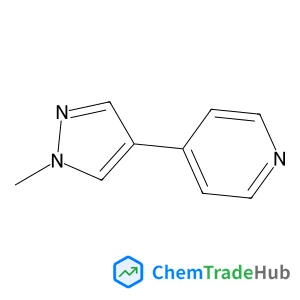
![1-Benzyl-1,7-diazaspiro[4.4]nonane dihydrochloride structure](https://static.chemtradehub.com/structs/115/1159822-71-5-0320.webp "1-Benzyl-1,7-diazaspiro[4.4]nonane dihydrochloride structure")
1-Benzyl-1,7-diazaspiro[4.4]nonane dihydrochloride
CAS Number:
1159822-71-5
Molecular Formula:
C14H22Cl2N2
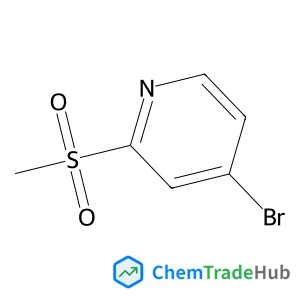
![1H-Imidazo[4,5-c]pyridine-7-carboxylic acid structure](https://static.chemtradehub.com/structs/123/1234616-39-7-1344.webp "1H-Imidazo[4,5-c]pyridine-7-carboxylic acid structure")
Recommended Suppliers




Disclaimer
This page provides academic journal information for reference and research purposes only. We are not affiliated with any journal publishers and do not handle publication submissions. For publication-related inquiries, please contact the respective journal publishers directly.
If you notice any inaccuracies in the information displayed, please contact us at support@chemtradehub.com. We will promptly review and address your concerns.