


![2-Bromo-7-chloro-4H-pyrrolo[2,3-b]pyrazine structure](https://static.chemtradehub.com/structs/115/1150617-58-5-0b0a.webp "2-Bromo-7-chloro-4H-pyrrolo[2,3-b]pyrazine structure")
Effect of residue structure on the thermal and thermoresponsive properties of γ-substituted poly(N-acryloyl-2-pyrrolidones)
Literature Information
Publication Date
2015-06-30
DOI
10.1039/C5PY00649J
Impact Factor
5.582
Authors
R. Bhat, H. Patel, P.-C. Tsai, X.-L. Sun, D. Daoud, R. A. Lalancette, B. Michniak-Kohn, A. Pietrangelo
View Original
Abstract
We discuss the results of an investigation into the structure/property correlations of γ-substituted poly(N-acryloyl-2-pyrrolidone)s, a recently reported class of pyrrolidone-based polymers prepared from pyroglutamic acid, a bio-derived resource. Monomers bearing alkoxy and thiolate substituents were polymerized by reversible addition–fragmentation chain-transfer (RAFT) polymerization with polymer molecular weights and dispersities (ĐM) estimated by gel-permeation chromatography (GPC). Single-crystal X-ray diffraction studies reveal a large degree of steric congestion about the monomer acryl-imide functionality, a topological feature that has residual effects on polymer physicochemical properties when variations to γ-substituent structure are applied. Indeed, glass transition temperature Tg is significantly influenced by both substituent structure (e.g., saturated linear aliphatic vs. cyclic aliphatic vs. aromatic) and chemical class with the more thermally stable thiolated polymers possessing lower Tg values than their alkoxy congeners of comparable molecular weight. Regarding solubility, all polymers dissolve in common organic solvents including chloroform, dichloromethane, and tetrahydrofuran while only those bearing methoxyethoxy (poly(MeOEthONP)) and tetrahydrofurfuryloxy (poly(FurONP)) substituents are soluble in water, a medium where they also exhibit thermoresponsive behavior. Despite the structural similarities among these polymers, a remarkable difference of ca. 32 °C is observed between their cloud point (CP) temperatures (poly(MeOEthONP), CP = 47 °C, poly(FurONP), CP = 15 °C) measured during a phase transition that is sensitive to polymer concentration (0.1–1.0 g L−1) and chemical environment (e.g. deionized water vs. phosphate buffered saline (PBS)). Given that both the methoxyethyl thiolate-substituted (poly(MeOEthSNP) and substituent-free (poly(NP)) polymers are insoluble in aqueous media, we conclude that the observed thermoresponsivity arises from both the topology of the hydrophilic ether-based moiety and identity of the atom (i.e. O vs. S) that tethers the substituent to the lactam scaffold. Finally, cytotoxicity assays were performed on poly(MeOEthONP) as its lower critical solution temperature (LCST) is close to that of the human body, an attribute that is desirable for hydrophilic materials used in thermoresponsive drug-delivery platforms. The results of this investigation show that over a concentration range of ca. 0.1–100 μg mL−1, poly(MeOEthONP) formulations are primarily noncytotoxic to both MCF-7 breast cancer cells and human dermal fibroblasts.
Recommended Journals

Acta Metallurgica Sinica-English Letters

Medicinal Chemistry Research

Colloid Journal

Main Group Chemistry

Electroanalysis

Critical Reviews in Solid State and Materials Sciences

Journal of Chemical Sciences

Chinese Journal of Chemistry

Bioorganic & Medicinal Chemistry Letters

Bioorganic & Medicinal Chemistry
Related Literature
Distortion of a cellobio-derived isofagomine highlights the potential conformational itinerary of inverting β-glucosidases
Annabelle Varrot, James Macdonald, Robert V. Stick, Gavin Pell, Harry J. Gilbert, Gideon J. Davies
2003-03-20
Communication
DOI: 10.1039/B301592K
Insertion of organoindium carbenoids into rhodium halide bonds: revisiting a classic type of transition metal–group 13 metal bond formation
Tobias Steinke, Christian Gemel, Mirza Cokoja, Manuela Winter, Roland A. Fischer
2003-03-31
Communication
DOI: 10.1039/B301928D
Shape-persistent arylene ethynylene macrocycles: syntheses and supramolecular chemistry
Dahui Zhao, Jeffrey S. Moore
2002-11-15
Feature Article
DOI: 10.1039/B207442G
Decomposition of Pt-intercalated hydrotalcite-like nanocomposites to produce micro/mesoporous catalysts
Masato Machida, Shin Hamada
2003-06-20
Communication
DOI: 10.1039/B304352E
Electrocatalytic dimerisation of non-heteroatom-substituted manganese alkynylcarbene complexes
Yannick Ortin, Alix Sournia-Saquet, Noël Lugan, René Mathieu
2003-04-02
Communication
DOI: 10.1039/B300623A
Synthesis, separation, and isomer-dependent packing in two dimensions—detected by scanning tunnelling microscopy—of a TTF derivative
Elba Gomar-Nadal, Mohamed M. S. Abdel-Mottaleb, Steven De Feyter, Jaume Veciana, Concepció Rovira, David B. Amabilino, Frans C. De Schryver
2003-03-10
Communication
DOI: 10.1039/B300731F
The first structurally characterised perchlorato-cobalt(iii) complexes, involving the C-bonded macrobicyclic ligand 1,4,8,11-tetraazabicyclo[9.5.2]octadecane
Xiangting Zhou, Anthony I. Day, Anthony C. Willis, W. Gregory Jackson
2003-08-20
Communication
DOI: 10.1039/B305182J
Concise total synthesis of the aporphine alkaloid 7,7′-bisdehydro-O-methylisopiline by an InCl3 mediated cycloisomerization reaction
Alois Fürstner, Victor Mamane
2003-07-22
Communication
DOI: 10.1039/B306880C
Effects of trace metals and organic additives on porosity and dielectric constant of high purity mesoporous silica films
Jerome C. Birnbaum, Glen E. Fryxell, Xiaohong Li, Chris A. Coyle, Glen C. Dunham, Suresh Baskaran
2003-06-20
Communication
DOI: 10.1039/B304903E
You might also like
Compound Q&A
What precautions should be taken when handling 2-Methyl-2-propanyl 5-amino-2-thiophenecarboxylate (CAS: 1498311-57-1)?
When handling 2-Methyl-2-propanyl 5-amino-2-thiophenecarboxylate (CAS: 1498311-5...
1498311-57-12-Methyl-2-propanyl ...
Compound Q&A
What are the physical and chemical properties of 5-Bromo-1,2-dichloro-3-fluorobenzene (CAS: 1000572-93-9)?
5-Bromo-1,2-dichloro-3-fluorobenzene (CAS: 1000572-93-9) is a crystalline solid ...
1000572-93-95-Bromo-1,2-dichloro...
Compound Q&A
How should (2R)-2-Amino-2-(4-bromophenyl)ethanol (CAS: 354153-64-3) be stored?
(2R)-2-Amino-2-(4-bromophenyl)ethanol (CAS: 354153-64-3) should be stored in a c...
354153-64-3(2R)-2-Amino-2-(4-br...
Compound Q&A
What regulatory guidelines apply to Methyl 4-(aminomethyl)tetrahydro-2H-pyran-4-carboxylate hydrochloride (CAS: 362707-24-2)?
Methyl 4-(aminomethyl)tetrahydro-2H-pyran-4-carboxylate hydrochloride (CAS: 3627...
362707-24-2Methyl 4-(aminomethy...
Compound Q&A
What are the main uses of 1,4-dimethyl-1H-pyrazole-5-sulfonyl chloride (CAS: 1174834-52-6)?
1,4-Dimethyl-1H-pyrazole-5-sulfonyl chloride is primarily used as an intermediat...
1174834-52-61,4-dimethyl-1H-pyra...
Compound Q&A
Is Dinaphtho[1,2-b:2',1'-d]furan (CAS: 239-69-0) safe?
Dinaphtho[1,2-b:2',1'-d]furan is generally safe when handled with appropriate pe...
239-69-0Dinaphtho[1,2-b:2',1...
Compound Q&A
What is the market or research trend for 7-Methyl-7,9-dihydro-1H-purine-2,6,8(3H)-trione (CAS: 612-37-3)?
The market for 7-Methyl-7,9-dihydro-1H-purine-2,6,8(3H)-trione (CAS: 612-37-3) i...
612-37-37-Methyl-7,9-dihydro...
Compound Q&A
What are the physical and chemical properties of 2-(4-Chlorophenyl)malonaldehyde (CAS: 205676-17-1)?
2-(4-Chlorophenyl)malonaldehyde (CAS: 205676-17-1) is a colorless or light yello...
205676-17-12-(4-Chlorophenyl)ma...
Compound Q&A
How is 2-Methylchrysene (CAS: 3351-32-4) typically synthesized?
2-Methylchrysene (CAS: 3351-32-4) is typically synthesized via the reaction of c...
3351-32-42-Methylchrysene
Compound Q&A
Is N-(6-aminopyrimidin-4-yl)acetamide (CAS: 89533-23-3) safe?
N-(6-aminopyrimidin-4-yl)acetamide (CAS: 89533-23-3) is generally considered saf...
89533-23-3N-(6-aminopyrimidin-...
Source Journal
Polymer Chemistry

CiteScore:
8.6
Self-citation Rate:
7.3%
Articles per Year:
457
Polymer Chemistry welcomes submissions in all areas of polymer science that have a strong focus on macromolecular chemistry. Manuscripts may cover a broad range of fields, yet no direct application focus is required.
Recommended Compounds
![3-[7-Amino-3-(3-pyridinyl)pyrazolo[1,5-a]pyrimidin-6-yl]phenol structure](https://static.chemtradehub.com/structs/861/861249-77-6-025b.webp "3-[7-Amino-3-(3-pyridinyl)pyrazolo[1,5-a]pyrimidin-6-yl]phenol structure")
3-[7-Amino-3-(3-pyridinyl)pyrazolo[1,5-a]pyrimidin-6-yl]phenol
CAS Number:
861249-77-6
Molecular Formula:
C17H13N5O
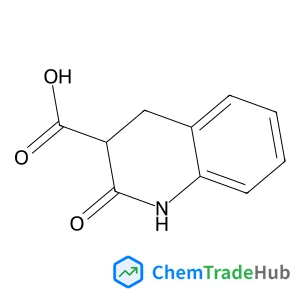
2-Oxo-1,2,3,4-tetrahydro-3-quinolinecarboxylic acid
CAS Number:
246867-17-4
Molecular Formula:
C10H9NO3
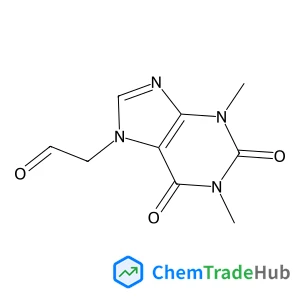
(1,3-Dimethyl-2,6-dioxo-1,2,3,6-tetrahydro-7H-purin-7-yl)acetaldehyde
CAS Number:
5614-53-9
Molecular Formula:
C9H10N4O3
Recommended Suppliers







Disclaimer
This page provides academic journal information for reference and research purposes only. We are not affiliated with any journal publishers and do not handle publication submissions. For publication-related inquiries, please contact the respective journal publishers directly.
If you notice any inaccuracies in the information displayed, please contact us at support@chemtradehub.com. We will promptly review and address your concerns.