![(3R,5R)-1-[(Benzyloxy)carbonyl]-5-methyl-3-piperidinecarboxylic acid structure](https://static.chemtradehub.com/structs/126/1269757-29-0-c552.webp "(3R,5R)-1-[(Benzyloxy)carbonyl]-5-methyl-3-piperidinecarboxylic acid structure")
(3R,5R)-1-[(Benzyloxy)carbonyl]-5-methyl-3-piperidinecarboxylic acid
CAS Number:
1269757-29-0
Molecular Formula:
C15H19NO4
Mariia Vorobii, Andres de los Santos Pereira, Ognen Pop-Georgievski, Nina Yu. Kostina, Virgil Percec
Surface-initiated photoinduced single-electron transfer living radical polymerization (SET-LRP) was employed to assemble brushes of poly[N-(2-hydroxypropyl) methacrylamide] (poly(HPMA)) from silicon surfaces. The linear increase in thickness of the poly(HPMA) brushes with time and the ability to prepare block copolymers indicate the living nature of this grafting-from process. Copper concentrations as low as 80 ppb were sufficient for this surface-initiated SET-LRP. Micropatterns of poly(HPMA) brushes on the silicon surface were constructed for the first time by this method. Negligible fouling was observed after contact with undiluted blood plasma. This report provides the first example of non-fouling polymer brushes prepared by SET-LRP of HPMA.
Kelsey I. MacConaghy, Duncan M. Chadly, Mark P. Stoykovich, Joel L. Kaar
DOI: 10.1039/C5AN01191D
Mark J. Schadt, Kaylie Young, Jin Luo, Chuan-Jian Zhong
DOI: 10.1039/C5AN01165E
Yuting Huang, Eric D. Dodds
DOI: 10.1039/C5AN01093D
Xiao-He Xiao, Jia-Bo Wang, Yan-Ling Zhao, Mei-Hua Yang
DOI: 10.1039/C2AN36084E
Jong-Min Jung, Ki-Hyun Kim, Eilhann E. Kwon, Hyung-Wook Kim
DOI: 10.1039/C5AN00961H
DOI: 10.1039/C5AN00278H
Michael D. Scott, Rinku Dutta, Manas K. Haldar, Anil Wagh, Thomas R. Gustad, Benedict Law, Daniel L. Friesner, Sanku Mallik
DOI: 10.1039/C2AN35877H
Imran I. Patel, Júlio Trevisan, Takahiro Nakamura, Carol J. Hirschmugl, Nigel J. Fullwood, Francis L. Martin
DOI: 10.1039/C2AN36197C
Eric Moore
DOI: 10.1039/C2AN35236B
Jilin Tang
DOI: 10.1039/C5AN00945F
4-Nitrophenyl phosphate disodium salt hexahydrate is primarily used as a substra...
2-(Trifluoromethyl)-1,3-oxazole-4-carboxylic Acid (CAS: 1060816-01-4) is widely ...
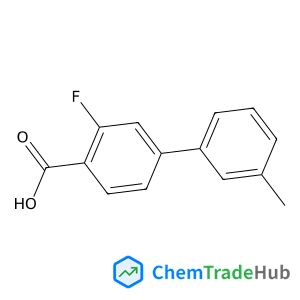
2-Fluoro-4-biphenylcarboxylic acid should be stored in a cool, dry place at room...
Prednisolone-21-Carboxylic Acid is primarily used in the pharmaceutical industry...
4-(Hydrazinomethyl)-1,2,3-benzenetriol (CAS: 3614-72-0) should be stored in a co...
4-Amino-1-methyl-1H-pyrazole-5-carboxylic acid hydrochloride (CAS: 92534-70-8) i...
Dehydropachymic acid (CAS: 77012-31-8) is regulated by various agencies. It fall...
The market and research trends for 6-[(2,2-Dimethylpropanoyl)amino]nicotinic aci...
1,10-Phenanthroline-2,9-dicarbaldehyde should be stored in a cool, dry place awa...
5-Carbamoyl-11-oxo-10,11-dihydro-5H-dibenzo[b,f]azepin-10-yl acetate can be synt...

Polymer Chemistry welcomes submissions in all areas of polymer science that have a strong focus on macromolecular chemistry. Manuscripts may cover a broad range of fields, yet no direct application focus is required.

![[(1S,2S,3R,4S,7R,9S,10S,12R,15S)-4,12-Diacetyloxy-15-[(2R,3S)-3-benzamido-3-phenyl-2-(2,2,2-trichloroethoxycarbonyloxy)propanoyl]oxy-1,9-dihydroxy-10,14,17,17-tetramethyl-11-oxo-6-oxatetracyclo[11.3.1.03,10.04,7]heptadec-13-en-2-yl] benzoate structure](https://static.chemtradehub.com/structs/100/100431-55-8-7104.webp "[(1S,2S,3R,4S,7R,9S,10S,12R,15S)-4,12-Diacetyloxy-15-[(2R,3S)-3-benzamido-3-phenyl-2-(2,2,2-trichloroethoxycarbonyloxy)propanoyl]oxy-1,9-dihydroxy-10,14,17,17-tetramethyl-11-oxo-6-oxatetracyclo[11.3.1.03,10.04,7]heptadec-13-en-2-yl] benzoate structure")