












Multi-component analysis of bile acids in natural Calculus bovis and its substitutes by ultrasound-assisted solid–liquid extraction and UPLC-ELSD
Literature Information
Publication Date
2012-10-01
DOI
10.1039/C2AN36084E
Impact Factor
4.616
Authors
Xiao-He Xiao, Jia-Bo Wang, Yan-Ling Zhao, Mei-Hua Yang
View Original
Abstract
An ultrasound-assisted solid–liquid extraction (USLE) coupled to ultra-performance liquid chromatography-evaporative light scattering detection (UPLC-ELSD) method has been developed for the simultaneous extraction and determination of six bile acids (BAs) in natural Calculus bovis and its substitutes, collected from different origins. The USLE conditions, UPLC chromatographic and ELSD conditions for BAs were optimized. Under optimum conditions, the six target analytes were efficiently extracted and baseline separated within 10 min. The limits of detection (LODs) and quantification (LOQs) for six BAs were less than 7 ng and 22 ng, respectively. Average recoveries were within the range of 98.8–100.7% with relative standard deviations (RSDs) <2% for the six analytes. This method, due to its convenience, high selectivity, fast analysis efficiency and good reproducibility can be employed for analyzing the content differences of six BAs in 40 batches of natural C. bovis and its existing substitutes. The differences of the content of each BA in natural C. bovis and its substitutes were significant, and the total contents of six BAs in 13 batches of natural C. bovis were in the range of 7.96–160.17 mg g−1, in 20 natural C. bovis of 0–245.89 mg g−1, in 2 artificial cultivated C. bovis of 178.48–194.22 mg g−1, in 3 cultured C. bovis of 41.01–107.3 mg g−1, and in 2 counterfeit C. bovis of 144.9–340.25 mg g−1. The significant differences of multi-component contents reflected the various inherent qualities of these samples, so, the use of these substitutes as the replacers of natural source in clinic should be paid more attention. Some substitutes could not be used as the replacers.
Related Literature
Ru(ii)-Catalyzed C–H activation/annulation reactions of N-aryl-pyrazolidinones with sulfoxonium ylides: synthesis of cinnoline-fused pyrazolidinones
Hai-Shan Jin, Ya-Zhen Du, Qing-Yang Zhao, Li-Ming Zhao
2021-09-13
Research Article
DOI: 10.1039/D1QO01001H
Carbenium ion formation by fragmentation of electrochemically generated oxonium ions
Anna Lielpetere, Aigars Jirgensons
2018-06-27
Communication
DOI: 10.1039/C8OB01339J
Zinc–Brønsted acid mediated practical hydrotrifluoromethylation of alkenes with CF3Br
Deqian Peng, Wu Fan, Xueqi Zhao, Wei Chen, Yuan Wen, Li Zhang
2021-09-13
Research Article
DOI: 10.1039/D1QO01073E
Base-promoted diastereoselective α-alkylation of borane N-((S)-1′-phenylethyl)azetidine-2-carboxylic acid ester complexes
Eiji Tayama, Ryotaro Nishio, Yoshiaki Kobayashi
2018-07-27
Paper
DOI: 10.1039/C8OB01395K
(−)-Cytisine: Access to a stereochemically defined and functionally flexible piperidine scaffold
Worawat Niwetmarin, Hugo Rego Campello, Hazel A. Sparkes, Varinder K. Aggarwal, Timothy Gallagher
2018-07-23
Paper
DOI: 10.1039/C8OB01456F
Brønsted acid-catalyzed dynamic kinetic resolution of in situ formed acyclic N,O-hemiaminals: cascade synthesis of chiral cyclic N,O-aminals
Xue-Jiao Lv, Yong-Chao Ming, Hui-Chun Wu
2021-09-16
Research Article
DOI: 10.1039/D1QO01135A
Regioselective addition of phosphites to acyl cyclopropanes and following rearrangements: a facile access to enol phosphates
Haotian Li, Yuequan Zhu, Dengfu Lu, Yuefa Gong
2018-07-25
Paper
DOI: 10.1039/C8OB01533C
Dibenzofuran-4,6-bis(oxazoline) (DBFOX). A novel trans-chelating bis(oxazoline) ligand for asymmetric reactions
Kennosuke Itoh, Mukund P. Sibi
2018-06-18
Review Article
DOI: 10.1039/C8OB01010B
Switchable hydroxysulfonyloxylation and defluorination–decarboxylation sulfonylation of gem-difluoroalkenes with sodium sulfinate via aerobic oxidation
Xiang Liu, Jiatong Lin, Canzhan Zhuang, Jinling Zhong, Dan Song, Jiaji Zhao, Hua Cao
2021-09-03
Research Article
DOI: 10.1039/D1QO01005K
Palladium catalyzed stereocontrolled synthesis of C-aryl glycosides using glycals and arenediazonium salts at room temperature‡
Adesh Kumar Singh, Jeyakumar Kandasamy
2018-06-28
Communication
DOI: 10.1039/C8OB01393D
You might also like
Compound Q&A
What are the main uses of 4-Nitrophenyl phosphate disodium salt hexahydrate (CAS: 333338-18-4)?
4-Nitrophenyl phosphate disodium salt hexahydrate is primarily used as a substra...
333338-18-44-Nitrophenyl phosph...
Compound Q&A
What are the main uses of 2-(Trifluoromethyl)-1,3-oxazole-4-carboxylic Acid (CAS: 1060816-01-4)?
2-(Trifluoromethyl)-1,3-oxazole-4-carboxylic Acid (CAS: 1060816-01-4) is widely ...
1060816-01-42-(Trifluoromethyl)-...
Compound Q&A
How should 2-Fluoro-4-biphenylcarboxylic acid (CAS: 137045-30-8) be stored?
2-Fluoro-4-biphenylcarboxylic acid should be stored in a cool, dry place at room...
137045-30-82-Fluoro-4-biphenylc...
Compound Q&A
What industries use Prednisolone-21-Carboxylic Acid (CAS: 61549-70-0)?
Prednisolone-21-Carboxylic Acid is primarily used in the pharmaceutical industry...
61549-70-0Prednisolone-21-Carb...
Compound Q&A
How should 4-(Hydrazinomethyl)-1,2,3-benzenetriol (CAS: 3614-72-0) be stored?
4-(Hydrazinomethyl)-1,2,3-benzenetriol (CAS: 3614-72-0) should be stored in a co...
3614-72-04-(Hydrazinomethyl)-...
Compound Q&A
What industries use 4-Amino-1-methyl-1H-pyrazole-5-carboxylic acid hydrochloride (CAS: 92534-70-8)?
4-Amino-1-methyl-1H-pyrazole-5-carboxylic acid hydrochloride (CAS: 92534-70-8) i...
92534-70-84-Amino-1-methyl-1H-...
Compound Q&A
What regulatory guidelines apply to dehydropachymic acid (CAS: 77012-31-8)?
Dehydropachymic acid (CAS: 77012-31-8) is regulated by various agencies. It fall...
77012-31-8Dehydropachymic acid
Compound Q&A
What is the market or research trend for 6-[(2,2-Dimethylpropanoyl)amino]nicotinic acid (CAS: 898561-66-5)?
The market and research trends for 6-[(2,2-Dimethylpropanoyl)amino]nicotinic aci...
898561-66-56-[(2,2-Dimethylprop...
Compound Q&A
How should 1,10-Phenanthroline-2,9-dicarbaldehyde (CAS: 57709-62-3) be stored?
1,10-Phenanthroline-2,9-dicarbaldehyde should be stored in a cool, dry place awa...
57709-62-31,10-Phenanthroline-...
Compound Q&A
How is 5-Carbamoyl-11-oxo-10,11-dihydro-5H-dibenzo[b,f]azepin-10-yl acetate (CAS: 113952-21-9) typically synthesized?
5-Carbamoyl-11-oxo-10,11-dihydro-5H-dibenzo[b,f]azepin-10-yl acetate can be synt...
113952-21-95-Carbamoyl-11-oxo-1...
Source Journal
Analyst

CiteScore:
7.8
Self-citation Rate:
5.6%
Articles per Year:
653
Analyst publishes analytical and bioanalytical research that reports premier fundamental discoveries and inventions, and the applications of those discoveries, unconfined by traditional discipline barriers.
Recommended Compounds
![S-[2,3-Bis(palmitoyloxy)propyl]-N-[(9H-fluoren-9-ylmethoxy)(hydroxy)methylene]cysteine structure](https://static.chemtradehub.com/structs/210/210532-98-2-f6a7.webp "S-[2,3-Bis(palmitoyloxy)propyl]-N-[(9H-fluoren-9-ylmethoxy)(hydroxy)methylene]cysteine structure")
S-[2,3-Bis(palmitoyloxy)propyl]-N-[(9H-fluoren-9-ylmethoxy)(hydroxy)methylene]cysteine
CAS Number:
210532-98-2
Molecular Formula:
C53H83NO8S
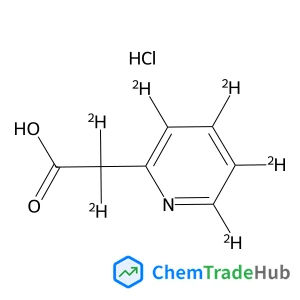
2,2-dideuterio-2-(3,4,5,6-tetradeuterio-2-pyridyl)acetic acid;hydrochloride
CAS Number:
1329799-67-8
Molecular Formula:
C7H2ClD6NO2
Recommended Suppliers





Disclaimer
This page provides academic journal information for reference and research purposes only. We are not affiliated with any journal publishers and do not handle publication submissions. For publication-related inquiries, please contact the respective journal publishers directly.
If you notice any inaccuracies in the information displayed, please contact us at support@chemtradehub.com. We will promptly review and address your concerns.