












Front cover
Literature Information
Publication Date
DOI
10.1039/C5CP90219C
Impact Factor
3.676
Authors
View Original
Abstract
A graphical abstract is available for this content
Related Literature
First example of a high-level correlated calculation of the indirect spin–spin coupling constants involving tellurium: tellurophene and divinyl telluride
Yury Yu. Rusakov, Leonid B. Krivdin, Freja F. Østerstrøm, Stephan P. A. Sauer, Vladimir A. Potapov, Svetlana V. Amosova
2013-07-03
Paper
DOI: 10.1039/C3CP51462E
Hydrogen bonding involving side chain exchangeable groups stabilizes amyloid quarternary structure
Vipin Agarwal, Rasmus Linser, Uwe Fink
2013-05-08
Paper
DOI: 10.1039/C3CP44653K
Computing Wigner distributions and time correlation functions using the quantum thermal bath method: application to proton transferspectroscopy
Marie Basire, Daniel Borgis, Rodolphe Vuilleumier
2013-05-29
Paper
DOI: 10.1039/C3CP50493J
Initiation of assembly of tau(273-284) and its ΔK280 mutant: an experimental and computational study
Megan Murray Gessel, Nichole E. LaPointe, Thanh D. Do, Michael T. Bowers, Stuart C. Feinstein
2013-03-08
Paper
DOI: 10.1039/C3CP00063J
Copper(ii)–human amylin complex protects pancreatic cells from amylin toxicity‡
Elizabeth C. Lee, Emmeline Ha, Sanghamitra Singh, Linda Legesse, Sana Ahmad, Elena Karnaukhova, Robert P. Donaldson, Aleksandar M. Jeremic
2013-06-13
Paper
DOI: 10.1039/C3CP44542A
Cooperative spin-crossover-like transitions in the inhomogeneous chain of exchange clusters
2013-04-22
Paper
DOI: 10.1039/C3CP50689D
Bistable memory devices with lower threshold voltage by extending the molecular alkyl-chain length
Wusheng Ren, Yongxiang Zhu, Jianfeng Ge, Xufeng Xu, Ru Sun, Najun Li, Hua Li, Qingfeng Xu, Junwei Zheng, Jianmei Lu
2013-04-17
Paper
DOI: 10.1039/C3CP51290H
A novel cobalt tetranitrophthalocyanine/graphene composite assembled by an in situsolvothermal synthesis method as a highly efficient electrocatalyst for the oxygen reduction reaction in alkaline medium
Guojun Lv, Lili Cui, Yanying Wu, Ying Liu, Tao Pu, Xingquan He
2013-06-03
Paper
DOI: 10.1039/C3CP51577J
Surface restructuring of Pt films on Au stepped surfaces: effects on catalytic behaviour
Mauricio J. Prieto, Germano Tremiliosi-Filho
2013-07-03
Paper
DOI: 10.1039/C3CP51513C
You might also like
Compound Q&A
What are the main uses of 1H-Indazole-6-carbonitrile (CAS: 141290-59-7)?
1H-Indazole-6-carbonitrile finds applications in pharmaceuticals, where it serve...
141290-59-71H-Indazole-6-carbon...
Compound Q&A
How should waste containing Dioctyl (2E)-2-butenedioate (CAS: 2997-85-5) be handled?
Waste containing Dioctyl (2E)-2-butenedioate (CAS: 2997-85-5) should be collecte...
2997-85-5Dioctyl (2E)-2-buten...
Compound Q&A
What industries use Sodium [(1,2-benzoxazol-3-ylmethyl)sulfonyl]azanide (CAS: 68291-98-5)?
Sodium [(1,2-benzoxazol-3-ylmethyl)sulfonyl]azanide is primarily used in pharmac...
68291-98-5Sodium [(1,2-benzoxa...
Compound Q&A
Are there alternatives to Dimethyl 4-(4,4,5,5-tetramethyl-1,3,2-dioxaborolan-2-yl)-2,6-pyridinedicarboxylate (CAS: 741709-66-0) in synthesis?
Dimethyl 4-(4,4,5,5-tetramethyl-1,3,2-dioxaborolan-2-yl)-2,6-pyridinedicarboxyla...
741709-66-0Dimethyl 4-(4,4,5,5-...
Compound Q&A
How should waste containing 2-Fluoro-6-hydrazinopyridine (CAS: 80714-39-2) be handled?
Waste containing 2-Fluoro-6-hydrazinopyridine (CAS: 80714-39-2) should be manage...
80714-39-22-Fluoro-6-hydrazino...
Compound Q&A
What is 6-Formyl-2-pyridinecarboxylic acid (CAS: 499214-11-8)?
6-Formyl-2-pyridinecarboxylic acid is an organic compound with the molecular for...
499214-11-86-Formyl-2-pyridinec...
Compound Q&A
What is the market or research trend for 3-(3,4-dimethoxyphenyl)-2,5-dimethyl-N-(2-morpholin-4-ylethyl)pyrazolo[1,5-a]pyrimidin-7-amine (CAS: 900874-91-1)?
Research trends for this compound indicate a focus on its potential applications...
900874-91-13-(3,4-dimethoxyphen...
Compound Q&A
How is 9H-Tribenzo[b,d,f]azepine (CAS: 29875-73-8) typically synthesized?
9H-Tribenzo[b,d,f]azepine is typically synthesized via a multi-step process invo...
29875-73-89H-Tribenzo[b,d,f]az...
Compound Q&A
How is 1-Cyclopropyl-7-ethoxy-6-fluoro-8-methoxy-4-oxo-1,4-dihydro-3-quinolinecarboxylic acid (CAS: 1797982-51-4) typically synthesized?
1-Cyclopropyl-7-ethoxy-6-fluoro-8-methoxy-4-oxo-1,4-dihydro-3-quinolinecarboxyli...
1797982-51-41-Cyclopropyl-7-etho...
Compound Q&A
How should waste containing Methyl 3-oxo-1,2,3,4-tetrahydro-6-quinoxalinecarboxylate (CAS: 671820-52-3) be handled?
Waste containing Methyl 3-oxo-1,2,3,4-tetrahydro-6-quinoxalinecarboxylate (CAS: ...
671820-52-3Methyl 3-oxo-1,2,3,4...
Source Journal
Physical Chemistry Chemical Physics

CiteScore:
5.5
Self-citation Rate:
10.3%
Articles per Year:
3036
Physical Chemistry Chemical Physics (PCCP) is an international journal co-owned by 19 physical chemistry and physics societies from around the world. This journal publishes original, cutting-edge research in physical chemistry, chemical physics and biophysical chemistry. To be suitable for publication in PCCP, articles must include significant innovation and/or insight into physical chemistry; this is the most important criterion that reviewers and Editors will judge against when evaluating submissions. The journal has a broad scope and welcomes contributions spanning experiment, theory, computation and data science. Topical coverage includes spectroscopy, dynamics, kinetics, statistical mechanics, thermodynamics, electrochemistry, catalysis, surface science, quantum mechanics, quantum computing and machine learning. Interdisciplinary research areas such as polymers and soft matter, materials, nanoscience, energy, surfaces/interfaces, and biophysical chemistry are welcomed if they demonstrate significant innovation and/or insight into physical chemistry. Joined experimental/theoretical studies are particularly appreciated when complementary and based on up-to-date approaches.
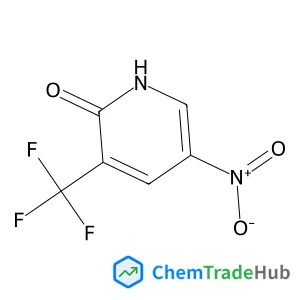
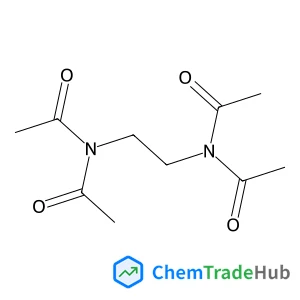
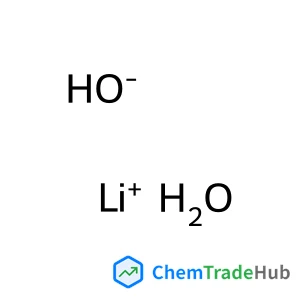
Recommended Compounds
Recommended Suppliers





Disclaimer
This page provides academic journal information for reference and research purposes only. We are not affiliated with any journal publishers and do not handle publication submissions. For publication-related inquiries, please contact the respective journal publishers directly.
If you notice any inaccuracies in the information displayed, please contact us at support@chemtradehub.com. We will promptly review and address your concerns.