


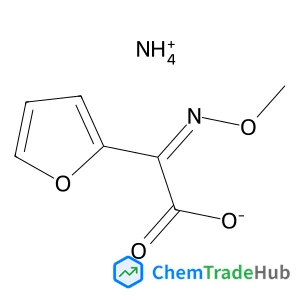
Ammonium (Z)-2-(furan-2-yl)-2-(methoxyimino)acetate
CAS Number:
97148-39-5
Molecular Formula:
C7H10N2O4
Elizabeth C. Lee, Emmeline Ha, Sanghamitra Singh, Linda Legesse, Sana Ahmad, Elena Karnaukhova, Robert P. Donaldson, Aleksandar M. Jeremic
Human amylin-derived oligomers and aggregates are believed to play an important role in the pathogenesis of type II diabetes mellitus (T2DM). In addition to amylin-evoked cell attrition, T2DM is often accompanied by elevated serum copper levels. Although previous studies have shown that human amylin, in the course of its aggregation, produces hydrogen peroxide (H2O2) in solution, and that this process is exacerbated in the presence of copper(II) ions (Cu2+), very little is known about the mechanism of interaction between Cu2+ and amylin in pancreatic β-cells, including its pathological significance. Hence, in this study we investigated the mechanism by which Cu2+ and human amylin catalyze formation of reactive oxygen species (ROS) in cells and in vitro, and examined the modulatory effect of Cu2+ on amylin aggregation and toxicity in pancreatic rat insulinoma (RIN-m5F) β-cells. Our results indicate that Cu2+ interacts with human and rat amylin to form metalo-peptide complexes with low aggregative and oxidative properties. Human and non-amyloidogenic rat amylin produced minute (nM) amounts of H2O2, the accumulation of which was slightly enhanced in the presence of Cu2+. In a marked contrast to human and rat amylin, and in the presence of the reducing agents glutathione and ascorbate, Cu2+ produced μM concentrations of H2O2 surpassing the amylin effect by several fold. The current study shows that human and rat amylin not only produce but also quench H2O2, and that human but not rat amylin significantly decreases the amount of H2O2 in solution produced by Cu2+ and glutathione. Similarly, human amylin was found to also decrease hydroxyl radical formation elicited by Cu2+ and glutathione. Furthermore, Cu2+ mitigated the toxic effect of human amylin by inhibiting activation of pro-apoptotic caspase-3 and stress-kinase signaling pathways in rat pancreatic insulinoma cells in part by stabilizing human amylin in its native conformational state. This sacrificial quenching of metal-catalyzed ROS by human amylin and copper's anti-aggregative and anti-apoptotic properties suggest a novel and protective role for the copper–amylin complex.

Contact Lens & Anterior Eye

Nature Reviews Drug Discovery

Journal of Enzyme inhibition and Medicinal Chemistry

European Journal of Organic Chemistry

Angewandte Chemie International Edition

Environmental Toxicology and Pharmacology

Green Chemistry

Molecular Diversity

Molecules

Mini-Reviews in Medicinal Chemistry
Sabine Bertho, Joke Vandenbergh, Guy Van Assche, Xiaoqing Yin, Jingdan Shi, Thomas Cleij, Laurence Lutsen, Bruno Van Mele
DOI: 10.1039/C0CP02814B
Takeshi Enomoto, Shunsuke Kanematsu, Katsuhiko Tsunashima, Kazuhiko Matsumoto, Rika Hagiwara
DOI: 10.1039/C1CP20285E
Amandine Maréchal, Alexander V. Ruban, Bruno Robert, Andrew A. Pascal, Norbert C. A. de Ruijter, Rienk van Grondelle
DOI: 10.1039/C1CP20331B
Dakui Zhang, Virginia Martín, Inmaculada García-Moreno, Angel Costela, M. Eugenia Pérez-Ojeda, Yi Xiao
DOI: 10.1039/C1CP21038F
Belén Maté, Yamilet Rodriguez-Lazcano, Óscar Gálvez, Isabel Tanarro, Rafael Escribano
DOI: 10.1039/C1CP20899C
Yugang Sun, Stephen K. Gray, Sheng Peng
DOI: 10.1039/C1CP20265K
J. M. Anglada, J. González, M. Torrent-Sucarrat
DOI: 10.1039/C1CP20872A
Soumik Sarkar, Abhinandan Makhal, Tanujjal Bora, Sunandan Baruah, Joydeep Dutta, Samir Kumar Pal
DOI: 10.1039/C1CP20892F
Toru Yajima, Yingying Yu, Masayuki Futamata
DOI: 10.1039/C1CP00046B
1H-Indazole-6-carbonitrile finds applications in pharmaceuticals, where it serve...
Waste containing Dioctyl (2E)-2-butenedioate (CAS: 2997-85-5) should be collecte...
Sodium [(1,2-benzoxazol-3-ylmethyl)sulfonyl]azanide is primarily used in pharmac...
Dimethyl 4-(4,4,5,5-tetramethyl-1,3,2-dioxaborolan-2-yl)-2,6-pyridinedicarboxyla...
Waste containing 2-Fluoro-6-hydrazinopyridine (CAS: 80714-39-2) should be manage...
6-Formyl-2-pyridinecarboxylic acid is an organic compound with the molecular for...
Research trends for this compound indicate a focus on its potential applications...
9H-Tribenzo[b,d,f]azepine is typically synthesized via a multi-step process invo...
1-Cyclopropyl-7-ethoxy-6-fluoro-8-methoxy-4-oxo-1,4-dihydro-3-quinolinecarboxyli...
Waste containing Methyl 3-oxo-1,2,3,4-tetrahydro-6-quinoxalinecarboxylate (CAS: ...

Physical Chemistry Chemical Physics (PCCP) is an international journal co-owned by 19 physical chemistry and physics societies from around the world. This journal publishes original, cutting-edge research in physical chemistry, chemical physics and biophysical chemistry. To be suitable for publication in PCCP, articles must include significant innovation and/or insight into physical chemistry; this is the most important criterion that reviewers and Editors will judge against when evaluating submissions. The journal has a broad scope and welcomes contributions spanning experiment, theory, computation and data science. Topical coverage includes spectroscopy, dynamics, kinetics, statistical mechanics, thermodynamics, electrochemistry, catalysis, surface science, quantum mechanics, quantum computing and machine learning. Interdisciplinary research areas such as polymers and soft matter, materials, nanoscience, energy, surfaces/interfaces, and biophysical chemistry are welcomed if they demonstrate significant innovation and/or insight into physical chemistry. Joined experimental/theoretical studies are particularly appreciated when complementary and based on up-to-date approaches.
![Sodium 3-[(E)-(4-anilinophenyl)diazenyl]benzenesulfonate structure](https://static.chemtradehub.com/structs/587/587-98-4-035f.webp "Sodium 3-[(E)-(4-anilinophenyl)diazenyl]benzenesulfonate structure")




