













Interaction of the ionic liquid [BMP][TFSA] with rutile TiO2(110) and coadsorbed lithium
Literature Information
Publication Date
2016-01-28
DOI
10.1039/C5CP07433A
Impact Factor
3.676
Authors
View Original
Abstract
Aiming at a fundamental understanding of the processes at the electrode|ionic liquid interface in Li ion batteries, we investigated the interaction of the ionic liquid n-butyl-n-methylpyrrolidinium bis(trifluoromethylsulfonyl)imide [BMP][TFSA] and of Li with a reduced rutile TiO2(110) (1 × 1) surface as well as the interaction between [BMP][TFSA] and Li on the TiO2(110) surface under ultrahigh vacuum (UHV) conditions by X-ray photoelectron spectroscopy and scanning tunnelling microscopy. Between 80 K and 340 K [BMP][TFSA] adsorbs molecularly on the surface and at higher temperatures decomposition is observed, resulting in products such as Sad, Fad and TiNx. The decomposition pattern is compared to proposals based on theory. Small amounts of Li intercalate even at 80 K into TiO2(110), forming Li+ and Ti3+ species. The stoichiometry in the near surface region corresponds to Li7Ti5O12. For higher coverages in the range of several monolayers part of the Li remains on the surface, forming a Li2O cover layer. At 300 K, Ti3+ species become sufficiently mobile to diffuse into the bulk. Li post-deposition on a [BMP][TFSA] covered TiO2(110) surface at 80 K results in two competing reactions, Li intercalation and reaction with the IL, resulting in the decomposition of the IL. Upon warming up, the Ti3+ formed at low T is consumed by reaction with the IL adlayer and intermediate decomposition products. Post-deposition of [BMP][TFSA] (300 K) on a surface pre-covered with a Li2O/Li7Ti5O12 layer results in the partial reaction of [BMP][TFSA] with the Li+ and Ti3+ species, which gets completed at higher temperatures.
Recommended Journals
Related Literature
One-pot noncovalent method to functionalize multi-walled carbon nanotubes using cyclomatrix-type polyphosphazenes
Jianwei Fu, Xiaobin Huang, Yawen Huang, Jiawei Zhang, Xiaozhen Tang
2008-12-22
Communication
DOI: 10.1039/B818071G
Nanocrystals of [Cu3(btc)2] (HKUST-1): a combined time-resolved light scattering and scanning electron microscopy study
Denise Zacher, Jianing Liu, Klaus Huber, Roland A. Fischer
2009-01-27
Communication
DOI: 10.1039/B819580C
Detection of single-nucleotide mismatches using scanning electrochemical microscopy
Piotr Michal Diakowski, Heinz-Bernhard Kraatz
2009-01-05
Communication
DOI: 10.1039/B819876D
(H2NC4H8NCH2CH2NH2)2Zn2Sn2Se7: a hybrid ternary semiconductor stabilized by amine molecules acting simultaneously as ligands and counterions
Aggelos Philippidis, Thomas Bakas, Pantelis N. Trikalitis
2009-02-03
Communication
DOI: 10.1039/B821859E
Activation of metal-bound η5-C5Me5groups to Diels–Alder addition of 3O2 and other dienophiles
Neil M. Boag, K. Mohan Rao
2009-01-27
Communication
DOI: 10.1039/B818537A
Directed covalent assembly of rigid organic nanodisks using self-assembled temporary scaffolds‡
Samuel Tekobo, Eugene Pinkhassik
2009-01-06
Communication
DOI: 10.1039/B817598E
In situ antimony doping of solution-grown ZnOnanorods
Joe Briscoe, Diego E. Gallardo, Steve Dunn
2009-01-19
Communication
DOI: 10.1039/B820797F
Transition metalborylene complexes: boron analogues of classical organometallic systems
Dragoslav Vidovic, Glesni A. Pierce, Simon Aldridge
2009-01-07
Feature Article
DOI: 10.1039/B816042B
Nitrogen-doped titania nanosheets towards visible light response
Lianzhou Wang, Chenghua Sun, Zhigang Chen, Xiaoxia Yan, Lina Cheng, Hui-Ming Cheng, Gao Qing (Max) Lu
2009-01-22
Communication
DOI: 10.1039/B820483G
You might also like
Compound Q&A
What precautions should be taken when handling 2-Methyl-2-propanyl 5-amino-2-thiophenecarboxylate (CAS: 1498311-57-1)?
When handling 2-Methyl-2-propanyl 5-amino-2-thiophenecarboxylate (CAS: 1498311-5...
1498311-57-12-Methyl-2-propanyl ...
Compound Q&A
What are the physical and chemical properties of 5-Bromo-1,2-dichloro-3-fluorobenzene (CAS: 1000572-93-9)?
5-Bromo-1,2-dichloro-3-fluorobenzene (CAS: 1000572-93-9) is a crystalline solid ...
1000572-93-95-Bromo-1,2-dichloro...
Compound Q&A
How should (2R)-2-Amino-2-(4-bromophenyl)ethanol (CAS: 354153-64-3) be stored?
(2R)-2-Amino-2-(4-bromophenyl)ethanol (CAS: 354153-64-3) should be stored in a c...
354153-64-3(2R)-2-Amino-2-(4-br...
Compound Q&A
What regulatory guidelines apply to Methyl 4-(aminomethyl)tetrahydro-2H-pyran-4-carboxylate hydrochloride (CAS: 362707-24-2)?
Methyl 4-(aminomethyl)tetrahydro-2H-pyran-4-carboxylate hydrochloride (CAS: 3627...
362707-24-2Methyl 4-(aminomethy...
Compound Q&A
What are the main uses of 1,4-dimethyl-1H-pyrazole-5-sulfonyl chloride (CAS: 1174834-52-6)?
1,4-Dimethyl-1H-pyrazole-5-sulfonyl chloride is primarily used as an intermediat...
1174834-52-61,4-dimethyl-1H-pyra...
Compound Q&A
Is Dinaphtho[1,2-b:2',1'-d]furan (CAS: 239-69-0) safe?
Dinaphtho[1,2-b:2',1'-d]furan is generally safe when handled with appropriate pe...
239-69-0Dinaphtho[1,2-b:2',1...
Compound Q&A
What is the market or research trend for 7-Methyl-7,9-dihydro-1H-purine-2,6,8(3H)-trione (CAS: 612-37-3)?
The market for 7-Methyl-7,9-dihydro-1H-purine-2,6,8(3H)-trione (CAS: 612-37-3) i...
612-37-37-Methyl-7,9-dihydro...
Compound Q&A
What are the physical and chemical properties of 2-(4-Chlorophenyl)malonaldehyde (CAS: 205676-17-1)?
2-(4-Chlorophenyl)malonaldehyde (CAS: 205676-17-1) is a colorless or light yello...
205676-17-12-(4-Chlorophenyl)ma...
Compound Q&A
How is 2-Methylchrysene (CAS: 3351-32-4) typically synthesized?
2-Methylchrysene (CAS: 3351-32-4) is typically synthesized via the reaction of c...
3351-32-42-Methylchrysene
Compound Q&A
Is N-(6-aminopyrimidin-4-yl)acetamide (CAS: 89533-23-3) safe?
N-(6-aminopyrimidin-4-yl)acetamide (CAS: 89533-23-3) is generally considered saf...
89533-23-3N-(6-aminopyrimidin-...
Source Journal
Physical Chemistry Chemical Physics

CiteScore:
5.5
Self-citation Rate:
10.3%
Articles per Year:
3036
Physical Chemistry Chemical Physics (PCCP) is an international journal co-owned by 19 physical chemistry and physics societies from around the world. This journal publishes original, cutting-edge research in physical chemistry, chemical physics and biophysical chemistry. To be suitable for publication in PCCP, articles must include significant innovation and/or insight into physical chemistry; this is the most important criterion that reviewers and Editors will judge against when evaluating submissions. The journal has a broad scope and welcomes contributions spanning experiment, theory, computation and data science. Topical coverage includes spectroscopy, dynamics, kinetics, statistical mechanics, thermodynamics, electrochemistry, catalysis, surface science, quantum mechanics, quantum computing and machine learning. Interdisciplinary research areas such as polymers and soft matter, materials, nanoscience, energy, surfaces/interfaces, and biophysical chemistry are welcomed if they demonstrate significant innovation and/or insight into physical chemistry. Joined experimental/theoretical studies are particularly appreciated when complementary and based on up-to-date approaches.
Recommended Compounds
![3-[7-Amino-3-(3-pyridinyl)pyrazolo[1,5-a]pyrimidin-6-yl]phenol structure](https://static.chemtradehub.com/structs/861/861249-77-6-025b.webp "3-[7-Amino-3-(3-pyridinyl)pyrazolo[1,5-a]pyrimidin-6-yl]phenol structure")
3-[7-Amino-3-(3-pyridinyl)pyrazolo[1,5-a]pyrimidin-6-yl]phenol
CAS Number:
861249-77-6
Molecular Formula:
C17H13N5O
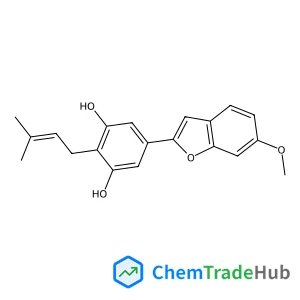
5-(6-Methoxy-1-benzofuran-2-yl)-2-(3-methyl-2-buten-1-yl)-1,3-benzenediol
CAS Number:
1017277-40-5
Molecular Formula:
C20H20O4
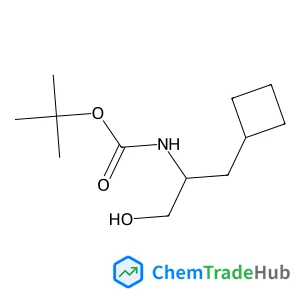
2-Methyl-2-propanyl (1-cyclobutyl-3-hydroxy-2-propanyl)carbamate
CAS Number:
816429-99-9
Molecular Formula:
C12H23NO3

Recommended Suppliers





Disclaimer
This page provides academic journal information for reference and research purposes only. We are not affiliated with any journal publishers and do not handle publication submissions. For publication-related inquiries, please contact the respective journal publishers directly.
If you notice any inaccuracies in the information displayed, please contact us at support@chemtradehub.com. We will promptly review and address your concerns.