



Evaluation of O/W microemulsions to penetrate the capillary structure of woody biomass: interplay between composition and formulation in green processing
Literature Information
Publication Date
2013-09-09
DOI
10.1039/C3GC41325J
Impact Factor
10.182
Authors
Daniel Saloni
View Original
Abstract
The ability of microemulsions to overcome the complex capillary structure of wood is revealed in relation to its composition and formulation. The oil phase (limonene in this study) of O/W microemulsions is found to be critical for effective flooding. The type of amphiphile molecule used, including sodium lignosulfonate and alkyl polyglucosides as well as reference sodium dodecylsulfate and silicone-based surfactants, together with the viscosity of the resulting microemulsions were the main factors determining the dynamics and extent of fluid penetration. The associated observations were ascribed to the balance of the affinities of the surfactants for the substrate and its conductive elements. Owing to the inherent morphological and chemical features, large differences were observed as far as impregnation susceptibility of different wood types is concerned. By using appropriate surfactant mixtures it was possible for the microemulsions to penetrate the most recalcitrant woody biomass studied, with efficiencies up to 83% higher than that of water, at atmospheric pressure and room temperature. Application of microemulsions is a new alternative for green and efficient pre-treatment of woody biomass in biorefineries, to deliver (bio)chemical functions to the constrained spaces of the cell wall and to increase its accessibility.
Recommended Journals

Polycyclic Aromatic Compounds

Journal of Asian Natural Products Research

Main Group Chemistry

Critical Reviews in Solid State and Materials Sciences

Journal of the Indian Institute of Science

Bioorganic & Medicinal Chemistry Letters

Biocatalysis and Biotransformation

Colloid Journal

Medicinal Chemistry Research

Topics in Catalysis
Related Literature
Thermo-responsive polymer aided spheroid culture in cryogel based platform for high throughput drug screening
J. Sarkar, A. Kumar
2016-03-30
Paper
DOI: 10.1039/C6AN00356G
A colorimetric and fluorescent dual probe for palladium in aqueous medium and live cell imaging
Jin-wu Yan, Xiao-lin Wang, Qi-feng Tan, Pei-fen Yao, Jia-heng Tan, Lei Zhang
2016-03-11
Communication
DOI: 10.1039/C6AN00204H
Enhanced fluorescent resonant energy transfer of DNA conjugates complexed with surfactants and divalent metal ions
Taeseok Oh, Jae-Young Choi
2016-03-08
Communication
DOI: 10.1039/C5AN02516H
Efficient enantiorecognition of amino acids under a stimuli-responsive system: synthesis, characterization and application of electroactive rotaxane
Datong Wu, Fei Pan, Gao-Chao Fan, Ziming Zhu, Li Gao, Yongxin Tao, Yong Kong
2019-09-23
Paper
DOI: 10.1039/C9AN01692A
Surface activation of CNT Webs towards layer by layer assembly of biosensors
Mustafa Musameh, Chi P. Huynh, Mark Hickey, Ilias Louis Kyratzis
2016-01-21
Paper
DOI: 10.1039/C5AN02547H
Electrochemical enzyme-linked immunosorbent assay (e-ELISA) for parasitic nematode Ostertagia ostertagi (brown stomach worm) infections in dairy cattle
Baljit Singh, Evangelia Flampouri, Eithne Dempsey
2019-08-15
Paper
DOI: 10.1039/C9AN00982E
Estimation of bisulfate in edible plant foods, dog urine, and drugs: picomolar level detection and bio-imaging in living organisms
2019-08-19
Paper
DOI: 10.1039/C9AN01078E
An evaluation of monovalent, divalent, and trivalent cations as aggregating agents for surface enhanced Raman spectroscopy (SERS) analysis of synthetic cannabinoids
Thaddeus Mostowtt, Jonathan Munoz, Bruce McCord
2019-10-02
Paper
DOI: 10.1039/C9AN01309A
Development of a new in situ analysis technique applying luminescence of local coordination sensors: principle and application for monitoring metal-ligand exchange processes
Huayna Terraschke, Laura Ruiz Arana, Patric Lindenberg, Wolfgang Bensch
2016-03-15
Paper
DOI: 10.1039/C6AN00075D
You might also like
Compound Q&A
What are the main uses of 1-(3-Aminophenyl)-3-[(3R)-1-(3,3-dimethyl-2-oxobutyl)-2-oxo-5-(2-pyridinyl)-2,3-dihydro-1H-1,4-benzodiazepin-3-yl]urea (CAS: 155412-88-7)?
This compound is mainly used as an intermediate in the synthesis of antipsychoti...
155412-88-71-(3-Aminophenyl)-3-...
Compound Q&A
How should waste containing 1-(D-Ribofuranosyl)-1,4-dihydro-3-pyridinecarboxamide (CAS: 19132-12-8) be handled?
Waste containing 1-(D-Ribofuranosyl)-1,4-dihydro-3-pyridinecarboxamide (CAS: 191...
19132-12-81-(D-Ribofuranosyl)-...
Compound Q&A
What regulatory guidelines apply to 2-Methyl-2-propanyl 3-bromo-3-(hydroxymethyl)-1-azetidinecarboxylate (CAS: 2007919-81-3)?
2-Methyl-2-propanyl 3-bromo-3-(hydroxymethyl)-1-azetidinecarboxylate (CAS: 20079...
2007919-81-32-Methyl-2-propanyl ...
Compound Q&A
What is N-(4-Chloro-2-pyridinyl)acetamide (CAS: 245056-66-0)?
N-(4-Chloro-2-pyridinyl)acetamide (CAS: 245056-66-0) is a chemical compound with...
245056-66-0N-(4-Chloro-2-pyridi...
Compound Q&A
What is 5-Chloro-2-hydroxybenzoic acid (CAS: 321-14-2)?
5-Chloro-2-hydroxybenzoic acid, also known as 5-chlorosalicylic acid, is an arom...
321-14-25-Chloro-2-hydroxybe...
Compound Q&A
What precautions should be taken when handling 1,1-Dichloro-1-fluoroethane (CAS: 1717-00-6)?
When handling 1,1-Dichloro-1-fluoroethane (CAS: 1717-00-6), it is important to u...
1717-00-61,1-Dichloro-1-fluor...
Compound Q&A
What are the physical and chemical properties of Fmoc-(2S,3R)-3-phenylpyrrolidine-2-carboxylic acid (CAS: 281655-32-1)?
Fmoc-(2S,3R)-3-phenylpyrrolidine-2-carboxylic acid is a white crystalline solid ...
281655-32-1Fmoc-(2S,3R)-3-pheny...
Compound Q&A
What are the main uses of 4-Amino-5-bromo-2-pyridinecarboxylic acid (CAS: 1363381-01-4)?
4-Amino-5-bromo-2-pyridinecarboxylic acid is primarily used as a precursor in th...
1363381-01-44-Amino-5-bromo-2-py...
Compound Q&A
What precautions should be taken when handling (S)-tert-butyl 2-((2-(4-bromophenyl)-2-oxoethyl)carbamoyl)pyrrolidine-1-carboxylate (CAS: 1007881-98-2)?
Handling this compound should be done with personal protective equipment (PPE) i...
1007881-98-2(S)-tert-butyl 2-((2...
Compound Q&A
What precautions should be taken when handling 8-bromo-2,2-dimethyl-3,4-dihydro-2H-1,4-benzoxazin-3-one (CAS: 688363-73-7)?
When handling 8-bromo-2,2-dimethyl-3,4-dihydro-2H-1,4-benzoxazin-3-one, use prop...
688363-73-78-bromo-2,2-dimethyl...
Source Journal
Green Chemistry

CiteScore:
16.1
Self-citation Rate:
7.5%
Articles per Year:
944
Green Chemistry provides a unique forum for the publication of innovative research on the development of alternative green and sustainable technologies. The scope of Green Chemistry is based on, but not limited to, the definition proposed by Anastas and Warner (Green Chemistry: Theory and Practice, P T Anastas and J C Warner, Oxford University Press, Oxford, 1998). Green chemistry is the utilisation of a set of principles that reduces or eliminates the use or generation of hazardous substances in the design, manufacture and application of chemical products. Green Chemistry is at the frontiers of this continuously-evolving interdisciplinary science and publishes research that attempts to reduce the environmental impact of the chemical enterprise by developing a technology base that is inherently non-toxic to living things and the environment. Submissions on all aspects of research relating to the endeavour are welcome. The journal publishes original and significant cutting-edge research that is likely to be of wide general appeal. To be published, work must present a significant advance in green chemistry. Papers must contain a comparison with existing methods and demonstrate advantages over those methods before publication can be considered. For more information please see this Editorial. Coverage includes the following, but is not limited to: Design (e.g. biomimicry, design for degradation/recycling/reduced toxicity…) Reagents & Feedstocks (e.g. renewables, CO2, solvents, auxiliary agents, waste utilization…) Synthesis (e.g. organic, inorganic, synthetic biology…) Catalysis (e.g. homogeneous, heterogeneous, enzyme, whole cell…) Process (e.g. process design, intensification, separations, recycling, efficiency…) Energy (e.g. renewable energy, fuels, photovoltaics, fuel cells, energy storage, energy carriers…) Applications (e.g. electronics, dyes, consumer products, coatings, pharmaceuticals, preservatives, building materials, chemicals for industry/agriculture/mining…) Impact (e.g. safety, metrics, LCA, sustainability, (eco)toxicology…) Green chemistry is, by definition, a continuously-evolving frontier. Therefore, the inclusion of a particular material or technology does not, of itself, guarantee that a paper is suitable for the journal. To be suitable, the novel advance should have the potential for reduced environmental impact relative to the state of the art. Green Chemistry does not normally deal with research associated with 'end-of-pipe' or remediation issues.
Recommended Compounds
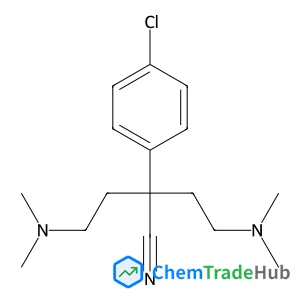
2-(4-Chlorophenyl)-4-(dimethylamino)-2-(2-(dimethylamino)ethyl)butanenitrile
CAS Number:
1246816-57-8
Molecular Formula:
C16H24ClN3
![2,6-Bis({(2R)-2-[hydroxy(diphenyl)methyl]-1-pyrrolidinyl}methyl)-4-methylphenol structure](https://static.chemtradehub.com/structs/877/877395-58-9-70bf.webp "2,6-Bis({(2R)-2-[hydroxy(diphenyl)methyl]-1-pyrrolidinyl}methyl)-4-methylphenol structure")
2,6-Bis({(2R)-2-[hydroxy(diphenyl)methyl]-1-pyrrolidinyl}methyl)-4-methylphenol
CAS Number:
877395-58-9
Molecular Formula:
C43H46N2O3
![4-Chloro-3-(trifluoromethyl)-1H-pyrrolo[2,3-b]pyridine structure](https://static.chemtradehub.com/structs/869/869335-75-1-a9d0.webp "4-Chloro-3-(trifluoromethyl)-1H-pyrrolo[2,3-b]pyridine structure")
4-Chloro-3-(trifluoromethyl)-1H-pyrrolo[2,3-b]pyridine
CAS Number:
869335-75-1
Molecular Formula:
C8H4ClF3N2

Recommended Suppliers





Disclaimer
This page provides academic journal information for reference and research purposes only. We are not affiliated with any journal publishers and do not handle publication submissions. For publication-related inquiries, please contact the respective journal publishers directly.
If you notice any inaccuracies in the information displayed, please contact us at support@chemtradehub.com. We will promptly review and address your concerns.