












Metal Ni-loaded g-C3N4 for enhanced photocatalytic H2 evolution activity: the change in surface band bending
Literature Information
Publication Date
2015-10-14
DOI
10.1039/C5CP05158D
Impact Factor
3.676
Authors
Lingling Bi, Dandan Xu, Lijing Zhang, Yanhong Lin, Tengfeng Xie
View Original
Abstract
A series of Ni@g-C3N4 composites were synthesized by a simple solvent thermal method using melamine and acetylacetone nickel as precursors. The results of X-ray diffraction, transmission electron microscopy and high resolution transmission electron microscopy indicate that Ni was successfully loaded on g-C3N4. And the Ni loaded greatly enhances the photocatalytic H2 evolution activity of g-C3N4 compared to the pure g-C3N4. In order to study the role of Ni, the surface photovoltage, the surface photocurrent and photoluminescence measurements were used to investigate the photogenerated charge properties of g-C3N4. What is more, Mott–Schottky plots and work function measurements confirmed the surface band bending change of g-C3N4 contacting with Ni. Those results demonstrate that Ni coating deepens surface band bending of g-C3N4, resulting in higher separation efficiency of photogenerated charge carriers, which is contributed to the enhanced photocatalytic H2 evolution activity.
Related Literature
Pushing the frontiers: boron-11 NMR as a method for quantitative boron analysis and its application to determine boric acid in commercial biocides
Luis Manuel Aguilera-Sáez, José Raúl Belmonte-Sánchez, Roberto Romero-González, José Luis Martínez Vidal, Francisco Javier Arrebola, Antonia Garrido Frenich, Ignacio Fernández
2018-09-05
Paper
DOI: 10.1039/C8AN00505B
Development of a high throughput (HT) Raman spectroscopy method for rapid screening of liquid blood plasma from prostate cancer patients
Jane Bryant, John Armstrong, Mary Dunne, Marie Finn
2016-12-13
Paper
DOI: 10.1039/C6AN02100J
Interaction study of cancer cells and fibroblasts on a spatially confined oxygen gradient microfluidic chip to investigate the tumor microenvironment
Wei Sun, Yuqing Chen, Yuerong Wang, Pei Luo, Min Zhang, Hongyang Zhang, Ping Hu
2018-10-01
Paper
DOI: 10.1039/C8AN01216D
Desktop NMR for structure elucidation and identification of strychnine adulteration
Kawarpal Singh, Bernhard Blümich
2017-03-15
Paper
DOI: 10.1039/C7AN00020K
SIproc: an open-source biomedical data processing platform for large hyperspectral images
Sebastian Berisha, Shengyuan Chang, Sam Saki, Davar Daeinejad, Ziqi He, Rupali Mankar, David Mayerich
2016-11-23
Paper
DOI: 10.1039/C6AN02082H
An up-converting phosphor technology-based lateral flow assay for point-of-collection detection of morphine and methamphetamine in saliva
Qiushi Hu, Qiaozhen Wei, Pingping Zhang, Shuang Li, Lei Xue, Ruifu Yang, Lei Zhou
2018-08-01
Paper
DOI: 10.1039/C8AN00651B
On-line coupling between capillary electrophoresis and microscale thermophoresis (CE–MST); the proof-of-concept
Paweł M. Nowak, Michał Woźniakiewicz
2018-09-07
Communication
DOI: 10.1039/C8AN01191E
You might also like
Compound Q&A
What is the market or research trend for N-(4-Methoxybenzyl)-2-pyridinamine (CAS: 52818-63-0)?
N-(4-Methoxybenzyl)-2-pyridinamine (CAS: 52818-63-0) is increasingly being used ...
52818-63-0N-(4-Methoxybenzyl)-...
Compound Q&A
What precautions should be taken when handling Ethyl 4-(2-chlorophenyl)-1,3-thiazole-2-carboxylate (CAS: 1050507-06-6)?
When handling Ethyl 4-(2-chlorophenyl)-1,3-thiazole-2-carboxylate, appropriate p...
1050507-06-6Ethyl 4-(2-chlorophe...
Compound Q&A
What regulatory guidelines apply to diethyldiselane (CAS: 628-39-7)?
Diethyldiselane (CAS: 628-39-7) is classified under the Globally Harmonized Syst...
628-39-7Diethyldiselane
Compound Q&A
What is the market or research trend for oxocopper (CAS: 12053-18-8)?
The market for oxocopper (CAS: 12053-18-8) is primarily driven by its use in cat...
12053-18-8oxocopper; oxo-(oxoc...
Compound Q&A
What is the market or research trend for 5-{[(2-Methyl-2-propanyl)oxy]carbonyl}-5-azaspiro[2.4]heptane-7-carboxylic acid?
The market for 5-{[(2-Methyl-2-propanyl)oxy]carbonyl}-5-azaspiro[2.4]heptane-7-c...
1268519-54-55-{[(2-Methyl-2-prop...
Compound Q&A
What is 2-(1-Pyrrolidinyl)-4-pyridinamine (CAS: 35981-63-6)?
2-(1-Pyrrolidinyl)-4-pyridinamine is a chemical compound with the CAS number 359...
35981-63-62-(1-Pyrrolidinyl)-4...
Compound Q&A
What are the physical and chemical properties of 2-(3-Pyridinyl)-1-azabicyclo[2.2.2]octane (CAS: 91556-75-1)?
2-(3-Pyridinyl)-1-azabicyclo[2.2.2]octane (CAS: 91556-75-1) is a crystalline sol...
91556-75-12-(3-Pyridinyl)-1-az...
Compound Q&A
How is (S)-Alpha-allyl-proline hydrochloride (CAS: 129704-91-2) typically synthesized?
(S)-Alpha-allyl-proline hydrochloride is usually synthesized via a Wittig reacti...
129704-91-2(S)-Alpha-allyl-prol...
Compound Q&A
What is 3-Methyl-1,2-oxazole-5-carboxylic acid (CAS: 4857-42-5)?
3-Methyl-1,2-oxazole-5-carboxylic acid (CAS: 4857-42-5) is an organic compound w...
4857-42-53-Methyl-1,2-oxazole...
Compound Q&A
How is Lys-SMCC-DM1 (CAS: 1281816-04-3) typically synthesized?
Lys-SMCC-DM1 is synthesized via a multi-step process involving the coupling of S...
1281816-04-3Lys-SMCC-DM1
Source Journal
Physical Chemistry Chemical Physics

CiteScore:
5.5
Self-citation Rate:
10.3%
Articles per Year:
3036
Physical Chemistry Chemical Physics (PCCP) is an international journal co-owned by 19 physical chemistry and physics societies from around the world. This journal publishes original, cutting-edge research in physical chemistry, chemical physics and biophysical chemistry. To be suitable for publication in PCCP, articles must include significant innovation and/or insight into physical chemistry; this is the most important criterion that reviewers and Editors will judge against when evaluating submissions. The journal has a broad scope and welcomes contributions spanning experiment, theory, computation and data science. Topical coverage includes spectroscopy, dynamics, kinetics, statistical mechanics, thermodynamics, electrochemistry, catalysis, surface science, quantum mechanics, quantum computing and machine learning. Interdisciplinary research areas such as polymers and soft matter, materials, nanoscience, energy, surfaces/interfaces, and biophysical chemistry are welcomed if they demonstrate significant innovation and/or insight into physical chemistry. Joined experimental/theoretical studies are particularly appreciated when complementary and based on up-to-date approaches.
Recommended Compounds

(3alpha,5beta,6alpha,7alpha)-6-Ethylcholane-3,7,24-triol
CAS Number:
1537866-49-1
Molecular Formula:
C26H46O3
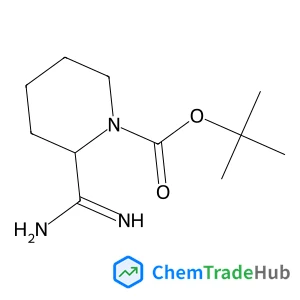
2-Methyl-2-propanyl 2-carbamimidoyl-1-piperidinecarboxylate
CAS Number:
1258640-98-0
Molecular Formula:
C11H21N3O2
![N-{[(2-Methyl-2-propanyl)oxy]carbonyl}-L-methionylglycine structure](https://static.chemtradehub.com/structs/234/23446-03-9-e1e5.webp "N-{[(2-Methyl-2-propanyl)oxy]carbonyl}-L-methionylglycine structure")
N-{[(2-Methyl-2-propanyl)oxy]carbonyl}-L-methionylglycine
CAS Number:
23446-03-9
Molecular Formula:
C12H22N2O5S
Recommended Suppliers




Disclaimer
This page provides academic journal information for reference and research purposes only. We are not affiliated with any journal publishers and do not handle publication submissions. For publication-related inquiries, please contact the respective journal publishers directly.
If you notice any inaccuracies in the information displayed, please contact us at support@chemtradehub.com. We will promptly review and address your concerns.