












An extrapolation method for the efficient calculation of molecular response properties within Born–Oppenheimer molecular dynamics
Literature Information
Publication Date
2013-05-10
DOI
10.1039/C3CP50204J
Impact Factor
3.676
Authors
View Original
Abstract
The calculation of molecular response properties in dynamic molecular systems is a major challenge that requires sampling over many steps of, e.g., Born–Oppenheimer molecular dynamics (BO-MD) simulations. We present an extrapolation scheme to accelerate such calculations for multiple steps within BO-MD trajectories or equivalently within other sampling methods of conformational space. The extrapolation scheme is related to the one introduced by Pulay and Fogarasi [Chem. Phys. Lett., 2004, 386, 272] for self-consistent field (SCF) energy calculations. We extend the extrapolation to the quantities within our density matrix-based Laplace-transformed coupled perturbed SCF (DL-CPSCF) method that allows for linear-scaling calculations of response properties for large molecular systems. Here, we focus on the example of calculating NMR chemical shifts for which the number of required DL-CPSCF iterations reduces by roughly 40–70%.
Related Literature
Core–shell CdSeTe/ZnS quantum dots for the detection of microRNA-155 based on the fluorescence resonance energy transfer technique via the formation of a network structure
Feng Cui, Qianying Qiu, Gang Peng, Xiaoyan Li, Xi Liu, Xiaojun Chen
2019-07-11
Paper
DOI: 10.1039/C9AY00783K
A new analytical method for the determination of beta-blockers and one metabolite in the influents and effluents of three urban wastewater treatment plants
Gabriel-Lucian Radu, Roxana Scutariu
2019-08-13
Paper
DOI: 10.1039/C9AY01597C
Homopropargyl as a new recognition moiety of a fluorescent probe for detection of palladium in living cells
Miao Chen, Xianhui Wang, Nannan Wang, Xin Ji, Jinling He, Jian Zhang
2019-07-15
Paper
DOI: 10.1039/C9AY00844F
Preparation and application of molecularly imprinted polymers for the selective extraction of naringin and genistein from herbal medicines
Zhimin Luo, Aiping Xiao, Guoning Chen, Qi Guo, Chun Chang, Aiguo Zeng, Qiang Fu
2019-08-28
Paper
DOI: 10.1039/C9AY01503E
A highly efficient fluorescent probe based on tetrahydroxanthylium–coumarin for the detection of bisulfite in mitochondria
Meng-Xiang Wu, Xue-Rui Wei, Yu-Fang Wei, Ru Sun, Yu-Jie Xu
2019-07-29
Paper
DOI: 10.1039/C9AY01355E
Green sensors for voltammetric determination of lindane in water samples using bare and nylon 6,6 modified pencil electrodes
2019-09-18
Paper
DOI: 10.1039/C9AY01589B
Development of an immunochromatographic strip for the detection of rosiglitazone in functional foods based on monoclonal antibodies
Gang Cui
2019-08-22
Paper
DOI: 10.1039/C9AY01534E
A robust method for critical micelle concentration determination using coumarin-6 as a fluorescent probe
Arnon Fluksman, Ofra Benny
2019-07-01
Paper
DOI: 10.1039/C9AY00577C
Correction: Fluorescence of a chiral pentaphene derivative derived from the hexabenzocoronene Motif
Philipp Rietsch, Jan Soyka, Steffen Brülls, Jasmin Er, Katrin Hoffmann, Julia Beerhues, Biprajit Sarkar, Ute Resch-Genger, Siegfried Eigler
2019-10-14
Correction
DOI: 10.1039/C9CC90456E
You might also like
Compound Q&A
What are the main uses of 1H-Indazole-6-carbonitrile (CAS: 141290-59-7)?
1H-Indazole-6-carbonitrile finds applications in pharmaceuticals, where it serve...
141290-59-71H-Indazole-6-carbon...
Compound Q&A
How should waste containing Dioctyl (2E)-2-butenedioate (CAS: 2997-85-5) be handled?
Waste containing Dioctyl (2E)-2-butenedioate (CAS: 2997-85-5) should be collecte...
2997-85-5Dioctyl (2E)-2-buten...
Compound Q&A
What industries use Sodium [(1,2-benzoxazol-3-ylmethyl)sulfonyl]azanide (CAS: 68291-98-5)?
Sodium [(1,2-benzoxazol-3-ylmethyl)sulfonyl]azanide is primarily used in pharmac...
68291-98-5Sodium [(1,2-benzoxa...
Compound Q&A
Are there alternatives to Dimethyl 4-(4,4,5,5-tetramethyl-1,3,2-dioxaborolan-2-yl)-2,6-pyridinedicarboxylate (CAS: 741709-66-0) in synthesis?
Dimethyl 4-(4,4,5,5-tetramethyl-1,3,2-dioxaborolan-2-yl)-2,6-pyridinedicarboxyla...
741709-66-0Dimethyl 4-(4,4,5,5-...
Compound Q&A
How should waste containing 2-Fluoro-6-hydrazinopyridine (CAS: 80714-39-2) be handled?
Waste containing 2-Fluoro-6-hydrazinopyridine (CAS: 80714-39-2) should be manage...
80714-39-22-Fluoro-6-hydrazino...
Compound Q&A
What is 6-Formyl-2-pyridinecarboxylic acid (CAS: 499214-11-8)?
6-Formyl-2-pyridinecarboxylic acid is an organic compound with the molecular for...
499214-11-86-Formyl-2-pyridinec...
Compound Q&A
What is the market or research trend for 3-(3,4-dimethoxyphenyl)-2,5-dimethyl-N-(2-morpholin-4-ylethyl)pyrazolo[1,5-a]pyrimidin-7-amine (CAS: 900874-91-1)?
Research trends for this compound indicate a focus on its potential applications...
900874-91-13-(3,4-dimethoxyphen...
Compound Q&A
How is 9H-Tribenzo[b,d,f]azepine (CAS: 29875-73-8) typically synthesized?
9H-Tribenzo[b,d,f]azepine is typically synthesized via a multi-step process invo...
29875-73-89H-Tribenzo[b,d,f]az...
Compound Q&A
How is 1-Cyclopropyl-7-ethoxy-6-fluoro-8-methoxy-4-oxo-1,4-dihydro-3-quinolinecarboxylic acid (CAS: 1797982-51-4) typically synthesized?
1-Cyclopropyl-7-ethoxy-6-fluoro-8-methoxy-4-oxo-1,4-dihydro-3-quinolinecarboxyli...
1797982-51-41-Cyclopropyl-7-etho...
Compound Q&A
How should waste containing Methyl 3-oxo-1,2,3,4-tetrahydro-6-quinoxalinecarboxylate (CAS: 671820-52-3) be handled?
Waste containing Methyl 3-oxo-1,2,3,4-tetrahydro-6-quinoxalinecarboxylate (CAS: ...
671820-52-3Methyl 3-oxo-1,2,3,4...
Source Journal
Physical Chemistry Chemical Physics

CiteScore:
5.5
Self-citation Rate:
10.3%
Articles per Year:
3036
Physical Chemistry Chemical Physics (PCCP) is an international journal co-owned by 19 physical chemistry and physics societies from around the world. This journal publishes original, cutting-edge research in physical chemistry, chemical physics and biophysical chemistry. To be suitable for publication in PCCP, articles must include significant innovation and/or insight into physical chemistry; this is the most important criterion that reviewers and Editors will judge against when evaluating submissions. The journal has a broad scope and welcomes contributions spanning experiment, theory, computation and data science. Topical coverage includes spectroscopy, dynamics, kinetics, statistical mechanics, thermodynamics, electrochemistry, catalysis, surface science, quantum mechanics, quantum computing and machine learning. Interdisciplinary research areas such as polymers and soft matter, materials, nanoscience, energy, surfaces/interfaces, and biophysical chemistry are welcomed if they demonstrate significant innovation and/or insight into physical chemistry. Joined experimental/theoretical studies are particularly appreciated when complementary and based on up-to-date approaches.
Recommended Compounds
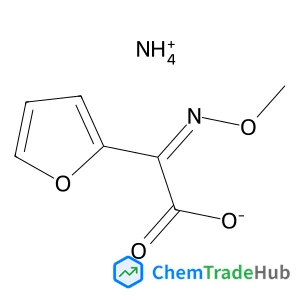
Ammonium (Z)-2-(furan-2-yl)-2-(methoxyimino)acetate
CAS Number:
97148-39-5
Molecular Formula:
C7H10N2O4


Recommended Suppliers






Disclaimer
This page provides academic journal information for reference and research purposes only. We are not affiliated with any journal publishers and do not handle publication submissions. For publication-related inquiries, please contact the respective journal publishers directly.
If you notice any inaccuracies in the information displayed, please contact us at support@chemtradehub.com. We will promptly review and address your concerns.