


Conformational disorder in energy transfer: beyond Förster theory
Literature Information
Publication Date
2013-04-30
DOI
10.1039/C3CP50857A
Impact Factor
3.676
Authors
Tammie Nelson, Sebastian Fernandez-Alberti, Adrian E. Roitberg, Sergei Tretiak
View Original
Abstract
Energy transfer in donor–acceptor chromophore pairs, where the absorption of each species is well separated while donor emission and acceptor absorption overlap, can be understood through a Förster resonance energy transfer model. The picture is more complex for organic conjugated polymers, where the total absorption spectrum can be described as a sum of the individual contributions from each subunit (chromophore), whose absorption is not well separated. Although excitations in these systems tend to be well localized, traditional donors and acceptors cannot be defined and energy transfer can occur through various pathways where each subunit (chromophore) is capable of playing either role. In addition, fast torsional motions between individual monomers can break conjugation and lead to reordering of excited state energy levels. Fast torsional fluctuations occur on the same timescale as electronic transitions leading to multiple trivial unavoided crossings between excited states during dynamics. We use the non-adiabatic excited state molecular dynamics (NA-ESMD) approach to simulate energy transfer between two poly-phenylene vinylene (PPV) oligomers composed of 3-rings and 4-rings, respectively, separated by varying distances. The change in the spatial localization of the transient electronic transition density, initially localized on the donors, is used to determine the transfer rate. Our analysis shows that evolution of the intramolecular transition density can be decomposed into contributions from multiple transfer pathways. Here we present a detailed analysis of ensemble dynamics as well as a few representative trajectories which demonstrate the intertwined role of electronic and conformational processes. Our study reveals the complex nature of energy transfer in organic conjugated polymer systems and emphasizes the caution that must be taken in performing such an analysis when a single simple unidirectional pathway is unlikely.
Recommended Journals

Molecular Diversity

Contact Lens & Anterior Eye

Coloration Technology

Current Pharmaceutical Biotechnology

Journal of Enzyme inhibition and Medicinal Chemistry

Photochemical & Photobiological Sciences

Nature Reviews Drug Discovery

Lab on a Chip

Angewandte Chemie International Edition

Advanced Engineering Materials
Related Literature
The influence of volume fractions on the phase behaviors of linear A(BC)nBA′ multiblock terpolymers
An-Chang Shi
2011-06-08
Paper
DOI: 10.1039/C1CP20633H
Large ferroelectric polarization in the new double perovskite NaLaMnWO6 induced by non-polar instabilities
T. Fukushima, A. Stroppa, S. Picozzi, J. M. Perez-Mato
2011-06-06
Paper
DOI: 10.1039/C1CP20626E
Molecular dynamics simulation studies of absorption in piperazine activated MDEA solution
Amir Hajiahmadi Farmahini, Bjørn Kvamme, Tatiana Kuznetsova
2011-06-20
Paper
DOI: 10.1039/C0CP02238A
Trends in water monomer adsorption and dissociation on flat insulating surfaces
Xiao Liang Hu, Jiří Klimeš, Angelos Michaelides
2011-06-08
Paper
DOI: 10.1039/C1CP20846B
Stern–Brocot trees in the periodicity of mixed-mode oscillations
2011-02-21
Paper
DOI: 10.1039/C0CP02776F
Closely adjacent gold nanoparticles linked by chemisorption of neutral rhodamine 123 molecules providing enormous SERS intensity
Toru Yajima, Yingying Yu, Masayuki Futamata
2011-06-08
Paper
DOI: 10.1039/C1CP00046B
Distorted fused porphyrin–phthalocyanine conjugates: synthesis and photophysics of supramolecular assembled systems with a pyridylfullerene
Ana M. V. M. Pereira, Anita Hausmann, Maria G. P. M. S. Neves, Augusto C. Tomé, Artur M. S. Silva, José A. S. Cavaleiro, Dirk M. Guldi
2011-05-26
Paper
DOI: 10.1039/C1CP00016K
Electrochemical stability of self-assembled monolayers on nanoporous Au
Masataka Hakamada, Masaki Takahashi, Toshiyuki Furukawa, Kazuki Tajima, Kazuki Yoshimura, Yasumasa Chino, Mamoru Mabuchi
2011-05-31
Paper
DOI: 10.1039/C0CP02553D
The influence of polarizability on the dielectric spectrum of the ionic liquid1-ethyl-3-methylimidazolium triflate
Thomas Sonnleitner, Richard Buchner
2011-06-03
Paper
DOI: 10.1039/C1CP20559E
You might also like
Compound Q&A
What are the main uses of 1H-Indazole-6-carbonitrile (CAS: 141290-59-7)?
1H-Indazole-6-carbonitrile finds applications in pharmaceuticals, where it serve...
141290-59-71H-Indazole-6-carbon...
Compound Q&A
How should waste containing Dioctyl (2E)-2-butenedioate (CAS: 2997-85-5) be handled?
Waste containing Dioctyl (2E)-2-butenedioate (CAS: 2997-85-5) should be collecte...
2997-85-5Dioctyl (2E)-2-buten...
Compound Q&A
What industries use Sodium [(1,2-benzoxazol-3-ylmethyl)sulfonyl]azanide (CAS: 68291-98-5)?
Sodium [(1,2-benzoxazol-3-ylmethyl)sulfonyl]azanide is primarily used in pharmac...
68291-98-5Sodium [(1,2-benzoxa...
Compound Q&A
Are there alternatives to Dimethyl 4-(4,4,5,5-tetramethyl-1,3,2-dioxaborolan-2-yl)-2,6-pyridinedicarboxylate (CAS: 741709-66-0) in synthesis?
Dimethyl 4-(4,4,5,5-tetramethyl-1,3,2-dioxaborolan-2-yl)-2,6-pyridinedicarboxyla...
741709-66-0Dimethyl 4-(4,4,5,5-...
Compound Q&A
How should waste containing 2-Fluoro-6-hydrazinopyridine (CAS: 80714-39-2) be handled?
Waste containing 2-Fluoro-6-hydrazinopyridine (CAS: 80714-39-2) should be manage...
80714-39-22-Fluoro-6-hydrazino...
Compound Q&A
What is 6-Formyl-2-pyridinecarboxylic acid (CAS: 499214-11-8)?
6-Formyl-2-pyridinecarboxylic acid is an organic compound with the molecular for...
499214-11-86-Formyl-2-pyridinec...
Compound Q&A
What is the market or research trend for 3-(3,4-dimethoxyphenyl)-2,5-dimethyl-N-(2-morpholin-4-ylethyl)pyrazolo[1,5-a]pyrimidin-7-amine (CAS: 900874-91-1)?
Research trends for this compound indicate a focus on its potential applications...
900874-91-13-(3,4-dimethoxyphen...
Compound Q&A
How is 9H-Tribenzo[b,d,f]azepine (CAS: 29875-73-8) typically synthesized?
9H-Tribenzo[b,d,f]azepine is typically synthesized via a multi-step process invo...
29875-73-89H-Tribenzo[b,d,f]az...
Compound Q&A
How is 1-Cyclopropyl-7-ethoxy-6-fluoro-8-methoxy-4-oxo-1,4-dihydro-3-quinolinecarboxylic acid (CAS: 1797982-51-4) typically synthesized?
1-Cyclopropyl-7-ethoxy-6-fluoro-8-methoxy-4-oxo-1,4-dihydro-3-quinolinecarboxyli...
1797982-51-41-Cyclopropyl-7-etho...
Compound Q&A
How should waste containing Methyl 3-oxo-1,2,3,4-tetrahydro-6-quinoxalinecarboxylate (CAS: 671820-52-3) be handled?
Waste containing Methyl 3-oxo-1,2,3,4-tetrahydro-6-quinoxalinecarboxylate (CAS: ...
671820-52-3Methyl 3-oxo-1,2,3,4...
Source Journal
Physical Chemistry Chemical Physics

CiteScore:
5.5
Self-citation Rate:
10.3%
Articles per Year:
3036
Physical Chemistry Chemical Physics (PCCP) is an international journal co-owned by 19 physical chemistry and physics societies from around the world. This journal publishes original, cutting-edge research in physical chemistry, chemical physics and biophysical chemistry. To be suitable for publication in PCCP, articles must include significant innovation and/or insight into physical chemistry; this is the most important criterion that reviewers and Editors will judge against when evaluating submissions. The journal has a broad scope and welcomes contributions spanning experiment, theory, computation and data science. Topical coverage includes spectroscopy, dynamics, kinetics, statistical mechanics, thermodynamics, electrochemistry, catalysis, surface science, quantum mechanics, quantum computing and machine learning. Interdisciplinary research areas such as polymers and soft matter, materials, nanoscience, energy, surfaces/interfaces, and biophysical chemistry are welcomed if they demonstrate significant innovation and/or insight into physical chemistry. Joined experimental/theoretical studies are particularly appreciated when complementary and based on up-to-date approaches.
Recommended Compounds

Trichloro(3,3,4,4,5,5,6,6,7,7,8,8,8-tridecafluorooctyl)silane
CAS Number:
78560-45-9
Molecular Formula:
C8H4Cl3F13Si
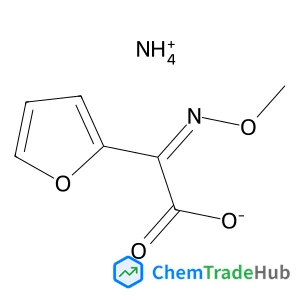
Ammonium (Z)-2-(furan-2-yl)-2-(methoxyimino)acetate
CAS Number:
97148-39-5
Molecular Formula:
C7H10N2O4
Recommended Suppliers






Disclaimer
This page provides academic journal information for reference and research purposes only. We are not affiliated with any journal publishers and do not handle publication submissions. For publication-related inquiries, please contact the respective journal publishers directly.
If you notice any inaccuracies in the information displayed, please contact us at support@chemtradehub.com. We will promptly review and address your concerns.