












Chemical-shift tensors of heavy nuclei in network solids: a DFT/ZORA investigation of 207Pb chemical-shift tensors using the bond-valence method
Literature Information
Publication Date
2015-09-02
DOI
10.1039/C5CP03348A
Impact Factor
3.676
Authors
Fahri Alkan, C. Dybowski
View Original
Abstract
Cluster models are used in calculation of 207Pb NMR magnetic-shielding parameters of α-PbO, β-PbO, Pb3O4, Pb2SnO4, PbF2, PbCl2, PbBr2, PbClOH, PbBrOH, PbIOH, PbSiO3, and Pb3(PO4)2. We examine the effects of cluster size, method of termination of the cluster, charge on the cluster, introduction of exact exchange, and relativistic effects on calculation of magnetic-shielding tensors with density functional theory. Proper termination of the cluster for a network solid, including approximations such as compensation of charge by the bond-valence (BV) method, is essential to provide results that agree with experiment. The inclusion of relativistic effects at the spin–orbit level for such heavy nuclei is an essential factor in achieving agreement with experiment.
Related Literature
Cobalt-modified molybdenum carbide as an efficient catalyst for chemoselective reduction of aromatic nitro compounds
Zhongkui Zhao, Hongling Yang, Yu Li, Xinwen Guo
2013-11-08
Paper
DOI: 10.1039/C3GC42049C
A highly efficient and recyclable ligand-free protocol for the Suzuki coupling reaction of potassium aryltrifluoroborates in water
Leifang Liu, Yan Dong, Nana Tang
2014-01-06
Paper
DOI: 10.1039/C3GC42182A
Biodegradability of 27 pyrrolidinium, morpholinium, piperidinium, imidazolium and pyridinium ionic liquid cations under aerobic conditions
Jennifer Neumann, Stephanie Steudte, Chul-Woong Cho, Jorg Thöming
2014-01-15
Paper
DOI: 10.1039/C3GC41997E
Biocatalysis in bio-derived solvents: an improved approach for medium optimisation
Giulia Paggiola, Andrew J. Hunt, Con R. McElroy, James Sherwood, James H. Clark
2014-01-20
Communication
DOI: 10.1039/C3GC42526F
Acceleration of Suzuki coupling reactions by abundant and non-toxic salt particles
Binbin Zhang, Jinliang Song, Huizhen Liu, Jinghua Shi, Jun Ma, Honglei Fan, Weitao Wang, Peng Zhang, Buxing Han
2013-10-23
Paper
DOI: 10.1039/C3GC42088D
A mechanochemical strategy for oxidative addition: remarkable yields and stereoselectivity in the halogenation of organometallic Re(i) complexes
José G. Hernández, Neil A. J. Macdonald, Cristina Mottillo, Ian S. Butler, Tomislav Friščić
2013-11-08
Communication
DOI: 10.1039/C3GC42104J
Formation of uniform colloidal spheres from lignin, a renewable resource recovered from pulping spent liquor
Yong Qian, Yonghong Deng, Xueqing Qiu, Hao Li, Dongjie Yang
2013-12-05
Paper
DOI: 10.1039/C3GC42131G
Highly efficient SO2 capture by phenyl-containing azole-based ionic liquids through multiple-site interactions
Wenjun Lin, Fang Ding, Xiaoyan Luo, Xi He, Congmin Wang
2013-10-16
Paper
DOI: 10.1039/C3GC41458B
Organocatalysis in biorefining for biomass conversion and upgrading
Eugene Y.-X. Chen
2013-11-12
Critical Review
DOI: 10.1039/C3GC41934G
Catalyst-free chemo-/regio-/stereo-selective amination of alk-3-ynones. Synthesis of 1,5-benzodiazepines and 3-amino-2-alkenones
Agnes Solan, Bilal Nişanci, Miranda Belcher, Jonathon Young, Christian Schäfer, Kraig A. Wheeler, Béla Török, Roman Dembinski
2013-12-19
Communication
DOI: 10.1039/C3GC41898G
You might also like
Compound Q&A
What precautions should be taken when handling 4-Methyl-6-(trifluoromethyl)quinoline (CAS: 40716-16-3)?
When handling 4-Methyl-6-(trifluoromethyl)quinoline (CAS: 40716-16-3), safety go...
40716-16-34-Methyl-6-(trifluor...
Compound Q&A
What is 4-(3,5-Difluorophenyl)aniline (CAS: 405058-00-6)?
4-(3,5-Difluorophenyl)aniline is an aromatic organic compound with the CAS numbe...
405058-00-64-(3,5-Difluoropheny...
Compound Q&A
How is 5-{[4-(Trifluoromethyl)phenyl]sulfanyl}-1,2,3-thiadiazole-4-carboxylic acid (CAS: 338982-07-3) typically synthesized?
5-{[4-(Trifluoromethyl)phenyl]sulfanyl}-1,2,3-thiadiazole-4-carboxylic acid can ...
338982-07-35-{[4-(Trifluorometh...
Compound Q&A
What is the market or research trend for 4-Benzylaniline hydrochloride (CAS: 6317-57-3)?
The market for 4-Benzylaniline hydrochloride (CAS: 6317-57-3) is steadily growin...
6317-57-34-Benzylaniline hydr...
Compound Q&A
Is [3-(Diethylsulfamoyl)phenyl]boronic acid (CAS: 871329-58-7) safe?
[3-(Diethylsulfamoyl)phenyl]boronic acid is generally considered safe when handl...
871329-58-7[3-(Diethylsulfamoyl...
Compound Q&A
What are the main uses of 3-Bromo-2,5-dimethoxyaniline (CAS: 115929-62-9)?
3-Bromo-2,5-dimethoxyaniline is mainly used in the pharmaceutical and chemical i...
115929-62-93-Bromo-2,5-dimethox...
Compound Q&A
What regulatory guidelines apply to N-Methyl-1-(5-methyl-1H-indol-3-yl)methanamine (CAS: 915922-67-7)?
N-Methyl-1-(5-methyl-1H-indol-3-yl)methanamine (CAS: 915922-67-7) is subject to ...
915922-67-7N-Methyl-1-(5-methyl...
Compound Q&A
What industries use Carbamic acid, N-[(5S)-5,6-diamino-6-oxohexyl]-, 1,1-dimethylethyl ester (CAS: 24828-96-4)?
This compound is primarily used in the pharmaceutical industry for the synthesis...
24828-96-4Carbamic acid, N-[(5...
Compound Q&A
How should 2-Methyl-2-propanyl [(1S,3R)-3-aminocyclohexyl]carbamate (CAS: 1298101-47-9) be stored?
2-Methyl-2-propanyl [(1S,3R)-3-aminocyclohexyl]carbamate (CAS: 1298101-47-9) sho...
1298101-47-92-Methyl-2-propanyl ...
Compound Q&A
What industries use Ethyl 2-bromo-4,4,4-trifluorobutanoate (CAS: 367-33-9)?
Ethyl 2-bromo-4,4,4-trifluorobutanoate (CAS: 367-33-9) is utilized in the pharma...
367-33-9Ethyl 2-bromo-4,4,4-...
Source Journal
Physical Chemistry Chemical Physics

CiteScore:
5.5
Self-citation Rate:
10.3%
Articles per Year:
3036
Physical Chemistry Chemical Physics (PCCP) is an international journal co-owned by 19 physical chemistry and physics societies from around the world. This journal publishes original, cutting-edge research in physical chemistry, chemical physics and biophysical chemistry. To be suitable for publication in PCCP, articles must include significant innovation and/or insight into physical chemistry; this is the most important criterion that reviewers and Editors will judge against when evaluating submissions. The journal has a broad scope and welcomes contributions spanning experiment, theory, computation and data science. Topical coverage includes spectroscopy, dynamics, kinetics, statistical mechanics, thermodynamics, electrochemistry, catalysis, surface science, quantum mechanics, quantum computing and machine learning. Interdisciplinary research areas such as polymers and soft matter, materials, nanoscience, energy, surfaces/interfaces, and biophysical chemistry are welcomed if they demonstrate significant innovation and/or insight into physical chemistry. Joined experimental/theoretical studies are particularly appreciated when complementary and based on up-to-date approaches.
Recommended Compounds
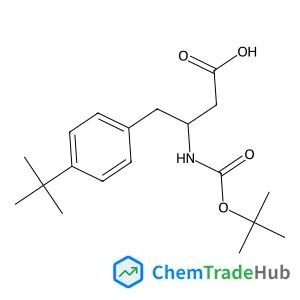
(S)-3-((tert-Butoxycarbonyl)amino)-4-(4-(tert-butyl)phenyl)butanoic acid
CAS Number:
403661-85-8
Molecular Formula:
C19H29NO4
![[3-(2,6-Dichlorophenyl)-5-isopropyl-1,2-oxazol-4-yl]methanol structure](https://static.chemtradehub.com/structs/278/278597-30-1-5c79.webp "[3-(2,6-Dichlorophenyl)-5-isopropyl-1,2-oxazol-4-yl]methanol structure")
[3-(2,6-Dichlorophenyl)-5-isopropyl-1,2-oxazol-4-yl]methanol
CAS Number:
278597-30-1
Molecular Formula:
C13H13Cl2NO2
Recommended Suppliers







Disclaimer
This page provides academic journal information for reference and research purposes only. We are not affiliated with any journal publishers and do not handle publication submissions. For publication-related inquiries, please contact the respective journal publishers directly.
If you notice any inaccuracies in the information displayed, please contact us at support@chemtradehub.com. We will promptly review and address your concerns.