












Biocatalysis in bio-derived solvents: an improved approach for medium optimisation
Literature Information
Publication Date
2014-01-20
DOI
10.1039/C3GC42526F
Impact Factor
10.182
Authors
Giulia Paggiola, Andrew J. Hunt, Con R. McElroy, James Sherwood, James H. Clark
View Original
Abstract
An improved multi-parameter approach to the correlation of enzymatic activity and solvent properties is proposed. The development of the correlation facilitated the introduction of renewable solvents in a CALB catalysed synthesis of fatty esters.
Related Literature
Thermodynamic and redox properties of graphene oxides for lithium-ion battery applications: a first principles density functional theory modeling approach
Ki Chul Kim
2016-07-04
Paper
DOI: 10.1039/C6CP02692C
A novel crystalline SiCO compound
Miriam Marqués, Angel Morales-García, José Manuel Menéndez, Valentín G. Baonza, José Manuel Recio
2015-08-20
Paper
DOI: 10.1039/C5CP03673A
How many enzyme molecules are needed for discrimination oriented applications?
Jerzy Gorecki, Joanna N. Gorecka, Hiroshi Ueno, Kenichi Yoshikawa
2016-06-27
Paper
DOI: 10.1039/C6CP03860C
Internal conversion and intersystem crossing pathways in UV excited, isolated uracils and their implications in prebiotic chemistry
Hui Yu, Jose A. Sanchez-Rodriguez, Marvin Pollum, Carlos E. Crespo-Hernández, Sebastian Mai, Philipp Marquetand, Leticia González, Susanne Ullrich
2016-05-10
Paper
DOI: 10.1039/C6CP01790H
Chain length, temperature and solvent effects on the structural properties of α-aminoisobutyric acid homooligopeptides
Sonja Grubišić
2016-06-29
Paper
DOI: 10.1039/C6CP01120A
Ultrafast excited-state dynamics of isocytosine
Rafał Szabla, Robert W. Góra
2016-06-10
Paper
DOI: 10.1039/C6CP01391K
Strong solvent dependence of linear and non-linear optical properties of donor–acceptor type pyrrolo[3,2-b]pyrroles
Rafał Orłowski, Marzena Banasiewicz, Guillaume Clermont, Frédéric Castet, Rashid Nazir, Mireille Blanchard-Desce, Daniel T. Gryko
2015-07-08
Paper
DOI: 10.1039/C5CP03523F
Flexible Ag–C60 nano-biosensors based on surface plasmon coupled emission for clinical and forensic applications
Pradyumna Mulpur, Sairam Yadavilli, Praharsha Mulpur, Neeharika Kondiparthi, Venkataramaniah Kamisetti
2015-09-08
Paper
DOI: 10.1039/C5CP04268B
Electron–vibration entanglement in the Born–Oppenheimer description of chemical reactions and spectroscopy
Ross H. McKenzie
2015-07-08
Paper
DOI: 10.1039/C5CP02239H
Synthesis of barbituric acid containing nucleotides and their implications for the origin of primitive informational polymers
Chaitanya V. Mungi, Sachin Kumar Singh, Sudha Rajamani
2016-04-12
Paper
DOI: 10.1039/C6CP00686H
You might also like
Compound Q&A
What precautions should be taken when handling 4-Methyl-6-(trifluoromethyl)quinoline (CAS: 40716-16-3)?
When handling 4-Methyl-6-(trifluoromethyl)quinoline (CAS: 40716-16-3), safety go...
40716-16-34-Methyl-6-(trifluor...
Compound Q&A
What is 4-(3,5-Difluorophenyl)aniline (CAS: 405058-00-6)?
4-(3,5-Difluorophenyl)aniline is an aromatic organic compound with the CAS numbe...
405058-00-64-(3,5-Difluoropheny...
Compound Q&A
How is 5-{[4-(Trifluoromethyl)phenyl]sulfanyl}-1,2,3-thiadiazole-4-carboxylic acid (CAS: 338982-07-3) typically synthesized?
5-{[4-(Trifluoromethyl)phenyl]sulfanyl}-1,2,3-thiadiazole-4-carboxylic acid can ...
338982-07-35-{[4-(Trifluorometh...
Compound Q&A
What is the market or research trend for 4-Benzylaniline hydrochloride (CAS: 6317-57-3)?
The market for 4-Benzylaniline hydrochloride (CAS: 6317-57-3) is steadily growin...
6317-57-34-Benzylaniline hydr...
Compound Q&A
Is [3-(Diethylsulfamoyl)phenyl]boronic acid (CAS: 871329-58-7) safe?
[3-(Diethylsulfamoyl)phenyl]boronic acid is generally considered safe when handl...
871329-58-7[3-(Diethylsulfamoyl...
Compound Q&A
What are the main uses of 3-Bromo-2,5-dimethoxyaniline (CAS: 115929-62-9)?
3-Bromo-2,5-dimethoxyaniline is mainly used in the pharmaceutical and chemical i...
115929-62-93-Bromo-2,5-dimethox...
Compound Q&A
What regulatory guidelines apply to N-Methyl-1-(5-methyl-1H-indol-3-yl)methanamine (CAS: 915922-67-7)?
N-Methyl-1-(5-methyl-1H-indol-3-yl)methanamine (CAS: 915922-67-7) is subject to ...
915922-67-7N-Methyl-1-(5-methyl...
Compound Q&A
What industries use Carbamic acid, N-[(5S)-5,6-diamino-6-oxohexyl]-, 1,1-dimethylethyl ester (CAS: 24828-96-4)?
This compound is primarily used in the pharmaceutical industry for the synthesis...
24828-96-4Carbamic acid, N-[(5...
Compound Q&A
How should 2-Methyl-2-propanyl [(1S,3R)-3-aminocyclohexyl]carbamate (CAS: 1298101-47-9) be stored?
2-Methyl-2-propanyl [(1S,3R)-3-aminocyclohexyl]carbamate (CAS: 1298101-47-9) sho...
1298101-47-92-Methyl-2-propanyl ...
Compound Q&A
What industries use Ethyl 2-bromo-4,4,4-trifluorobutanoate (CAS: 367-33-9)?
Ethyl 2-bromo-4,4,4-trifluorobutanoate (CAS: 367-33-9) is utilized in the pharma...
367-33-9Ethyl 2-bromo-4,4,4-...
Source Journal
Green Chemistry

CiteScore:
16.1
Self-citation Rate:
7.5%
Articles per Year:
944
Green Chemistry provides a unique forum for the publication of innovative research on the development of alternative green and sustainable technologies. The scope of Green Chemistry is based on, but not limited to, the definition proposed by Anastas and Warner (Green Chemistry: Theory and Practice, P T Anastas and J C Warner, Oxford University Press, Oxford, 1998). Green chemistry is the utilisation of a set of principles that reduces or eliminates the use or generation of hazardous substances in the design, manufacture and application of chemical products. Green Chemistry is at the frontiers of this continuously-evolving interdisciplinary science and publishes research that attempts to reduce the environmental impact of the chemical enterprise by developing a technology base that is inherently non-toxic to living things and the environment. Submissions on all aspects of research relating to the endeavour are welcome. The journal publishes original and significant cutting-edge research that is likely to be of wide general appeal. To be published, work must present a significant advance in green chemistry. Papers must contain a comparison with existing methods and demonstrate advantages over those methods before publication can be considered. For more information please see this Editorial. Coverage includes the following, but is not limited to: Design (e.g. biomimicry, design for degradation/recycling/reduced toxicity…) Reagents & Feedstocks (e.g. renewables, CO2, solvents, auxiliary agents, waste utilization…) Synthesis (e.g. organic, inorganic, synthetic biology…) Catalysis (e.g. homogeneous, heterogeneous, enzyme, whole cell…) Process (e.g. process design, intensification, separations, recycling, efficiency…) Energy (e.g. renewable energy, fuels, photovoltaics, fuel cells, energy storage, energy carriers…) Applications (e.g. electronics, dyes, consumer products, coatings, pharmaceuticals, preservatives, building materials, chemicals for industry/agriculture/mining…) Impact (e.g. safety, metrics, LCA, sustainability, (eco)toxicology…) Green chemistry is, by definition, a continuously-evolving frontier. Therefore, the inclusion of a particular material or technology does not, of itself, guarantee that a paper is suitable for the journal. To be suitable, the novel advance should have the potential for reduced environmental impact relative to the state of the art. Green Chemistry does not normally deal with research associated with 'end-of-pipe' or remediation issues.
Recommended Compounds
![2,4-Dichloro-6-isopropyl-5H-pyrrolo[3,4-d]pyrimidin-7(6H)-one structure](https://static.chemtradehub.com/structs/107/1079649-94-7-ad4a.webp "2,4-Dichloro-6-isopropyl-5H-pyrrolo[3,4-d]pyrimidin-7(6H)-one structure")
2,4-Dichloro-6-isopropyl-5H-pyrrolo[3,4-d]pyrimidin-7(6H)-one
CAS Number:
1079649-94-7
Molecular Formula:
C9H9Cl2N3O
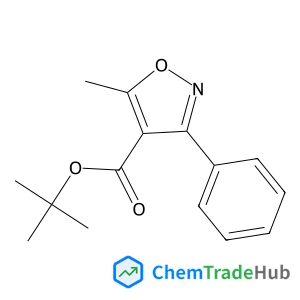
2-Methyl-2-propanyl 5-methyl-3-phenyl-1,2-oxazole-4-carboxylate
CAS Number:
211429-79-7
Molecular Formula:
C15H17NO3
Recommended Suppliers







Disclaimer
This page provides academic journal information for reference and research purposes only. We are not affiliated with any journal publishers and do not handle publication submissions. For publication-related inquiries, please contact the respective journal publishers directly.
If you notice any inaccuracies in the information displayed, please contact us at support@chemtradehub.com. We will promptly review and address your concerns.