












The effect of Duschinsky rotation on charge transport properties of molecular junctions in the sequential tunneling regime
Literature Information
Publication Date
2015-08-05
DOI
10.1039/C5CP02736E
Impact Factor
3.676
Authors
Guangjun Tian, Sai Duan, Guang-Ping Zhang, Wei Hu
View Original
Abstract
We present here a systematic theoretical study on the effect of Duschinsky rotation on charge transport properties of molecular junctions in the sequential tunneling regime. In the simulations we assume that only two electronic charging states each coupled to a two dimensional vibrational potential energy surface (PES) are involved in the transport process. The Duschinsky rotation effect is accounted by varying the rotational angle between the two sets of displaced PESs. Both harmonic potential and anharmonic Morse potential have been considered for the cases of the intermediate to strong electron–vibration couplings. Our calculations show that the inclusion of the Duschinsky rotation effect can significantly change the charge transport properties of a molecular junction. Such an effect makes the otherwise symmetric Coulomb diamond become asymmetric in harmonic potentials. Depending on the angle of the rotation, the low bias current could be significantly suppressed or enhanced. This effect is particularly prominent in the Franck–Condon (FC) blockade regime where the electron–vibration coupling is strong. These changes are caused by the variation of the FC factors which are closely related to the rotational angle between the two sets of PESs involved in the charge transport process. For a molecular junction with Morse potentials, the changes caused by Duschinsky rotation are much more complicated. Both the amplitude and shape of the Coulomb diamond are closely dependent on the rotational angle in the whole range from 0 to 2π. One interesting result is that with a rotation angle of π (and also π/2 for certain cases) symmetric Coulomb diamonds can even be formed from the intrinsically asymmetric Morse potential. These results could be important for the interpretation of experimental observations.
Recommended Journals
Related Literature
Azidoacetylene – interpretation of gas phase infrared spectra based on high-level vibrational configuration interaction calculations
Dominik Oschetzki, Xiaoqing Zeng, Helmut Beckers, Klaus Banert, Guntram Rauhut
2013-03-14
Paper
DOI: 10.1039/C3CP50268F
Interpretation of experimental hydrogen-bond enthalpies and entropies from COSMO polarisation charge densities
Jens Reinisch, Frank Eckert, Jérôme Graton, Jean-Yves Le Questel
2013-03-22
Paper
DOI: 10.1039/C3CP44611E
Experimental evidence for surface freezing in supercooled n-alkane nanodroplets
Viraj P. Modak, Harshad Pathak, Mitchell Thayer, Sherwin J. Singer
2013-03-05
Paper
DOI: 10.1039/C3CP44490B
Visible light initiated and collapsed resistive switching in TbMnO3/Nb:SrTiO3 heterojunctions
Yimin Cui, Wei Liu, Rongming Wang
2013-03-14
Paper
DOI: 10.1039/C3CP00132F
Modeling environment effects on spectroscopies through QM/classical models
Benedetta Mennucci
2013-01-08
Perspective
DOI: 10.1039/C3CP44417A
Understanding multi-quantum NMR through secular approximation
Deepansh Srivastava, R. Venkata SubbaRao, Ramesh Ramachandran
2013-02-15
Paper
DOI: 10.1039/C3CP44296A
Co–Ni layered double hydroxides for water oxidation in neutral electrolyte
Ye Zhang, Bai Cui, Chunsong Zhao, Hong Lin
2013-03-18
Paper
DOI: 10.1039/C3CP50202C
Thermal oxidation of Ni films for p-type thin-film transistors
Jie Jiang, Xinghui Wang, Qing Zhang, Jingqi Li, X. X. Zhang
2013-03-15
Paper
DOI: 10.1039/C3CP50197C
You might also like
Compound Q&A
What precautions should be taken when handling 4-(2-Furylmethyl)thiomorpholine 1,1-dioxide (CAS: 79206-94-3)?
When handling 4-(2-Furylmethyl)thiomorpholine 1,1-dioxide (CAS: 79206-94-3), it ...
79206-94-34-(2-Furylmethyl)thi...
Compound Q&A
What precautions should be taken when handling 4-Chloro-N-[2-(4-morpholinyl)ethyl]benzamide (CAS: 71320-77-9)?
When handling 4-Chloro-N-[2-(4-morpholinyl)ethyl]benzamide (CAS: 71320-77-9), it...
71320-77-94-Chloro-N-[2-(4-mor...
Compound Q&A
How should waste containing 2-[2-(2-Methoxyethoxy)ethoxy]ethyl 4-methylbenzenesulfonate (CAS: 62921-74-8) be handled?
Waste containing this compound (CAS: 62921-74-8) should be handled according to ...
62921-74-82-[2-(2-Methoxyethox...
Compound Q&A
How should waste containing (S)-Methyl 2-amino-3-cyclohexylpropanoate be handled?
Waste containing (S)-Methyl 2-amino-3-cyclohexylpropanoate should be collected i...
40056-18-6(S)-Methyl 2-amino-3...
Compound Q&A
How is 5-({4-[(2S,4R)-4-Hydroxy-2-methyltetrahydro-2H-pyran-4-yl]-2-thienyl}sulfanyl)-1-methyl-1,3-dihydro-2H-indol-2-one (CAS: 166882-70-8) typically synthesized?
This compound can be synthesized using a multi-step process involving the conjug...
166882-70-85-({4-[(2S,4R)-4-Hyd...
Compound Q&A
Are there alternatives to (2E)-3-(3,4-Dichlorophenyl)acrylic acid (CAS: 7312-27-8) in synthesis?
There are several alternatives to (2E)-3-(3,4-Dichlorophenyl)acrylic acid in syn...
7312-27-8(2E)-3-(3,4-Dichloro...
Compound Q&A
How should Ethyl 6-(2-nitrophenyl)imidazo[2,1-b][1,3]thiazole-3-carboxylate (CAS: 925437-84-9) be stored?
Ethyl 6-(2-nitrophenyl)imidazo[2,1-b][1,3]thiazole-3-carboxylate (CAS: 925437-84...
925437-84-9Ethyl 6-(2-nitrophen...
Compound Q&A
How should waste containing 2-(1,3-Thiazol-2-yl)ethanamine (CAS: 18453-07-1) be handled?
Waste containing 2-(1,3-Thiazol-2-yl)ethanamine (CAS: 18453-07-1) should be coll...
18453-07-12-(1,3-Thiazol-2-yl)...
Compound Q&A
How is Methyl 5-iodo-2-methylbenzoate (CAS: 103440-54-6) typically synthesized?
Methyl 5-iodo-2-methylbenzoate can be synthesized through the iodination of meth...
103440-54-6Methyl 5-iodo-2-meth...
Compound Q&A
How is 5-Chloro[1,2,4]triazolo[1,5-a]pyridine (CAS: 1427399-34-5) typically synthesized?
5-Chloro[1,2,4]triazolo[1,5-a]pyridine is commonly synthesized via the condensat...
1427399-34-55-Chloro[1,2,4]triaz...
Source Journal
Physical Chemistry Chemical Physics

CiteScore:
5.5
Self-citation Rate:
10.3%
Articles per Year:
3036
Physical Chemistry Chemical Physics (PCCP) is an international journal co-owned by 19 physical chemistry and physics societies from around the world. This journal publishes original, cutting-edge research in physical chemistry, chemical physics and biophysical chemistry. To be suitable for publication in PCCP, articles must include significant innovation and/or insight into physical chemistry; this is the most important criterion that reviewers and Editors will judge against when evaluating submissions. The journal has a broad scope and welcomes contributions spanning experiment, theory, computation and data science. Topical coverage includes spectroscopy, dynamics, kinetics, statistical mechanics, thermodynamics, electrochemistry, catalysis, surface science, quantum mechanics, quantum computing and machine learning. Interdisciplinary research areas such as polymers and soft matter, materials, nanoscience, energy, surfaces/interfaces, and biophysical chemistry are welcomed if they demonstrate significant innovation and/or insight into physical chemistry. Joined experimental/theoretical studies are particularly appreciated when complementary and based on up-to-date approaches.
Recommended Compounds
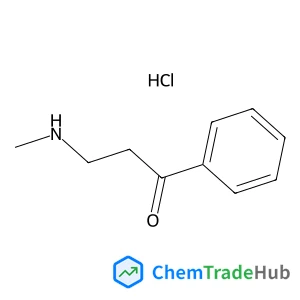
3-(Methylamino)-1-phenyl-1-propanone hydrochloride (1:1)
CAS Number:
2538-50-3
Molecular Formula:
C10H14ClNO
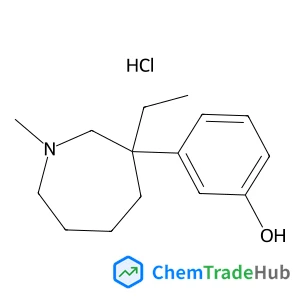
3-(3-Ethyl-1-methyl-3-azepanyl)phenol hydrochloride (1:1)
CAS Number:
59263-76-2
Molecular Formula:
C15H24ClNO

Recommended Suppliers




Disclaimer
This page provides academic journal information for reference and research purposes only. We are not affiliated with any journal publishers and do not handle publication submissions. For publication-related inquiries, please contact the respective journal publishers directly.
If you notice any inaccuracies in the information displayed, please contact us at support@chemtradehub.com. We will promptly review and address your concerns.