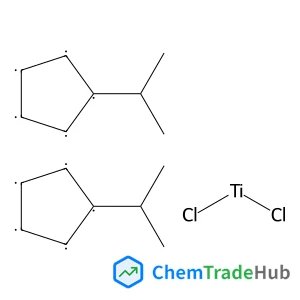
BIS(I-PROPYLCYCLOPENTADIENYL)TITANIUM DICHLORIDE
CAS Number:
12130-65-3
Molecular Formula:
C16H22Cl2Ti
Miljan Milosevic, Suhong Wu, Elvin Blanco, Mauro Ferrari, Arturas Ziemys
Frequent mass exchange takes place in a heterogeneous environment among several phases, where mass partitioning may occur at the interface of phases. Analytical and computational methods for diffusion do not usually incorporate molecule partitioning masking the true picture of mass transport. Here we present a computational finite element methodology to calculate diffusion mass transport with a partitioning phenomenon included and the analysis of the effects of partitioning. Our numerical results showed that partitioning controls equilibrated mass distribution as expected from analytical solutions. The experimental validation of mass release from drug-loaded nanoparticles showed that partitioning might even dominate in some cases with respect to diffusion itself. The analysis of diffusion kinetics in the parameter space of partitioning and diffusivity showed that partitioning is an extremely important parameter in systems, where mass diffusivity is fast and that the concentration of nanoparticles can control payload retention inside nanoparticles. The computational and experimental results suggest that partitioning and physiochemical properties of phases play an important, if not crucial, role in diffusion transport and should be included in the studies of mass transport processes.
M. Oujja, S. Psilodimitrakopoulos, E. Carrasco, M. Sanz, A. Philippidis, A. Selimis, P. Pouli, G. Filippidis, M. Castillejo
DOI: 10.1039/C7CP02509B
S. Torgova, S. P. Sreenilayam, O. Francescangeli, F. Vita, J. K. Vij, E. Pozhidaev, M. Minchenko, C. Ferrero
DOI: 10.1039/C7CP03561F
Yaxiong Wei, Qiaohui Zhou
DOI: 10.1039/C7CP03840B
Q. Gao, X. M. Li, J. Z. Zhou, X. X. Ruan, Q. Liu, G. R. Qian
DOI: 10.1039/C7CP01541K
Nicole L. Ing, Tyler D. Nusca
DOI: 10.1039/C7CP03651E
Nasrin Sarmadian, Erik C. Neyts, Bart Partoens
DOI: 10.1039/C7CP03575F
Ryan C. Fortenberry, Timothy J. Lee, Xinchuan Huang
DOI: 10.1039/C7CP04257D
Dejan Cibrev, Massimo Tallarida, Chittaranjan Das, Teresa Lana-Villarreal, Dieter Schmeisser, Roberto Gómez
DOI: 10.1039/C7CP03958A
Mikko Karttunen
DOI: 10.1039/C7CP04009A
Jhoan Toro-Mendoza, Gieberth Rodriguez-Lopez, Oscar Paredes-Altuve
DOI: 10.1039/C7CP04415A
6-(3-Fluorophenyl)picolinic acid is generally considered safe for laboratory use...
(3R)-3-Pyrrolidinol is used in the pharmaceutical industry as a precursor for dr...
When handling (4R,5R)-4,5-Diethoxycarbonyl-2,2-dimethyldioxolane (CAS: 59779-75-...
1-(6-Chloroimidazo[1,2-b]pyridazin-3-yl)ethanone is often synthesized via a mult...
The market for N-Ethyl-3,4-dimethylbenzylamine (CAS: 39180-83-1) remains steady,...
Tert-butyl 3-(pyrrolidin-1-yl)azetidine-1-carboxylate is a chemical compound wit...
1-Bromo-3-chloro-2,4-dimethoxybenzene (CAS: 1228956-93-1) falls under the classi...
The safety of 8-Bromo-2-methyl-3,4-dihydroisoquinolin-1(2H)-one (CAS: 1368622-07...
Benzyl [(3S)-2,6-dioxo-3-piperidinyl]carbamate is generally safe when handled wi...
1-{[4-(4,4,5,5-Tetramethyl-1,3,2-dioxaborolan-2-yl)phenyl]sulfonyl}pyrrolidine s...

Physical Chemistry Chemical Physics (PCCP) is an international journal co-owned by 19 physical chemistry and physics societies from around the world. This journal publishes original, cutting-edge research in physical chemistry, chemical physics and biophysical chemistry. To be suitable for publication in PCCP, articles must include significant innovation and/or insight into physical chemistry; this is the most important criterion that reviewers and Editors will judge against when evaluating submissions. The journal has a broad scope and welcomes contributions spanning experiment, theory, computation and data science. Topical coverage includes spectroscopy, dynamics, kinetics, statistical mechanics, thermodynamics, electrochemistry, catalysis, surface science, quantum mechanics, quantum computing and machine learning. Interdisciplinary research areas such as polymers and soft matter, materials, nanoscience, energy, surfaces/interfaces, and biophysical chemistry are welcomed if they demonstrate significant innovation and/or insight into physical chemistry. Joined experimental/theoretical studies are particularly appreciated when complementary and based on up-to-date approaches.