












Exploring PtSO4 and PdSO4 phases: an evolutionary algorithm based investigation
Literature Information
Publication Date
2015-06-08
DOI
10.1039/C5CP02658J
Impact Factor
3.676
Authors
Hom Sharma, Vinit Sharma
View Original
Abstract
Metal sulfate formation is one of the major challenges to the emission aftertreatment catalysts. Unlike the incredibly sulfation prone nature of Pd to form PdSO4, no experimental evidence exists for PtSO4 formation. Given the mystery of nonexistence of PtSO4, we explore PtSO4 using a combined approach of an evolutionary algorithm based search technique and quantum mechanical computations. Experimentally known PdSO4 is considered for the comparison and validation of our results. We predict many possible low-energy phases of PtSO4 and PdSO4 at 0 K, which are further investigated in a wide range of temperature–pressure conditions. An entirely new low-energy (tetragonal P42/m) structure of PtSO4 and PdSO4 is predicted, which appears to be the most stable phase of PtSO4 and a competing phase of the experimentally known monoclinic C2/c phase of PdSO4. Phase stability at a finite temperature is further examined and verified by Gibbs free energy calculations of sulfates towards their possible decomposition products. Finally, temperature–pressure phase diagrams are computationally established for both PtSO4 and PdSO4.
Related Literature
Fluorescence and stimuli-responsive performance of polymer composites filled with tetraphenylethene derivatives
2022-05-06
Paper
DOI: 10.1039/D2PY00396A
Synthesis of an amphiphilic copolymer using biopolymer-dextran via a combination of ROP and RAFT techniques
Puja Das Karmakar, Sagar Pal
2022-02-02
Paper
DOI: 10.1039/D1PY01596F
Microfluidic-supported synthesis of anisotropic polyvinyl methacrylate nanoparticles via interfacial agents
Nikunjkumar R. Visaveliya, Firdaus Khatoon, Jin Xu, Kelvin Leo, Lauren St. Peter, Christopher Chan, Tatiana Mikhailova, Visar Bexheti, Ashni Kapadia, Piyali Maity, William P. Carbery
2022-04-11
Paper
DOI: 10.1039/D1PY01729B
One-pot synthesis of high-concentration mixed-shell polymeric micelles as nanochaperones for the renaturation of bulk proteins
Fei Deng, Menglin Yang, Yanli Zhang, Xiaohui Wu, Rujiang Ma, Feihe Ma, Linqi Shi
2021-12-30
Paper
DOI: 10.1039/D1PY01404H
Metallosupramolecular polymers as precursors for platinum nanocomposites
Claudio Cappelletti, Luis M. Olaechea, Alessandro Ianiro, Cristina Prado-Martínez, Emad Oveisi, Christoph Weder, Stephen Schrettl
2022-03-07
Paper
DOI: 10.1039/D2PY00071G
Facile synthesis of a hyperbranched polymer prodrug as unimolecular micelles for overcoming multidrug resistance
Jie Li, Peng Liu
2022-02-08
Paper
DOI: 10.1039/D1PY01670A
Macrocyclization efficiency for poly(2-oxazoline)s and poly(2-oxazine)s
Richard Hoogenboom
2022-06-09
Communication
DOI: 10.1039/D2PY00376G
Effects of the number and position of methoxy substituents on triphenylamine-based chalcone visible-light-absorbing photoinitiators
Shih-Chieh Yen, Zhong-Han Lee, Jen-Shyang Ni, Ching-Chin Chen
2022-06-03
Paper
DOI: 10.1039/D2PY00604A
Molecularly engineered dual-crosslinked elastomer vitrimers with superior strength, improved creep resistance, and retained malleability
Lin Wang, Yunhe Qiao, Yuli Wang, Ziwen Cui, Shaoyi Zhu, Fuwei Dong, Sikun Fang, Aihua Du
2022-06-22
Paper
DOI: 10.1039/D2PY00489E
You might also like
Compound Q&A
What are the main uses of 1-(3-Aminophenyl)-3-[(3R)-1-(3,3-dimethyl-2-oxobutyl)-2-oxo-5-(2-pyridinyl)-2,3-dihydro-1H-1,4-benzodiazepin-3-yl]urea (CAS: 155412-88-7)?
This compound is mainly used as an intermediate in the synthesis of antipsychoti...
155412-88-71-(3-Aminophenyl)-3-...
Compound Q&A
How should waste containing 1-(D-Ribofuranosyl)-1,4-dihydro-3-pyridinecarboxamide (CAS: 19132-12-8) be handled?
Waste containing 1-(D-Ribofuranosyl)-1,4-dihydro-3-pyridinecarboxamide (CAS: 191...
19132-12-81-(D-Ribofuranosyl)-...
Compound Q&A
What regulatory guidelines apply to 2-Methyl-2-propanyl 3-bromo-3-(hydroxymethyl)-1-azetidinecarboxylate (CAS: 2007919-81-3)?
2-Methyl-2-propanyl 3-bromo-3-(hydroxymethyl)-1-azetidinecarboxylate (CAS: 20079...
2007919-81-32-Methyl-2-propanyl ...
Compound Q&A
What is N-(4-Chloro-2-pyridinyl)acetamide (CAS: 245056-66-0)?
N-(4-Chloro-2-pyridinyl)acetamide (CAS: 245056-66-0) is a chemical compound with...
245056-66-0N-(4-Chloro-2-pyridi...
Compound Q&A
What is 5-Chloro-2-hydroxybenzoic acid (CAS: 321-14-2)?
5-Chloro-2-hydroxybenzoic acid, also known as 5-chlorosalicylic acid, is an arom...
321-14-25-Chloro-2-hydroxybe...
Compound Q&A
What precautions should be taken when handling 1,1-Dichloro-1-fluoroethane (CAS: 1717-00-6)?
When handling 1,1-Dichloro-1-fluoroethane (CAS: 1717-00-6), it is important to u...
1717-00-61,1-Dichloro-1-fluor...
Compound Q&A
What are the physical and chemical properties of Fmoc-(2S,3R)-3-phenylpyrrolidine-2-carboxylic acid (CAS: 281655-32-1)?
Fmoc-(2S,3R)-3-phenylpyrrolidine-2-carboxylic acid is a white crystalline solid ...
281655-32-1Fmoc-(2S,3R)-3-pheny...
Compound Q&A
What are the main uses of 4-Amino-5-bromo-2-pyridinecarboxylic acid (CAS: 1363381-01-4)?
4-Amino-5-bromo-2-pyridinecarboxylic acid is primarily used as a precursor in th...
1363381-01-44-Amino-5-bromo-2-py...
Compound Q&A
What precautions should be taken when handling (S)-tert-butyl 2-((2-(4-bromophenyl)-2-oxoethyl)carbamoyl)pyrrolidine-1-carboxylate (CAS: 1007881-98-2)?
Handling this compound should be done with personal protective equipment (PPE) i...
1007881-98-2(S)-tert-butyl 2-((2...
Compound Q&A
What precautions should be taken when handling 8-bromo-2,2-dimethyl-3,4-dihydro-2H-1,4-benzoxazin-3-one (CAS: 688363-73-7)?
When handling 8-bromo-2,2-dimethyl-3,4-dihydro-2H-1,4-benzoxazin-3-one, use prop...
688363-73-78-bromo-2,2-dimethyl...
Source Journal
Physical Chemistry Chemical Physics

CiteScore:
5.5
Self-citation Rate:
10.3%
Articles per Year:
3036
Physical Chemistry Chemical Physics (PCCP) is an international journal co-owned by 19 physical chemistry and physics societies from around the world. This journal publishes original, cutting-edge research in physical chemistry, chemical physics and biophysical chemistry. To be suitable for publication in PCCP, articles must include significant innovation and/or insight into physical chemistry; this is the most important criterion that reviewers and Editors will judge against when evaluating submissions. The journal has a broad scope and welcomes contributions spanning experiment, theory, computation and data science. Topical coverage includes spectroscopy, dynamics, kinetics, statistical mechanics, thermodynamics, electrochemistry, catalysis, surface science, quantum mechanics, quantum computing and machine learning. Interdisciplinary research areas such as polymers and soft matter, materials, nanoscience, energy, surfaces/interfaces, and biophysical chemistry are welcomed if they demonstrate significant innovation and/or insight into physical chemistry. Joined experimental/theoretical studies are particularly appreciated when complementary and based on up-to-date approaches.
Recommended Compounds


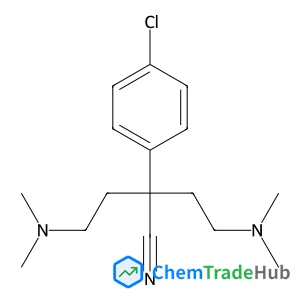
2-(4-Chlorophenyl)-4-(dimethylamino)-2-(2-(dimethylamino)ethyl)butanenitrile
CAS Number:
1246816-57-8
Molecular Formula:
C16H24ClN3
![1-[3-(4-Morpholinylsulfonyl)phenyl]methanamine structure](https://static.chemtradehub.com/structs/933/933989-32-3-51af.webp "1-[3-(4-Morpholinylsulfonyl)phenyl]methanamine structure")
Recommended Suppliers







Disclaimer
This page provides academic journal information for reference and research purposes only. We are not affiliated with any journal publishers and do not handle publication submissions. For publication-related inquiries, please contact the respective journal publishers directly.
If you notice any inaccuracies in the information displayed, please contact us at support@chemtradehub.com. We will promptly review and address your concerns.