











NMR study of Ba8Cu5SixGe41−x clathrate semiconductors
Literature Information
Publication Date
2015-06-01
DOI
10.1039/C5CP02575C
Impact Factor
3.676
Authors
Ali A. Sirusi, Xinlin Yan, Silke Paschen
View Original
Abstract
We have performed 63Cu, 65Cu, and 137Ba NMR on Ba8Cu5SixGe41−x, a series of intermetallic clathrates known for their potential as thermoelectric materials, in order to investigate the electronic behavior of the samples. The spectra and spin–lattice relaxation times were measured at 77 K and 290 K for the entire composition range 0 ≤ x ≤ 41. Magnetic and quadrupole shifts and relaxation rates of the Cu NMR data were extracted, and thereby carrier-induced metallic contributions identified. The observed shifts change in a nonlinear way with increasing Si substitution: from x = 0 to about 20 the shifts are essentially constant, while approaching x = 41 they increase rapidly. At the same time, Ba NMR data indicate greater Ba-site participation in the conduction band in Ba8Cu5Si41 than in Ba8Cu5Ge41. The results indicate surprisingly little change in electronic features vs. Si content for most of the composition range, while Ba8Cu5Si41 exhibits enhanced hybridization and a more metallic framework than Ba8Cu5Ge41.
Recommended Journals
Related Literature
Synthesis of block copolymers containing 3-chloro-2-hydroxypropyl methacrylate by NMP – a versatile platform for functionalization
Michael Klein
2022-07-08
Paper
DOI: 10.1039/D2PY00611A
The copolymerization of SO2 with propylene oxide mediated by organic ammonium salts: a comprehensive study of the main-chain structure, living polymerization character and regioselectivity
Xian-Chao Jin, Bai-Hao Ren, Ge-Ge Gu, Tian-Jun Yue, Wei-Min Ren
2022-04-30
Paper
DOI: 10.1039/D2PY00185C
Efficient suppression of the chain transfer reaction in ethylene coordination polymerization with dibenzosuberyl substituents
Zhou Lu, Weigang Fan
2022-06-06
Paper
DOI: 10.1039/D2PY00282E
Thioanhydride/isothiocyanate/epoxide ring-opening terpolymerisation: sequence selective enchainment of monomer mixtures and switchable catalysis
Dorothee Silbernagl, Heinz Sturm, Alex J. Plajer
2022-06-20
Communication
DOI: 10.1039/D2PY00629D
Enzymatic recycling of polymacrolactones‡
Salvador León, Sejin Oh, Antxon Martínez de Ilarduya
2022-02-16
Paper
DOI: 10.1039/D1PY01721G
Ruthenium-catalyzed diazoacetate/cyclooctene metathesis copolymerization
Minghang Ji, Shengquan Zheng, Chen Zou, Min Chen
2022-07-30
Paper
DOI: 10.1039/D2PY00886F
Thiolactone chemistry, a versatile platform for macromolecular engineering
Nicolas Illy, Emma Mongkhoun
2022-07-25
Review Article
DOI: 10.1039/D2PY00731B
Hydrophobic cargo loading at the core–corona interface of uniform, length-tunable aqueous diblock copolymer nanofibers with a crystalline polycarbonate core
Yangyang Ren
2022-06-02
Paper
DOI: 10.1039/D2PY00395C
Functional pH-responsive polymers containing dynamic enaminone linkages for the release of active organic amines
Spyridon Efstathiou, Congkai Ma, Despina Coursari, Georgios Patias, Lucas Al-Shok, David M. Haddleton
2022-03-18
Paper
DOI: 10.1039/D2PY00167E
Naphthoquinone-based imidazolyl esters as blue-light-sensitive Type I photoinitiators
Aristea Pavlou, Alexandros Petropoulos, Michael G. Siskos, Akram Hijazi, Frédéric Dumur
2022-08-01
Paper
DOI: 10.1039/D2PY00753C
You might also like
Compound Q&A
What are the main uses of 1-(3-Aminophenyl)-3-[(3R)-1-(3,3-dimethyl-2-oxobutyl)-2-oxo-5-(2-pyridinyl)-2,3-dihydro-1H-1,4-benzodiazepin-3-yl]urea (CAS: 155412-88-7)?
This compound is mainly used as an intermediate in the synthesis of antipsychoti...
155412-88-71-(3-Aminophenyl)-3-...
Compound Q&A
How should waste containing 1-(D-Ribofuranosyl)-1,4-dihydro-3-pyridinecarboxamide (CAS: 19132-12-8) be handled?
Waste containing 1-(D-Ribofuranosyl)-1,4-dihydro-3-pyridinecarboxamide (CAS: 191...
19132-12-81-(D-Ribofuranosyl)-...
Compound Q&A
What regulatory guidelines apply to 2-Methyl-2-propanyl 3-bromo-3-(hydroxymethyl)-1-azetidinecarboxylate (CAS: 2007919-81-3)?
2-Methyl-2-propanyl 3-bromo-3-(hydroxymethyl)-1-azetidinecarboxylate (CAS: 20079...
2007919-81-32-Methyl-2-propanyl ...
Compound Q&A
What is N-(4-Chloro-2-pyridinyl)acetamide (CAS: 245056-66-0)?
N-(4-Chloro-2-pyridinyl)acetamide (CAS: 245056-66-0) is a chemical compound with...
245056-66-0N-(4-Chloro-2-pyridi...
Compound Q&A
What is 5-Chloro-2-hydroxybenzoic acid (CAS: 321-14-2)?
5-Chloro-2-hydroxybenzoic acid, also known as 5-chlorosalicylic acid, is an arom...
321-14-25-Chloro-2-hydroxybe...
Compound Q&A
What precautions should be taken when handling 1,1-Dichloro-1-fluoroethane (CAS: 1717-00-6)?
When handling 1,1-Dichloro-1-fluoroethane (CAS: 1717-00-6), it is important to u...
1717-00-61,1-Dichloro-1-fluor...
Compound Q&A
What are the physical and chemical properties of Fmoc-(2S,3R)-3-phenylpyrrolidine-2-carboxylic acid (CAS: 281655-32-1)?
Fmoc-(2S,3R)-3-phenylpyrrolidine-2-carboxylic acid is a white crystalline solid ...
281655-32-1Fmoc-(2S,3R)-3-pheny...
Compound Q&A
What are the main uses of 4-Amino-5-bromo-2-pyridinecarboxylic acid (CAS: 1363381-01-4)?
4-Amino-5-bromo-2-pyridinecarboxylic acid is primarily used as a precursor in th...
1363381-01-44-Amino-5-bromo-2-py...
Compound Q&A
What precautions should be taken when handling (S)-tert-butyl 2-((2-(4-bromophenyl)-2-oxoethyl)carbamoyl)pyrrolidine-1-carboxylate (CAS: 1007881-98-2)?
Handling this compound should be done with personal protective equipment (PPE) i...
1007881-98-2(S)-tert-butyl 2-((2...
Compound Q&A
What precautions should be taken when handling 8-bromo-2,2-dimethyl-3,4-dihydro-2H-1,4-benzoxazin-3-one (CAS: 688363-73-7)?
When handling 8-bromo-2,2-dimethyl-3,4-dihydro-2H-1,4-benzoxazin-3-one, use prop...
688363-73-78-bromo-2,2-dimethyl...
Source Journal
Physical Chemistry Chemical Physics

CiteScore:
5.5
Self-citation Rate:
10.3%
Articles per Year:
3036
Physical Chemistry Chemical Physics (PCCP) is an international journal co-owned by 19 physical chemistry and physics societies from around the world. This journal publishes original, cutting-edge research in physical chemistry, chemical physics and biophysical chemistry. To be suitable for publication in PCCP, articles must include significant innovation and/or insight into physical chemistry; this is the most important criterion that reviewers and Editors will judge against when evaluating submissions. The journal has a broad scope and welcomes contributions spanning experiment, theory, computation and data science. Topical coverage includes spectroscopy, dynamics, kinetics, statistical mechanics, thermodynamics, electrochemistry, catalysis, surface science, quantum mechanics, quantum computing and machine learning. Interdisciplinary research areas such as polymers and soft matter, materials, nanoscience, energy, surfaces/interfaces, and biophysical chemistry are welcomed if they demonstrate significant innovation and/or insight into physical chemistry. Joined experimental/theoretical studies are particularly appreciated when complementary and based on up-to-date approaches.
Recommended Compounds
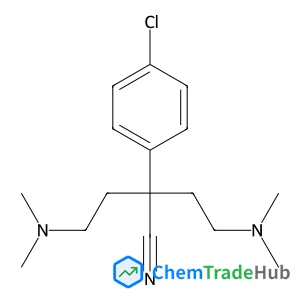
2-(4-Chlorophenyl)-4-(dimethylamino)-2-(2-(dimethylamino)ethyl)butanenitrile
CAS Number:
1246816-57-8
Molecular Formula:
C16H24ClN3
Recommended Suppliers





Disclaimer
This page provides academic journal information for reference and research purposes only. We are not affiliated with any journal publishers and do not handle publication submissions. For publication-related inquiries, please contact the respective journal publishers directly.
If you notice any inaccuracies in the information displayed, please contact us at support@chemtradehub.com. We will promptly review and address your concerns.