


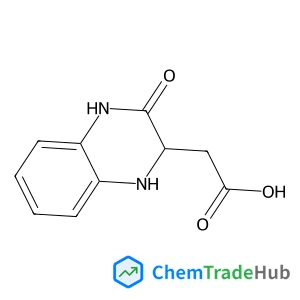
(3-Oxo-1,2,3,4-tetrahydro-2-quinoxalinyl)acetic acid
CAS Number:
136584-14-0
Molecular Formula:
C10H10N2O3
Zhou Lu, Weigang Fan
The chain transfer reaction plays an important role in governing the polymer molecular weight in coordination polymerization. In this work, we demonstrate that dibenzosuberyl substituents are efficient in suppressing chain transfer reactions and significantly enhancing the molecular weight of polymers and copolymers in ethylene (co)polymerization with α-diimine Ni(II) and Pd(II) species. Herein, a family of α-diimine Ni(II) and Pd(II) complexes with dibenzosuberyl substituents were designed, synthesized and characterized. In the nickel-catalyzed ethylene polymerization, dibenzosuberyl Ni(II) catalysts exhibited high activities (level of 106 g mol−1 h−1) and yielded highly branched (80–93/1000C) polyethylenes with high molecular weights (up to 586.4 kg mol−1). On the other hand, in the corresponding palladium-catalyzed ethylene polymerization, the Pd(II) catalysts displayed moderate activities (level of 105 g mol−1 h−1) and yielded highly branched (72–113/1000C) polyethylenes with high molecular weights (up to 297.3 kg mol−1). Moreover, dibenzosuberyl Pd(II) catalysts generated highly branched (72–107/1000C) E-MA copolymers with high molecular weights (up to 78.5 kg mol−1) and high incorporation ratios (up to 9.6 mol%). As compared with the classical dibenzhydryl Ni(II) and Pd(II) catalysts, dibenzosuberyl catalysts displayed an outstanding ability to suppress chain transfer reactions and generated polymers and copolymers with 1–2 orders of magnitude higher molecular weights during ethylene (co)polymerization. The sandwich-like structure formed by dibenzosuberyl substituents was proposed to be responsible for the observed phenomenon.

Russian Journal of General Chemistry

Chemical Communications

Nature Medicine

Journal of Peptide Science

Chemistry Education Research and Practice

Current Opinion in Solid State & Materials Science

Russian Journal of Applied Chemistry

Russian Journal of Coordination Chemistry

Current Opinion in Colloid & Interface Science

New Journal of Chemistry
Denis S. Grebenkov, Ralf Metzler, Gleb Oshanin
DOI: 10.1039/C8CP02043D
Daniel J. Nelson, Wilson K. Gichuhi, Charles M. Nichols, Veronica M. Bierbaum, W. Carl Lineberger
DOI: 10.1039/C8CP05403G
Joonhee Kang, Seung Hyo Noh, Jeemin Hwang, Hoje Chun, Hansung Kim, Byungchan Han
DOI: 10.1039/C8CP03801E
Francesco Stellato, Matteo Calandra, Francesco D'Acapito, Emiliano De Santis
DOI: 10.1039/C8CP04355H
Panagiotis Krokidas, Salvador Moncho, Edward N. Brothers, Marcelo Castier, Ioannis G. Economou
DOI: 10.1039/C7CP08456K
Bo Yang, Junru Wang, Xiaobiao Liu
DOI: 10.1039/C7CP04985D
Andrea Bonvicini, Laure Guilhaudis, Vincent Tognetti, Didier Desmaële, Nathalie Sauvonnet, Hassan Oulyadi, Laurent Joubert
DOI: 10.1039/C7CP07713K
Sofia M. Johansson, Xiangrui Kong, Erik S. Thomson, Stéphane Briquez, Céline Toubin, Jan B. C. Pettersson
DOI: 10.1039/C8CP04151B
Marco Drache, Katrin Brandl, Rebecca Reinhardt, Sabine Beuermann
DOI: 10.1039/C7CP07768H
This compound is mainly used as an intermediate in the synthesis of antipsychoti...
Waste containing 1-(D-Ribofuranosyl)-1,4-dihydro-3-pyridinecarboxamide (CAS: 191...
2-Methyl-2-propanyl 3-bromo-3-(hydroxymethyl)-1-azetidinecarboxylate (CAS: 20079...
N-(4-Chloro-2-pyridinyl)acetamide (CAS: 245056-66-0) is a chemical compound with...
5-Chloro-2-hydroxybenzoic acid, also known as 5-chlorosalicylic acid, is an arom...
When handling 1,1-Dichloro-1-fluoroethane (CAS: 1717-00-6), it is important to u...
Fmoc-(2S,3R)-3-phenylpyrrolidine-2-carboxylic acid is a white crystalline solid ...
4-Amino-5-bromo-2-pyridinecarboxylic acid is primarily used as a precursor in th...
Handling this compound should be done with personal protective equipment (PPE) i...
When handling 8-bromo-2,2-dimethyl-3,4-dihydro-2H-1,4-benzoxazin-3-one, use prop...

Polymer Chemistry welcomes submissions in all areas of polymer science that have a strong focus on macromolecular chemistry. Manuscripts may cover a broad range of fields, yet no direct application focus is required.
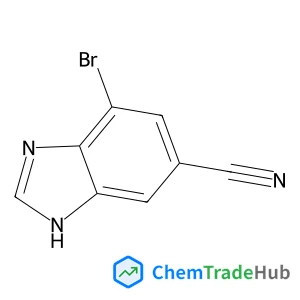
![Pyrazolo[1,5-a]pyridine-3-carbothioamide structure](https://static.chemtradehub.com/structs/885/885275-44-5-aae0.webp "Pyrazolo[1,5-a]pyridine-3-carbothioamide structure")
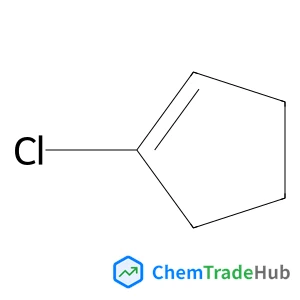
![2,6-Bis({(2R)-2-[hydroxy(diphenyl)methyl]-1-pyrrolidinyl}methyl)-4-methylphenol structure](https://static.chemtradehub.com/structs/877/877395-58-9-70bf.webp "2,6-Bis({(2R)-2-[hydroxy(diphenyl)methyl]-1-pyrrolidinyl}methyl)-4-methylphenol structure")





