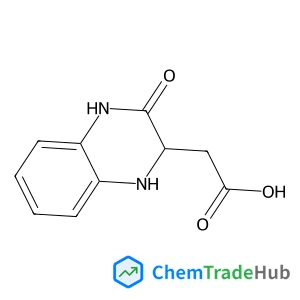
(3-Oxo-1,2,3,4-tetrahydro-2-quinoxalinyl)acetic acid
CAS Number:
136584-14-0
Molecular Formula:
C10H10N2O3
Rui Li, Senlin Wang, Jianpeng Wang, Zongchuan Huang
In this study, we demonstrate a facile method to fabricate novel Ni3S2 nano-triangular pyramid (NTP) arrays on Ni foam through a hydrothermal process and build unique Ni3S2@CoS core–shell NTP arrays by electro-deposition. The obtained Ni3S2@CoS material displays twice the specific capacitance of the pure Ni3S2 material in both a three-electrode system (4.89 F cm−2 at 4 mA cm−2) and asymmetric supercapacitor device (0.69 F cm−2 at 1.43 mA cm−2). In addition, the asymmetric supercapacitor demonstrates the outstanding energy density of 28.24 W h kg−1 at a power density of 134.46 W kg−1, with a stable cycle life (98.83% retained after 2000 cycles). The unique structure of the Ni3S2@CoS core–shell NTP arrays, which provides an ultra-thin CoS shell to enlarge efficient areas, introduces good conductivity, and short transportation lengths for both ions and electrons, contributes most to its excellent performance. Moreover, the bare Ni3S2 NTP arrays can be used as a new template to build other potential electrode materials.
Fumi Ishizuka, Hyun Jin Kim, Rhiannon P. Kuchel, Yin Yao, Shunsuke Chatani, Hiroshi Niino, Per B. Zetterlund
DOI: 10.1039/D1PY01661J
Fei Deng, Menglin Yang, Yanli Zhang, Xiaohui Wu, Rujiang Ma, Feihe Ma, Linqi Shi
DOI: 10.1039/D1PY01404H
Csilla György, Timothy Smith, David J. Growney, Steven P. Armes
DOI: 10.1039/D2PY00559J
Vahid Asadi, Jasper van der Gucht, Thomas E. Kodger
DOI: 10.1039/D2PY00841F
Spyridon Efstathiou, Congkai Ma, Despina Coursari, Georgios Patias, Lucas Al-Shok, David M. Haddleton
DOI: 10.1039/D2PY00167E
Rui Yang, Lin Xie, Nan Li, Pablo Froimowicz, Kan Zhang
DOI: 10.1039/D2PY00244B
Susanna V. Kunz, Cameron M. Cole, Steven C. Gauci, Felicia Zaar, Paul E. Shaw, Chandana Sampath Kumara Ranasinghe, Thomas Baumann, Prashant Sonar, Soniya D. Yambem, Christopher Barner-Kowollik, James P. Blinco
DOI: 10.1039/D2PY00511E
Daniel J. Keddie
DOI: 10.1039/D1PY01599K
This compound is mainly used as an intermediate in the synthesis of antipsychoti...
Waste containing 1-(D-Ribofuranosyl)-1,4-dihydro-3-pyridinecarboxamide (CAS: 191...
2-Methyl-2-propanyl 3-bromo-3-(hydroxymethyl)-1-azetidinecarboxylate (CAS: 20079...
N-(4-Chloro-2-pyridinyl)acetamide (CAS: 245056-66-0) is a chemical compound with...
5-Chloro-2-hydroxybenzoic acid, also known as 5-chlorosalicylic acid, is an arom...
When handling 1,1-Dichloro-1-fluoroethane (CAS: 1717-00-6), it is important to u...
Fmoc-(2S,3R)-3-phenylpyrrolidine-2-carboxylic acid is a white crystalline solid ...
4-Amino-5-bromo-2-pyridinecarboxylic acid is primarily used as a precursor in th...
Handling this compound should be done with personal protective equipment (PPE) i...
When handling 8-bromo-2,2-dimethyl-3,4-dihydro-2H-1,4-benzoxazin-3-one, use prop...

Physical Chemistry Chemical Physics (PCCP) is an international journal co-owned by 19 physical chemistry and physics societies from around the world. This journal publishes original, cutting-edge research in physical chemistry, chemical physics and biophysical chemistry. To be suitable for publication in PCCP, articles must include significant innovation and/or insight into physical chemistry; this is the most important criterion that reviewers and Editors will judge against when evaluating submissions. The journal has a broad scope and welcomes contributions spanning experiment, theory, computation and data science. Topical coverage includes spectroscopy, dynamics, kinetics, statistical mechanics, thermodynamics, electrochemistry, catalysis, surface science, quantum mechanics, quantum computing and machine learning. Interdisciplinary research areas such as polymers and soft matter, materials, nanoscience, energy, surfaces/interfaces, and biophysical chemistry are welcomed if they demonstrate significant innovation and/or insight into physical chemistry. Joined experimental/theoretical studies are particularly appreciated when complementary and based on up-to-date approaches.