












Impacts of retinal polyene (de)methylation on the photoisomerization mechanism and photon energy storage of rhodopsin
Literature Information
Publication Date
2015-05-26
DOI
10.1039/C5CP01939G
Impact Factor
3.676
Authors
Elżbieta Walczak, Tadeusz Andruniów
View Original
Abstract
Ab initio multiconfigurational quantum chemical methodology combined with molecular mechanics (CASPT2//CASSCF/AMBER) was applied to probe impacts of retinal protonated Schiff base (RPSB) polyene methylation and/or demethylation on the mechanism of photochemical isomerization in bovine rhodopsin. We have examined structural and spectroscopic properties of wild-type rhodopsin (with 11-cis-9,13-dimethyl-RPSB) and artificial rhodopsins, hosting four 11-cis-RPSB derivatives, 13-demethyl-, 9-demethyl-, 10-methyl-13-demethyl-, and 10-methyl-RPSB, evolving along the photoisomerization coordinate. It is found that the addition of 10-methyl or/and deletion of 9-/13-methyl groups do not appear to interfere structurally with the photoisomerization pathway in the S1 excited state. Remarkably, the two-mode space-saving mechanism initiated by bond order inversion and followed by asynchronous bicycle-pedal distortion in the RPSB backbone drives the photoreaction in all rhodopsin analogues studied here. However, methylation and/or demethylation is responsible for perturbation of excess energy deposited in the conical intersection structures. The analysis of photon energy stored by bathorhodopsin in synthetic pigments reveals that it is affected by steric crowding of methyl substituents in the RPSB backbone.
Recommended Journals
Related Literature
Orthogonally grown polycarbonate and polyvinyl block copolymers from mechanistically distinct (co)polymerizations
Naganatha Patil, Yves Gnanou, Xiaoshuang Feng
2022-05-11
Paper
DOI: 10.1039/D2PY00442A
Thermoresponsive metalloprotein-based hybrid hydrogels for the reversible and highly selective removal of lead(ii) from water
Tianbiao Wei, Shanqing Huang, Qingyuan Hu, Jue Wang, Zhongzhong Huo, Tongyang Zhu, Chi Wu, Hao Chen
2022-02-07
Paper
DOI: 10.1039/D1PY01574E
Exploiting the reversible covalent bonding of boronic acids for self-healing/recycling of main-chain polybenzoxazines
Sevinc Gulyuz, Yusuf Yagci, Baris Kiskan
2022-05-20
Paper
DOI: 10.1039/D2PY00068G
The UCST phase transition of a dextran based copolymer in aqueous media with tunable thermoresponsive behavior
Shaon Dey, Arpita Roy, Kalipada Manna, Sagar Pal
2022-06-15
Communication
DOI: 10.1039/D2PY00626J
Poly(sulfur ylides): a new class of zwitterionic polymers with distinct thermal and solution behaviour
Georgia Poulladofonou, Kevin Neumann
2022-07-06
Paper
DOI: 10.1039/D2PY00851C
Effect of radical copolymerization of the (oxa)norbornene end-group of RAFT-prepared macromonomers on bottlebrush copolymer synthesis via ROMP
Daniel J. Keddie
2022-02-02
Paper
DOI: 10.1039/D1PY01599K
Reinforcement of ultrahigh thermoresistant polybenzimidazole films by hard craters
Jiabei Zhou, Xianzhu Zhong, Yang Liu, Kenji Takada, Tatsuo Kaneko
2022-07-05
Communication
DOI: 10.1039/D2PY00548D
Synthesis and derivatization of epoxy-functional sterically-stabilized diblock copolymer spheres in non-polar media: does the spatial location of the epoxy groups matter?
Csilla György, Timothy Smith, David J. Growney, Steven P. Armes
2022-06-10
Paper
DOI: 10.1039/D2PY00559J
A robust platform to construct molecular patchy particles with a pentiptycene skeleton toward controlled mesoscale structures
Wei Xu, Yicong Wang, Feng-Gang Bian
2022-03-22
Communication
DOI: 10.1039/D2PY00130F
You might also like
Compound Q&A
What are the main uses of 1-(3-Aminophenyl)-3-[(3R)-1-(3,3-dimethyl-2-oxobutyl)-2-oxo-5-(2-pyridinyl)-2,3-dihydro-1H-1,4-benzodiazepin-3-yl]urea (CAS: 155412-88-7)?
This compound is mainly used as an intermediate in the synthesis of antipsychoti...
155412-88-71-(3-Aminophenyl)-3-...
Compound Q&A
How should waste containing 1-(D-Ribofuranosyl)-1,4-dihydro-3-pyridinecarboxamide (CAS: 19132-12-8) be handled?
Waste containing 1-(D-Ribofuranosyl)-1,4-dihydro-3-pyridinecarboxamide (CAS: 191...
19132-12-81-(D-Ribofuranosyl)-...
Compound Q&A
What regulatory guidelines apply to 2-Methyl-2-propanyl 3-bromo-3-(hydroxymethyl)-1-azetidinecarboxylate (CAS: 2007919-81-3)?
2-Methyl-2-propanyl 3-bromo-3-(hydroxymethyl)-1-azetidinecarboxylate (CAS: 20079...
2007919-81-32-Methyl-2-propanyl ...
Compound Q&A
What is N-(4-Chloro-2-pyridinyl)acetamide (CAS: 245056-66-0)?
N-(4-Chloro-2-pyridinyl)acetamide (CAS: 245056-66-0) is a chemical compound with...
245056-66-0N-(4-Chloro-2-pyridi...
Compound Q&A
What is 5-Chloro-2-hydroxybenzoic acid (CAS: 321-14-2)?
5-Chloro-2-hydroxybenzoic acid, also known as 5-chlorosalicylic acid, is an arom...
321-14-25-Chloro-2-hydroxybe...
Compound Q&A
What precautions should be taken when handling 1,1-Dichloro-1-fluoroethane (CAS: 1717-00-6)?
When handling 1,1-Dichloro-1-fluoroethane (CAS: 1717-00-6), it is important to u...
1717-00-61,1-Dichloro-1-fluor...
Compound Q&A
What are the physical and chemical properties of Fmoc-(2S,3R)-3-phenylpyrrolidine-2-carboxylic acid (CAS: 281655-32-1)?
Fmoc-(2S,3R)-3-phenylpyrrolidine-2-carboxylic acid is a white crystalline solid ...
281655-32-1Fmoc-(2S,3R)-3-pheny...
Compound Q&A
What are the main uses of 4-Amino-5-bromo-2-pyridinecarboxylic acid (CAS: 1363381-01-4)?
4-Amino-5-bromo-2-pyridinecarboxylic acid is primarily used as a precursor in th...
1363381-01-44-Amino-5-bromo-2-py...
Compound Q&A
What precautions should be taken when handling (S)-tert-butyl 2-((2-(4-bromophenyl)-2-oxoethyl)carbamoyl)pyrrolidine-1-carboxylate (CAS: 1007881-98-2)?
Handling this compound should be done with personal protective equipment (PPE) i...
1007881-98-2(S)-tert-butyl 2-((2...
Compound Q&A
What precautions should be taken when handling 8-bromo-2,2-dimethyl-3,4-dihydro-2H-1,4-benzoxazin-3-one (CAS: 688363-73-7)?
When handling 8-bromo-2,2-dimethyl-3,4-dihydro-2H-1,4-benzoxazin-3-one, use prop...
688363-73-78-bromo-2,2-dimethyl...
Source Journal
Physical Chemistry Chemical Physics

CiteScore:
5.5
Self-citation Rate:
10.3%
Articles per Year:
3036
Physical Chemistry Chemical Physics (PCCP) is an international journal co-owned by 19 physical chemistry and physics societies from around the world. This journal publishes original, cutting-edge research in physical chemistry, chemical physics and biophysical chemistry. To be suitable for publication in PCCP, articles must include significant innovation and/or insight into physical chemistry; this is the most important criterion that reviewers and Editors will judge against when evaluating submissions. The journal has a broad scope and welcomes contributions spanning experiment, theory, computation and data science. Topical coverage includes spectroscopy, dynamics, kinetics, statistical mechanics, thermodynamics, electrochemistry, catalysis, surface science, quantum mechanics, quantum computing and machine learning. Interdisciplinary research areas such as polymers and soft matter, materials, nanoscience, energy, surfaces/interfaces, and biophysical chemistry are welcomed if they demonstrate significant innovation and/or insight into physical chemistry. Joined experimental/theoretical studies are particularly appreciated when complementary and based on up-to-date approaches.
Recommended Compounds
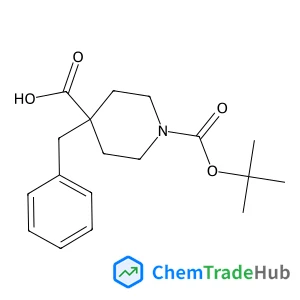
4-Benzyl-1-(tert-butoxycarbonyl)piperidine-4-carboxylic acid
CAS Number:
170838-87-6
Molecular Formula:
C18H25NO4
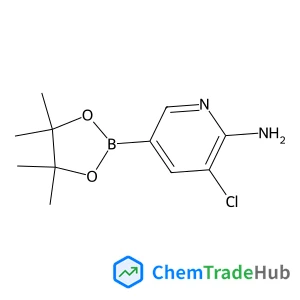
3-Chloro-5-(4,4,5,5-tetramethyl-1,3,2-dioxaborolan-2-yl)-2-pyridinamine
CAS Number:
1032758-99-8
Molecular Formula:
C11H16BClN2O2
![1-[3-(4-Morpholinylsulfonyl)phenyl]methanamine structure](https://static.chemtradehub.com/structs/933/933989-32-3-51af.webp "1-[3-(4-Morpholinylsulfonyl)phenyl]methanamine structure")
Recommended Suppliers






Disclaimer
This page provides academic journal information for reference and research purposes only. We are not affiliated with any journal publishers and do not handle publication submissions. For publication-related inquiries, please contact the respective journal publishers directly.
If you notice any inaccuracies in the information displayed, please contact us at support@chemtradehub.com. We will promptly review and address your concerns.