












Orthogonally grown polycarbonate and polyvinyl block copolymers from mechanistically distinct (co)polymerizations
Literature Information
Publication Date
2022-05-11
DOI
10.1039/D2PY00442A
Impact Factor
5.582
Authors
Naganatha Patil, Yves Gnanou, Xiaoshuang Feng
View Original
Abstract
Mechanistically distinct polymerization systems can afford unique block copolymers that would not be accessible by mere sequential polymerization. Herein we report a convenient one-pot synthesis of miscellaneous di- and triblock copolymers comprising CO2-based and polyvinyl blocks, obtained orthogonally through triethylborane (TEB)-mediated ring opening copolymerization (ROCOP) of CO2 with epoxides on the one hand and reversible addition fragmentation chain transfer (RAFT) polymerization of vinyl monomers on the other. 4-Cyano-4-[(dodecylsulfanylthiocarbonyl) sulfanyl] pentanoic acid (TTC-COOH), which carries a trithiocarbonate function and a carboxylic acid group, played the dual role of a chain transfer agent for RAFT polymerization and an initiator for the ROCOP of CO2/epoxide. Different bases such as tetrabutylammonium hydroxide, N-heterocyclic carbene (NHC), and tributylamine (TBA) were used for the deprotonation of TTC-COOH; in each case the compatibility of the generated carboxylic salts with trithiocarbonate functions was checked when they were utilized to copolymerize CO2 and epoxides. It was found that the salts produced in situ by the deprotonation of TTC-COOH using NHC and TBA did not harm trithiocarbonate functions. The two distinct polymerizations occurred as expected, affording a series of well-defined CO2-based AB and ABC block copolymers comprising one or two poly(vinyl) blocks, depending upon the choice of different combinations of epoxides and vinyl monomers. The thermal characterization of these AB and ABC block copolymers revealed either two or three glass transition temperatures indicative of phase-separated materials.
Related Literature
Understanding interface (odd–even) effects in charge tunneling using a polished EGaIn electrode
Jiahao Chen, Thomas J. Giroux, Yen Nguyen, Atte A. Kadoma, Boyce S. Chang, Brett VanVeller, Martin M. Thuo
2018-01-12
Paper
DOI: 10.1039/C7CP07531F
Intermolecular and very strong intramolecular C–Se⋯O/N chalcogen bonds in nitrophenyl selenocyanate crystals
Hui Wang, Ju Liu, Weizhou Wang
2018-01-25
Paper
DOI: 10.1039/C7CP08215K
Modelling the kinetics and structural property evolution of a versatile reaction: aqueous HCN polymerization
Amparo Fernández, Marta Ruiz-Bermejo, José L. de la Fuente
2018-05-29
Paper
DOI: 10.1039/C8CP01662C
Preventing iron(ii) precipitation in aqueous systems using polyacrylic acid: some molecular insights
Pierre-Arnaud Artola, Bernard Rousseau, Carine Clavaguéra, Marion Roy, Dominique You, Gabriel Plancque
2018-06-06
Paper
DOI: 10.1039/C7CP02743E
Disorder in the hydrogen-atoms uninvolved in hydrogen bonds in a metal–organic framework
2018-09-19
Communication
DOI: 10.1039/C8CP03709D
Zn-Porphyrin propped with hydantoin anchor: synthesis, photophysics and electron injection/recombination dynamics
Poomani Ram Kumar, Ebrahim M. Mothi, Mohan Ramesh, Arunkumar Kathiravan
2018-01-18
Paper
DOI: 10.1039/C7CP07326G
Investigations on the charge transfer mechanism at donor/acceptor interfaces in the quest for descriptors of organic solar cell performance
Kenji Mishima, Hiroki Matsunaga
2018-04-04
Paper
DOI: 10.1039/C8CP01253A
Kinetics of autoignition: a simple intuitive interpretation and its relation to the Livengood–Wu integral
2018-01-17
Paper
DOI: 10.1039/C7CP07736J
Solvation dynamics in polar solvents and imidazolium ionic liquids: failure of linear response approximations
Esther Heid, Christian Schröder
2018-01-29
Paper
DOI: 10.1039/C7CP07052G
Non-linear and non-local behaviour in spontaneously electrical solids
M. Roman, S. Taj, M. Gutowski, M. R. S. McCoustra, A. C. Dunn, Z. G. Keolopile, A. Rosu-Finsen, A. M. Cassidy, D. Field
2018-01-26
Paper
DOI: 10.1039/C7CP08489G
You might also like
Compound Q&A
What are the main uses of 1-(3-Aminophenyl)-3-[(3R)-1-(3,3-dimethyl-2-oxobutyl)-2-oxo-5-(2-pyridinyl)-2,3-dihydro-1H-1,4-benzodiazepin-3-yl]urea (CAS: 155412-88-7)?
This compound is mainly used as an intermediate in the synthesis of antipsychoti...
155412-88-71-(3-Aminophenyl)-3-...
Compound Q&A
How should waste containing 1-(D-Ribofuranosyl)-1,4-dihydro-3-pyridinecarboxamide (CAS: 19132-12-8) be handled?
Waste containing 1-(D-Ribofuranosyl)-1,4-dihydro-3-pyridinecarboxamide (CAS: 191...
19132-12-81-(D-Ribofuranosyl)-...
Compound Q&A
What regulatory guidelines apply to 2-Methyl-2-propanyl 3-bromo-3-(hydroxymethyl)-1-azetidinecarboxylate (CAS: 2007919-81-3)?
2-Methyl-2-propanyl 3-bromo-3-(hydroxymethyl)-1-azetidinecarboxylate (CAS: 20079...
2007919-81-32-Methyl-2-propanyl ...
Compound Q&A
What is N-(4-Chloro-2-pyridinyl)acetamide (CAS: 245056-66-0)?
N-(4-Chloro-2-pyridinyl)acetamide (CAS: 245056-66-0) is a chemical compound with...
245056-66-0N-(4-Chloro-2-pyridi...
Compound Q&A
What is 5-Chloro-2-hydroxybenzoic acid (CAS: 321-14-2)?
5-Chloro-2-hydroxybenzoic acid, also known as 5-chlorosalicylic acid, is an arom...
321-14-25-Chloro-2-hydroxybe...
Compound Q&A
What precautions should be taken when handling 1,1-Dichloro-1-fluoroethane (CAS: 1717-00-6)?
When handling 1,1-Dichloro-1-fluoroethane (CAS: 1717-00-6), it is important to u...
1717-00-61,1-Dichloro-1-fluor...
Compound Q&A
What are the physical and chemical properties of Fmoc-(2S,3R)-3-phenylpyrrolidine-2-carboxylic acid (CAS: 281655-32-1)?
Fmoc-(2S,3R)-3-phenylpyrrolidine-2-carboxylic acid is a white crystalline solid ...
281655-32-1Fmoc-(2S,3R)-3-pheny...
Compound Q&A
What are the main uses of 4-Amino-5-bromo-2-pyridinecarboxylic acid (CAS: 1363381-01-4)?
4-Amino-5-bromo-2-pyridinecarboxylic acid is primarily used as a precursor in th...
1363381-01-44-Amino-5-bromo-2-py...
Compound Q&A
What precautions should be taken when handling (S)-tert-butyl 2-((2-(4-bromophenyl)-2-oxoethyl)carbamoyl)pyrrolidine-1-carboxylate (CAS: 1007881-98-2)?
Handling this compound should be done with personal protective equipment (PPE) i...
1007881-98-2(S)-tert-butyl 2-((2...
Compound Q&A
What precautions should be taken when handling 8-bromo-2,2-dimethyl-3,4-dihydro-2H-1,4-benzoxazin-3-one (CAS: 688363-73-7)?
When handling 8-bromo-2,2-dimethyl-3,4-dihydro-2H-1,4-benzoxazin-3-one, use prop...
688363-73-78-bromo-2,2-dimethyl...
Source Journal
Polymer Chemistry

CiteScore:
8.6
Self-citation Rate:
7.3%
Articles per Year:
457
Polymer Chemistry welcomes submissions in all areas of polymer science that have a strong focus on macromolecular chemistry. Manuscripts may cover a broad range of fields, yet no direct application focus is required.
Recommended Compounds
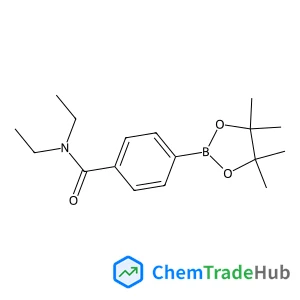
N,N-Diethyl-4-(4,4,5,5-tetramethyl-1,3,2-dioxaborolan-2-yl)benzamide
CAS Number:
325142-99-2
Molecular Formula:
C17H26BNO3
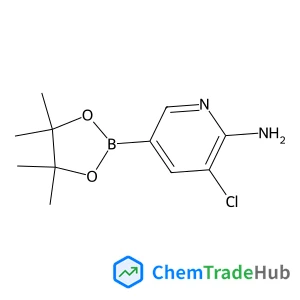
3-Chloro-5-(4,4,5,5-tetramethyl-1,3,2-dioxaborolan-2-yl)-2-pyridinamine
CAS Number:
1032758-99-8
Molecular Formula:
C11H16BClN2O2
Recommended Suppliers





Disclaimer
This page provides academic journal information for reference and research purposes only. We are not affiliated with any journal publishers and do not handle publication submissions. For publication-related inquiries, please contact the respective journal publishers directly.
If you notice any inaccuracies in the information displayed, please contact us at support@chemtradehub.com. We will promptly review and address your concerns.