












Structural organization of surfactant aggregates in vacuo: a molecular dynamics and well-tempered metadynamics study
Literature Information
Publication Date
2015-05-26
DOI
10.1039/C5CP01926E
Impact Factor
3.676
Authors
Sandro L. Fornili, Vincenzo Turco Liveri
View Original
Abstract
Experimental investigations using mass spectrometry have established that surfactant molecules are able to form aggregates in the gas phase. However, there is no general consensus on the organization of these aggregates and how it depends on the aggregation number and surfactant molecular structure. In the present paper we investigate the structural organization of some surfactants in vacuo by molecular dynamics and well-tempered metadynamics simulations to widely explore the space of their possible conformations in vacuo. To study how the specific molecular features of such compounds affect their organization, we have considered as paradigmatic surfactants, the anionic single-chain sodium dodecyl sulfate (SDS), the anionic double-chain sodium bis(2-ethylhexyl) sulfosuccinate (AOT) and the zwitterionic single-chain dodecyl phosphatidyl choline (DPC) within a wide aggregation number range (from 5 to 100). We observe that for low aggregation numbers the aggregates show in vacuo the typical structure of reverse micelles, while for large aggregation numbers a variety of globular aggregates occur that are characterized by the coexistence of interlaced domains formed by the polar or ionic heads and by the alkyl chains of the surfactants. Well-tempered metadynamics simulations allows us to confirm that the structural organizations obtained after 50 ns of molecular dynamics simulations are practically the equilibrium ones. Similarities and differences of surfactant aggregates in vacuo and in apolar media are also discussed.
Related Literature
Molybdenum sulphide clusters as redox-active supports for low-valent uranium
Kamaless Patra, William W. Brennessel, Ellen M. Matson
2023-11-29
Communication
DOI: 10.1039/D3CC05561B
Programmable photochemical deoxygenation for 2.5D grayscale printing
Sihan Chen, Hongqi Zhou, Ning Zhou, Jiang He, Wei Lu
2023-11-28
Communication
DOI: 10.1039/D3CC04147F
Highly selective pressure-dependent (transfer) hydrogenative depolymerization of polybutylene succinate
Mary L. Johnson, Rachel L. Fine, Dakota S. Stankowski, Casey A. Koch, Kylie A. Limoges, Nicholas J. Robertson
2023-12-18
Communication
DOI: 10.1039/D3CC05239G
Rh(iii)-catalyzed selective mono- and dual-functionalization/cyclization of 1-aryl-5-aminopyrazoles with iodonium ylides
Longkun Chen, Mingshuai Zhang, Meichen Liu, Zhuoyuan Liu, Yuetong Qiu, Zhilai Zhang, Fuchao Yu, Jiuzhong Huang
2023-12-05
Communication
DOI: 10.1039/D3CC05266D
Artificial transmembrane potassium transporters: designs, functions, mechanisms and applications
Xiyu Yuan, Jie Shen, Huaqiang Zeng
2023-12-08
Feature Article
DOI: 10.1039/D3CC04488B
Isolated Ni-atom catalyst supported on Ti3C2Tx with an asymmetrical C–Ni–N structure for the hydrogen evolution reaction
Haosen Yang, Pengfei Wu, Jiajing Pei, Bo Peng, Qingqing Liu
2023-12-01
Communication
DOI: 10.1039/D3CC04930B
Influence of donor point modifications on the assembly of chalcogen-bonded organic frameworks
Brian J. Eckstein, Hannah R. Martin, Michael P. Moghadasnia, Arijit Halder, Michael J. Melville, Tara N. Buzinski, Gary J. Balaich, C. Michael McGuirk
2023-12-21
Communication
DOI: 10.1039/D3CC05162E
Spatially resolved fluoroalkylation and alkylation of graphene by direct laser writing
Sabrin Al-Fogra, Sofia Rohde, Marcus Speck, Frank Hauke, Andreas Hirsch, Tao Wei
2023-12-14
Communication
DOI: 10.1039/D3CC05355E
You might also like
Compound Q&A
How should waste containing 6-Chloro-5-(2'-hydroxy-3'-methoxy-4-biphenylyl)-3-(3-methoxyphenyl)-1H-pyrrolo[3,2-d]pyrimidine-2,4(3H,5H)-dione (CAS: 1346607-05-3) be handled?
Waste containing 6-Chloro-5-(2'-hydroxy-3'-methoxy-4-biphenylyl)-3-(3-methoxyphe...
1346607-05-36-Chloro-5-(2'-hydro...
Compound Q&A
What are the main uses of (3alpha,5alpha)-3-Hydroxypregnane-11,20-dione (CAS: 23930-19-0)?
(3alpha,5alpha)-3-Hydroxypregnane-11,20-dione is primarily used in the pharmaceu...
23930-19-0(3alpha,5alpha)-3-Hy...
Compound Q&A
What is the market or research trend for 4-Amino-6-chloro-2-pyridinecarboxylic acid (CAS: 546141-56-4)?
The market for 4-Amino-6-chloro-2-pyridinecarboxylic acid (CAS: 546141-56-4) is ...
546141-56-44-Amino-6-chloro-2-p...
Compound Q&A
Are there alternatives to (2-Benzoylethyl)trimethylammonium chloride (CAS: 24472-88-6) in synthesis?
Alternatives to (2-Benzoylethyl)trimethylammonium chloride (CAS: 24472-88-6) in ...
24472-88-6(2-Benzoylethyl)trim...
Compound Q&A
Is N-[4-Nitro-3-(trifluoromethyl)phenyl]acetamide (CAS: 393-12-4) safe?
N-[4-Nitro-3-(trifluoromethyl)phenyl]acetamide (CAS: 393-12-4) is generally safe...
393-12-4N-[4-Nitro-3-(triflu...
Compound Q&A
Are there alternatives to [(4R,5R,6S)-5-hydroxy-10-imino-3,7-dioxa-1,9-diazatricyclo[6.4.0.02,6]dodeca-8,11-dien-4-yl]methyl dihydrogen phosphate (CAS: 39679-56-6) in synthesis?
Alternative reagents such as other phosphates or similar functional groups can b...
39679-56-6[(4R,5R,6S)-5-hydrox...
Compound Q&A
Are there alternatives to N,N'-Bis(3-aminopropyl)-1,3-propanediamine (CAS: 4605-14-5) in synthesis?
There are alternatives to N,N'-Bis(3-aminopropyl)-1,3-propanediamine (CAS: 4605-...
4605-14-5N,N'-Bis(3-aminoprop...
Compound Q&A
What precautions should be taken when handling Aluminium trihexadecanoate (CAS: 555-35-1)?
When handling Aluminium trihexadecanoate, it is important to use appropriate per...
555-35-1Aluminium trihexadec...
Compound Q&A
What is (1,1-Dioxido-3-oxo-1,2-benzothiazol-2(3H)-yl)acetic acid (CAS: 52188-11-1)?
(1,1-Dioxido-3-oxo-1,2-benzothiazol-2(3H)-yl)acetic acid is a chemical compound ...
52188-11-1(1,1-Dioxido-3-oxo-1...
Compound Q&A
Are there alternatives to 5,5-dimethyloxolan-2-one (CAS: 3123-97-5) in synthesis?
Several alternatives to 5,5-dimethyloxolan-2-one (CAS: 3123-97-5) can be used in...
3123-97-55,5-dimethyloxolan-2...
Source Journal
Physical Chemistry Chemical Physics

CiteScore:
5.5
Self-citation Rate:
10.3%
Articles per Year:
3036
Physical Chemistry Chemical Physics (PCCP) is an international journal co-owned by 19 physical chemistry and physics societies from around the world. This journal publishes original, cutting-edge research in physical chemistry, chemical physics and biophysical chemistry. To be suitable for publication in PCCP, articles must include significant innovation and/or insight into physical chemistry; this is the most important criterion that reviewers and Editors will judge against when evaluating submissions. The journal has a broad scope and welcomes contributions spanning experiment, theory, computation and data science. Topical coverage includes spectroscopy, dynamics, kinetics, statistical mechanics, thermodynamics, electrochemistry, catalysis, surface science, quantum mechanics, quantum computing and machine learning. Interdisciplinary research areas such as polymers and soft matter, materials, nanoscience, energy, surfaces/interfaces, and biophysical chemistry are welcomed if they demonstrate significant innovation and/or insight into physical chemistry. Joined experimental/theoretical studies are particularly appreciated when complementary and based on up-to-date approaches.
Recommended Compounds
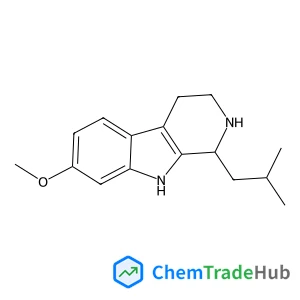
1-Isobutyl-7-methoxy-2,3,4,9-tetrahydro-1H-beta-carboline
CAS Number:
175975-76-5
Molecular Formula:
C16H22N2O
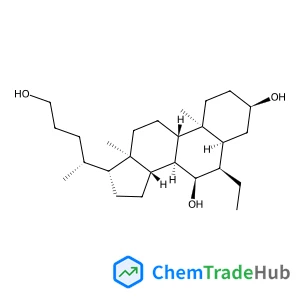
(3alpha,5beta,6alpha,7alpha)-6-Ethylcholane-3,7,24-triol
CAS Number:
1537866-49-1
Molecular Formula:
C26H46O3
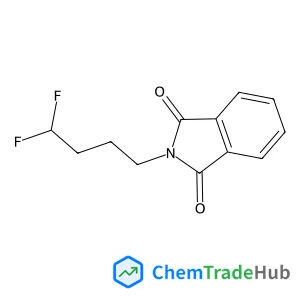
2-(4,4-Difluorobutyl)-1H-isoindole-1,3(2H)-dione
CAS Number:
1265341-14-7
Molecular Formula:
C12H11F2NO2
Recommended Suppliers






Disclaimer
This page provides academic journal information for reference and research purposes only. We are not affiliated with any journal publishers and do not handle publication submissions. For publication-related inquiries, please contact the respective journal publishers directly.
If you notice any inaccuracies in the information displayed, please contact us at support@chemtradehub.com. We will promptly review and address your concerns.