












Spectroscopic and second-order nonlinear optical properties of Ruthenium(ii) complexes: a DFT/MRCI and ADC(2) study
Literature Information
Publication Date
2015-07-01
DOI
10.1039/C5CP01884F
Impact Factor
3.676
Authors
Daniel Escudero, Walter Thiel, Benoît Champagne
View Original
Abstract
In this communication we use the density functional theory-based multi-reference configuration interaction (DFT/MRCI) and the second-order algebraic diagrammatic construction (ADC(2)) methods to compute the spectroscopic and second-order nonlinear optical (NLO) properties of Ru(II)-based NLO-phores. For some of the complexes, an appropriate treatment of doubly excited states is essential to correctly describe their spectroscopic and photochemical properties. Geometrical and solvent relaxation effects are also assessed. An adequate treatment of solvent effects seems critical for an accurate description of the NLO properties of these complexes.
Related Literature
Photocatalytic activity and charge carrier dynamics of TiO2 powders with a binary particle size distribution
Fabian Sieland, Jenny Schneider
2018-02-12
Paper
DOI: 10.1039/C8CP00398J
Molecules mimicking atoms: monomers and dimers of alkali metal solvated electron precursors
Isuru R. Ariyarathna, Filip Pawłowski, Joseph Vincent Ortiz, Evangelos Miliordos
2018-09-07
Paper
DOI: 10.1039/C8CP05497E
Deep eutectic–water binary solvent associations investigated by vibrational spectroscopy and chemometrics
R. Ahmadi, A. Safavi, Z. Shojaeifard, A. Shahsavar, A. Mohajeri, M. Heydari Dokoohaki, A. R. Zolghadr
2018-06-04
Paper
DOI: 10.1039/C8CP00409A
Magnesium bis(trifluoromethanesulfonyl)amide complexes with triglyme and asymmetric homologues: phase behavior, coordination structures and melting point reduction
Kei Hashimoto, Soma Suzuki, Morgan L. Thomas, Toshihiko Mandai, Seiji Tsuzuki, Masayoshi Watanabe
2018-02-13
Paper
DOI: 10.1039/C7CP08367J
New carbon allotropes in sp + sp3 bonding networks consisting of C8 cubes
Changfeng Chen, Hiroshi Mizuseki
2018-01-18
Paper
DOI: 10.1039/C7CP08380G
Pseudorotaxanes in the gas phase: structure and energetics of protonated dibenzylamine–crown ether complexes
Motoki Kida, Daisuke Shimoyama, Toshiaki Ikeda, Ryo Sekiya, Takeharu Haino, Takayuki Ebata, Christophe Jouvet, Yoshiya Inokuchi
2018-06-22
Paper
DOI: 10.1039/C8CP02707B
Formation patterns of water clusters in CMK-3 and CMK-5 mesoporous carbons: a computational recognition study
Xuan Peng, Surendra Kumar Jain, Jayant Kumar Singh, Qibing Jin
2018-05-30
Paper
DOI: 10.1039/C8CP01887A
How low-resolution structural data predict the conformational changes of a protein: a study on data-driven molecular dynamics simulations
Ryuhei Harada, Yasuteru Shigeta
2018-06-05
Paper
DOI: 10.1039/C8CP02246A
Systematic exploitation of thermotropic bicontinuous cubic phase families from 1,2-bis(aryloyl)hydrazine-based molecules
Shoichi Kutsumizu, Yutaro Yamada, Tadashi Sugimoto, Nina Yamada, Taro Udagawa, Yohei Miwa
2018-02-02
Paper
DOI: 10.1039/C7CP08345A
You might also like
Compound Q&A
Is 2-(2-chloroacetamido)-3-phenylpropanoic acid (CAS: 7765-11-9) safe?
2-(2-Chloroacetamido)-3-phenylpropanoic acid (CAS: 7765-11-9) is generally consi...
7765-11-92-(2-chloroacetamido...
Compound Q&A
Is 2-(Benzyloxy)-5-bromobenzoic acid (CAS: 62176-31-2) safe?
2-(Benzyloxy)-5-bromobenzoic acid can be handled safely if appropriate precautio...
62176-31-22-(Benzyloxy)-5-brom...
Compound Q&A
What is (4-Methyl-1,2,5-oxadiazol-3-yl)methanamine hydrochloride (CAS: 1159825-48-5)?
(4-Methyl-1,2,5-oxadiazol-3-yl)methanamine hydrochloride is a chemical compound ...
1159825-48-5(4-Methyl-1,2,5-oxad...
Compound Q&A
What is 2-(5-Hexylthiophen-2-yl)-4,4,5,5-tetramethyl-1,3,2-dioxaborolane (CAS: 917985-54-7)?
2-(5-Hexylthiophen-2-yl)-4,4,5,5-tetramethyl-1,3,2-dioxaborolane (CAS: 917985-54...
917985-54-72-(5-Hexylthiophen-2...
Compound Q&A
Are there alternatives to 4-(8-Methyl-9H-1,3-dioxolo[4,5-h][2,3]benzodiazepin-5-yl)benzenamine (CAS: 102771-26-6) in synthesis?
While 4-(8-Methyl-9H-1,3-dioxolo[4,5-h][2,3]benzodiazepin-5-yl)benzenamine (CAS:...
102771-26-64-(8-Methyl-9H-1,3-d...
Compound Q&A
What is the market or research trend for tert-butyl 3-hydroxy-4,5,7,8-tetrahydro-2H-pyrazolo[3,4-d]azepine-6-carboxylate (CAS: 851376-80-2)?
The market for tert-butyl 3-hydroxy-4,5,7,8-tetrahydro-2H-pyrazolo[3,4-d]azepine...
851376-80-2tert-butyl 3-hydroxy...
Compound Q&A
How should waste containing 3,5-Diamino-1H-pyrazole-4-carbonitrile (CAS: 6844-58-2) be handled?
Waste containing 3,5-Diamino-1H-pyrazole-4-carbonitrile (CAS: 6844-58-2) should ...
6844-58-23,5-Diamino-1H-pyraz...
Compound Q&A
How is (6-Fluoro-3-pyridinyl)boronic acid (CAS: 351019-18-6) typically synthesized?
(6-Fluoro-3-pyridinyl)boronic acid can be synthesized through the reaction of 6-...
351019-18-6(6-Fluoro-3-pyridiny...
Compound Q&A
What industries use Dibenzyl carbonimidoylbiscarbamate (CAS: 10065-79-9)?
Dibenzyl carbonimidoylbiscarbamate (CAS: 10065-79-9) finds applications in vario...
10065-79-9Dibenzyl carbonimido...
Compound Q&A
What is the market or research trend for (beta,beta,2,3,4,5,6-~2~H_7_)Phenylalanine (CAS: 74228-83-4)?
The market for (beta,beta,2,3,4,5,6-~2~H_7_)Phenylalanine (CAS: 74228-83-4) is g...
74228-83-4(beta,beta,2,3,4,5,6...
Source Journal
Physical Chemistry Chemical Physics

CiteScore:
5.5
Self-citation Rate:
10.3%
Articles per Year:
3036
Physical Chemistry Chemical Physics (PCCP) is an international journal co-owned by 19 physical chemistry and physics societies from around the world. This journal publishes original, cutting-edge research in physical chemistry, chemical physics and biophysical chemistry. To be suitable for publication in PCCP, articles must include significant innovation and/or insight into physical chemistry; this is the most important criterion that reviewers and Editors will judge against when evaluating submissions. The journal has a broad scope and welcomes contributions spanning experiment, theory, computation and data science. Topical coverage includes spectroscopy, dynamics, kinetics, statistical mechanics, thermodynamics, electrochemistry, catalysis, surface science, quantum mechanics, quantum computing and machine learning. Interdisciplinary research areas such as polymers and soft matter, materials, nanoscience, energy, surfaces/interfaces, and biophysical chemistry are welcomed if they demonstrate significant innovation and/or insight into physical chemistry. Joined experimental/theoretical studies are particularly appreciated when complementary and based on up-to-date approaches.
Recommended Compounds
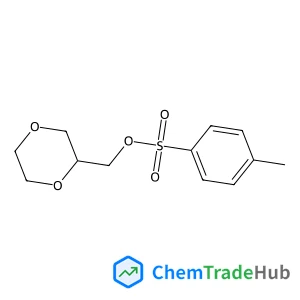
(S)-(1,4-Dioxan-2-yl)methyl 4-methylbenzenesulfonate
CAS Number:
917882-64-5
Molecular Formula:
C12H16O5S

Recommended Suppliers







Disclaimer
This page provides academic journal information for reference and research purposes only. We are not affiliated with any journal publishers and do not handle publication submissions. For publication-related inquiries, please contact the respective journal publishers directly.
If you notice any inaccuracies in the information displayed, please contact us at support@chemtradehub.com. We will promptly review and address your concerns.