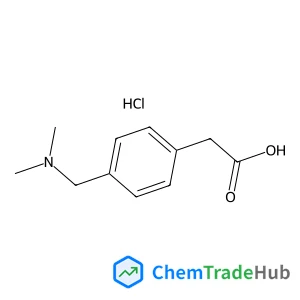
4-(Dimethylaminomethyl)phenylacetic acid hydrochloride
CAS Number:
99985-52-1
Molecular Formula:
C11H16ClNO2
Tatiana Kuznetsova, Bjørnar Jensen, Bjørn Kvamme, Sara Sjøblom
Water condensing as liquid drops within the fluid bulk has traditionally been the only scenario accepted in the industrial analysis of hydrate risks. We have applied a combination of absolute thermodynamics and molecular dynamics modeling to analyze the five primary routes of hydrate formation in a rusty pipeline carrying dense carbon dioxide with methane, hydrogen sulfide, argon, and nitrogen as additional impurities. We have revised the risk analysis of all possible routes in accordance with the combination of the first and the second laws of thermodynamics to determine the highest permissible content of water. It was found that at concentrations lower than five percent, hydrogen sulfide will only support the formation of carbon dioxide-dominated hydrate from adsorbed water and hydrate formers from carbon dioxide phase rather than formation in the aqueous phase. Our results indicate that hydrogen sulfide leaving carbon dioxide for the aqueous phase will be able to create an additional hydrate phase in the aqueous region adjacent to the first adsorbed water layer. The growth of hydrate from different phases will decrease the induction time by substantially reducing the kinetically limiting mass transport across the hydrate films. Hydrate formation via adsorption of water on rusty walls will play the decisive role in hydrate formation risk, with the initial concentration of hydrogen sulfide being the critical factor. We concluded that the safest way to eliminate hydrate risks is to ensure that the water content of carbon dioxide is low enough to prevent water dropout via the adsorption mechanism.
Herbert W. Roesky, S. Shravan Kumar
DOI: 10.1039/B505307B
Nagendra K. Sharma, Krishna N. Ganesh
DOI: 10.1039/B506870C
John H. Thurston, Dale C. Swenson, Louis Messerle
DOI: 10.1039/B504864H
Christian Helbig, Rudolf Herrmann, Franz Mayr, Ernst-Wilhelm Scheidt, Klaus Tröster, Jan Hanss, Hans-Albrecht Krug von Nidda, Gunter Heymann, Hubert Huppertz, Wolfgang Scherer
DOI: 10.1039/B506088E
Charng-Sheng Tsai, Ting-Bin Yu, Chao-Tsen Chen
DOI: 10.1039/B507237A
Hiroyuki Katayama, Hiroshi Yari, Masaki Tanaka, Fumiyuki Ozawa
DOI: 10.1039/B504436G
Tao Yang, Guobao Li, Liping You, Jing Ju, Fuhui Liao, Jianhua Lin
DOI: 10.1039/B506901G
Maurilio Galletta, Sebastiano Campagna, Manuel Quesada, Gilles Ulrich, Raymond Ziessel
DOI: 10.1039/B507196H
Victorio Cadierno, Sergio E. García-Garrido, José Gimeno, Noel Nebra
DOI: 10.1039/B506788J
Waste containing N-Methoxy-N-methyl-1,3-thiazole-5-carboxamide (CAS: 898825-89-3...
N-(4-Biphenylyl)dibenzo[b,d]furan-4-amine should be stored in a tightly sealed c...
The market for 3-Acetamido-5-amino-2,4,6-triiodobenzoic acid (CAS: 1713-07-1) is...
Benzyl 2-O-acetyl-3,4,6-tri-O-benzyl-beta-D-galactopyranoside (CAS: 61820-03-9) ...
2-Ethylpiperazine dihydrochloride (CAS: 438050-52-3) is regulated under the Glob...
1,1'-[1,3-Phenylenebis(methylene)]bis(3-methyl-1H-pyrrole-2,5-dione) (CAS: 11946...
Several alternatives can be used in the synthesis of 5-Fluoro-2-(1-pyrrolidinyl)...
Proper personal protective equipment (PPE) must be worn when handling this compo...
When handling 6-Bromoimidazo[1,2-a]pyridin-8-amine, it is important to wear appr...
Alternatives to (2S,4R)-4-(4-Nitrobenzyl)pyrrolidine-2-carboxylic acid hydrochlo...

Physical Chemistry Chemical Physics (PCCP) is an international journal co-owned by 19 physical chemistry and physics societies from around the world. This journal publishes original, cutting-edge research in physical chemistry, chemical physics and biophysical chemistry. To be suitable for publication in PCCP, articles must include significant innovation and/or insight into physical chemistry; this is the most important criterion that reviewers and Editors will judge against when evaluating submissions. The journal has a broad scope and welcomes contributions spanning experiment, theory, computation and data science. Topical coverage includes spectroscopy, dynamics, kinetics, statistical mechanics, thermodynamics, electrochemistry, catalysis, surface science, quantum mechanics, quantum computing and machine learning. Interdisciplinary research areas such as polymers and soft matter, materials, nanoscience, energy, surfaces/interfaces, and biophysical chemistry are welcomed if they demonstrate significant innovation and/or insight into physical chemistry. Joined experimental/theoretical studies are particularly appreciated when complementary and based on up-to-date approaches.