


![Ethyl thieno[3,2-f]quinoline-2-carboxylate structure](https://static.chemtradehub.com/structs/299/29948-26-3-f62b.webp "Ethyl thieno[3,2-f]quinoline-2-carboxylate structure")
The influence of polaron formation on exciton dissociation
Literature Information
Publication Date
2015-04-01
DOI
10.1039/C5CP00415B
Impact Factor
3.676
Authors
View Original
Abstract
A linear tight-binding model was used to examine the yield of exciton dissociation under the influence of the electron–vibration interaction. The system consists of a linear chain, coupled to a single vibration, and electron–vibration interaction is permitted to occur on certain sites. In the presence of this interaction, population tends to localize to build a polaron. The system loses polaron trapping energy to the environment through its coupling to the bath environment, and loses population due to the injection into the electrode at the terminal site. A self-energy term was generated from population injection, and was added to the energy level of the last site, working as a sink function to absorb the electrons and measure the yield. This injection occurs only when the electron energy is inside and around the band. When the electron energy is outside the tight-binding band, population injection is inhibited. Our aim is to investigate the exciton dissociation effected by the competition between polaron formation and population injection, via a process strongly influenced by the inter-site coupling and the electron–vibration interaction.
Recommended Journals

Russian Journal of Applied Chemistry

Russian Journal of Coordination Chemistry

Journal of Natural Medicines

Acta Materialia

Crystallography Reports

Journal of Saudi Chemical Society

Organic Process Research & Development

Russian Chemical Bulletin

Russian Journal of General Chemistry

Russian Journal of Bioorganic Chemistry
Related Literature
Quantum phase transitions in Sn bilayer based interfacial systems by an external strain
Li Chen, Qiandong Zhuang, Yeqing Chen, Changmin Shi, Dongchao Wang
2016-08-03
Paper
DOI: 10.1039/C6CP04534K
Micelle formation of a non-ionic surfactant in non-aqueous molecular solvents and protic ionic liquids (PILs)
Frances Separovic, Calum J. Drummond, Tamar L. Greaves
2016-08-08
Paper
DOI: 10.1039/C6CP03332F
Impact of the Si/Al ratio on the selective capture of iodine compounds in silver-mordenite: a periodic DFT study
Siwar Chibani, Mouheb Chebbi, Sébastien Lebègue, Laurent Cantrel, Michael Badawi
2016-08-19
Paper
DOI: 10.1039/C6CP05015H
Effects of the acceptor unit in dyes with acceptor–bridge–donor architecture on the electron photo-injection mechanism and aggregation in DSSCs
Ximena Zarate, Francisca Claveria-Cadiz, David Arias-Olivares, Angela Rodriguez-Serrano, Natalia Inostroza, Eduardo Schott
2016-08-02
Paper
DOI: 10.1039/C6CP04662B
Mechanistic insights into ozone-initiated oxidative degradation of saturated hydrocarbons and polymers
Richmond Lee, Michelle L. Coote
2016-08-16
Paper
DOI: 10.1039/C6CP05064F
New insight into probe-location dependent polarity and hydration at lipid/water interfaces: comparison between gel- and fluid-phases of lipid bilayers
Moirangthem Kiran Singh, Him Shweta, Mohammad Firoz Khan, Sobhan Sen
2016-04-22
Paper
DOI: 10.1039/C6CP01201A
The involvement of triplet receiver states in the ultrafast excited state processes of small esters
A. B. Stephansen, M. A. B. Larsen, T. I. Sølling
2016-08-12
Paper
DOI: 10.1039/C6CP04046B
Effect of water on the structure of a prototype ionic liquid
Oleg Borodin, David L. Price, Bachir Aoun, Miguel A. González, Justin B. Hooper, Maiko Kofu, Osamu Yamamuro
2016-05-26
Paper
DOI: 10.1039/C6CP02191C
Thermodynamics of binary gas adsorption in nanopores
Sujeet Dutta, Ronan Lefort, Denis Morineau, Ramona Mhanna, Odile Merdrignac-Conanec, Arnaud Saint-Jalmes, Théo Leclercq
2016-07-28
Paper
DOI: 10.1039/C6CP01587E
Empirical in operando analysis of the charge carrier dynamics in hematite photoanodes by PEIS, IMPS and IMVS
David Shai Ellis, Hen Dotan, Avner Rothschild
2016-08-01
Perspective
DOI: 10.1039/C6CP04683E
You might also like
Compound Q&A
Is 2-(2-chloroacetamido)-3-phenylpropanoic acid (CAS: 7765-11-9) safe?
2-(2-Chloroacetamido)-3-phenylpropanoic acid (CAS: 7765-11-9) is generally consi...
7765-11-92-(2-chloroacetamido...
Compound Q&A
Is 2-(Benzyloxy)-5-bromobenzoic acid (CAS: 62176-31-2) safe?
2-(Benzyloxy)-5-bromobenzoic acid can be handled safely if appropriate precautio...
62176-31-22-(Benzyloxy)-5-brom...
Compound Q&A
What is (4-Methyl-1,2,5-oxadiazol-3-yl)methanamine hydrochloride (CAS: 1159825-48-5)?
(4-Methyl-1,2,5-oxadiazol-3-yl)methanamine hydrochloride is a chemical compound ...
1159825-48-5(4-Methyl-1,2,5-oxad...
Compound Q&A
What is 2-(5-Hexylthiophen-2-yl)-4,4,5,5-tetramethyl-1,3,2-dioxaborolane (CAS: 917985-54-7)?
2-(5-Hexylthiophen-2-yl)-4,4,5,5-tetramethyl-1,3,2-dioxaborolane (CAS: 917985-54...
917985-54-72-(5-Hexylthiophen-2...
Compound Q&A
Are there alternatives to 4-(8-Methyl-9H-1,3-dioxolo[4,5-h][2,3]benzodiazepin-5-yl)benzenamine (CAS: 102771-26-6) in synthesis?
While 4-(8-Methyl-9H-1,3-dioxolo[4,5-h][2,3]benzodiazepin-5-yl)benzenamine (CAS:...
102771-26-64-(8-Methyl-9H-1,3-d...
Compound Q&A
What is the market or research trend for tert-butyl 3-hydroxy-4,5,7,8-tetrahydro-2H-pyrazolo[3,4-d]azepine-6-carboxylate (CAS: 851376-80-2)?
The market for tert-butyl 3-hydroxy-4,5,7,8-tetrahydro-2H-pyrazolo[3,4-d]azepine...
851376-80-2tert-butyl 3-hydroxy...
Compound Q&A
How should waste containing 3,5-Diamino-1H-pyrazole-4-carbonitrile (CAS: 6844-58-2) be handled?
Waste containing 3,5-Diamino-1H-pyrazole-4-carbonitrile (CAS: 6844-58-2) should ...
6844-58-23,5-Diamino-1H-pyraz...
Compound Q&A
How is (6-Fluoro-3-pyridinyl)boronic acid (CAS: 351019-18-6) typically synthesized?
(6-Fluoro-3-pyridinyl)boronic acid can be synthesized through the reaction of 6-...
351019-18-6(6-Fluoro-3-pyridiny...
Compound Q&A
What industries use Dibenzyl carbonimidoylbiscarbamate (CAS: 10065-79-9)?
Dibenzyl carbonimidoylbiscarbamate (CAS: 10065-79-9) finds applications in vario...
10065-79-9Dibenzyl carbonimido...
Compound Q&A
What is the market or research trend for (beta,beta,2,3,4,5,6-~2~H_7_)Phenylalanine (CAS: 74228-83-4)?
The market for (beta,beta,2,3,4,5,6-~2~H_7_)Phenylalanine (CAS: 74228-83-4) is g...
74228-83-4(beta,beta,2,3,4,5,6...
Source Journal
Physical Chemistry Chemical Physics

CiteScore:
5.5
Self-citation Rate:
10.3%
Articles per Year:
3036
Physical Chemistry Chemical Physics (PCCP) is an international journal co-owned by 19 physical chemistry and physics societies from around the world. This journal publishes original, cutting-edge research in physical chemistry, chemical physics and biophysical chemistry. To be suitable for publication in PCCP, articles must include significant innovation and/or insight into physical chemistry; this is the most important criterion that reviewers and Editors will judge against when evaluating submissions. The journal has a broad scope and welcomes contributions spanning experiment, theory, computation and data science. Topical coverage includes spectroscopy, dynamics, kinetics, statistical mechanics, thermodynamics, electrochemistry, catalysis, surface science, quantum mechanics, quantum computing and machine learning. Interdisciplinary research areas such as polymers and soft matter, materials, nanoscience, energy, surfaces/interfaces, and biophysical chemistry are welcomed if they demonstrate significant innovation and/or insight into physical chemistry. Joined experimental/theoretical studies are particularly appreciated when complementary and based on up-to-date approaches.
Recommended Compounds
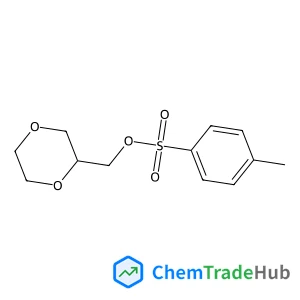
(S)-(1,4-Dioxan-2-yl)methyl 4-methylbenzenesulfonate
CAS Number:
917882-64-5
Molecular Formula:
C12H16O5S
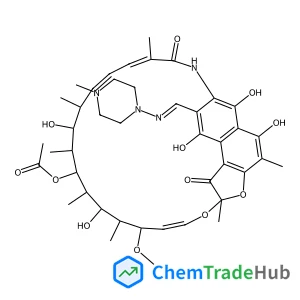
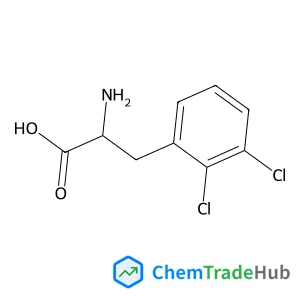
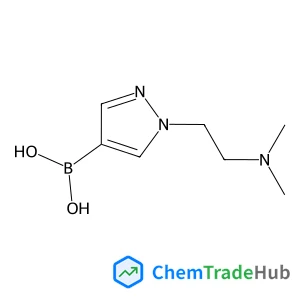
(1-(2-(Dimethylamino)ethyl)-1H-pyrazol-4-yl)boronic acid
CAS Number:
1086063-73-1
Molecular Formula:
C7H14BN3O2
Recommended Suppliers






Disclaimer
This page provides academic journal information for reference and research purposes only. We are not affiliated with any journal publishers and do not handle publication submissions. For publication-related inquiries, please contact the respective journal publishers directly.
If you notice any inaccuracies in the information displayed, please contact us at support@chemtradehub.com. We will promptly review and address your concerns.