


![(1S)-1,5-Anhydro-2-O-alpha-L-arabinopyranosyl-1-[5-hydroxy-7-({6-O-[3-(4-hydroxy-3-methoxyphenyl)propanoyl]-beta-D-glucopyranosyl}oxy)-2-(4-hydroxyphenyl)-4-oxo-4H-chromen-6-yl]-D-glucitol structure](https://static.chemtradehub.com/structs/225/2252345-81-4-bcff.webp "(1S)-1,5-Anhydro-2-O-alpha-L-arabinopyranosyl-1-[5-hydroxy-7-({6-O-[3-(4-hydroxy-3-methoxyphenyl)propanoyl]-beta-D-glucopyranosyl}oxy)-2-(4-hydroxyphenyl)-4-oxo-4H-chromen-6-yl]-D-glucitol structure")
Very low amount of TiO2 on N-doped carbon nanotubes significantly improves oxygen reduction activity and stability of supported Pt nanoparticles
Literature Information
Publication Date
2015-03-20
DOI
10.1039/C5CP00369E
Impact Factor
3.676
Authors
Anqi Zhao, Justus Masa, Wei Xia
View Original
Abstract
Electrochemical corrosion is a major problem for carbon materials used in electrocatalysis. Highly dispersed TiO2 was deposited on O-functionalized and N-doped carbon nanotubes by chemical vapour deposition to tackle the carbon corrosion problem. Very low Ti loadings of about 1 wt% were applied to minimize the negative influence of TiO2 as a semiconductor on the high conductivity of carbon materials. Both N doping and TiO2 coating facilitate strong metal–support interactions and favour the formation of small Pt particles. N doping improved the intrinsic catalytic activity of the carbon support and enhanced the conductivity due to the removal of surface oxygen groups, while the negative effect of TiO2 on conductivity is counterbalanced by its promoting effect on metal–support interactions leading to enhanced overall catalytic performance. Pt/TiO2/NCNTs showed the highest ORR activity, and significantly outperformed Pt/NCNTs in electrochemical stability tests.
Recommended Journals

Russian Journal of Bioorganic Chemistry

Current Opinion in Solid State & Materials Science

Journal of Natural Medicines

Russian Journal of Organic Chemistry

Russian Chemical Bulletin

Organic Process Research & Development

Current Opinion in Colloid & Interface Science

Journal of Peptide Science

Nature Medicine

Russian Journal of Coordination Chemistry
Related Literature
The photoenhanced aging process of soot by the heterogeneous ozonization reaction
2016-08-01
Paper
DOI: 10.1039/C6CP03938C
Factors controlling the CO intercalation of h-BN overlayers on Ru(0001)
Aiyi Dong, Qiang Fu, Hao Wu, Mingming Wei, Xinhe Bao
2016-08-08
Paper
DOI: 10.1039/C6CP03660K
Correction: Chiral sensing of amino acids and proteins chelating with EuIII complexes by Raman optical activity spectroscopy
Tao Wu, Jiří Kessler, Petr Bouř
2016-08-23
Correction
DOI: 10.1039/C6CP90213H
Iron-embedded C2N monolayer: a promising low-cost and high-activity single-atom catalyst for CO oxidation
B. L. He, J. S. Shen, Z. X. Tian
2016-08-03
Paper
DOI: 10.1039/C6CP03398A
ZnO nanorods prepared via ablation of Zn with millisecond laser in liquid media
Taku Goto, Tatsuki Owashi, Alex G. Rozhin, Shigeru Yamaguchi, Tsuyohito Ito
2016-08-03
Paper
DOI: 10.1039/C6CP04556A
Unraveling multiple binding modes of acridine orange to DNA using a multispectroscopic approach
Mhejabeen Sayed, Bhavana Krishnamurthy, Haridas Pal
2016-07-25
Paper
DOI: 10.1039/C6CP03716J
Utilization of the Donnan potential induced by reverse salt flux in pressure retarded osmosis systems
Chul Ho Park, Sung Jo Kwak, Joo-Youn Nam, Moon Seok Jang, Jung-Hyun Lee
2016-08-15
Communication
DOI: 10.1039/C6CP03939A
Peptides@mica: from affinity to adhesion mechanism
T. Gladytz, R. Hassert, M. Pagel, H. J. Risselada, S. Naumov, A. G. Beck-Sickinger
2016-07-22
Paper
DOI: 10.1039/C6CP03325C
Hybridization and de-hybridization between the locally-excited (LE) state and the charge-transfer (CT) state: a combined experimental and theoretical study
Qiang Gu, Yuguang Ma
2016-05-25
Paper
DOI: 10.1039/C6CP02778D
Water adsorption and O-defect formation on Fe2O3(0001) surfaces
Roman Ovcharenko, Elena Voloshina, Joachim Sauer
2016-08-31
Paper
DOI: 10.1039/C6CP05313K
You might also like
Compound Q&A
Is 2-(2-chloroacetamido)-3-phenylpropanoic acid (CAS: 7765-11-9) safe?
2-(2-Chloroacetamido)-3-phenylpropanoic acid (CAS: 7765-11-9) is generally consi...
7765-11-92-(2-chloroacetamido...
Compound Q&A
Is 2-(Benzyloxy)-5-bromobenzoic acid (CAS: 62176-31-2) safe?
2-(Benzyloxy)-5-bromobenzoic acid can be handled safely if appropriate precautio...
62176-31-22-(Benzyloxy)-5-brom...
Compound Q&A
What is (4-Methyl-1,2,5-oxadiazol-3-yl)methanamine hydrochloride (CAS: 1159825-48-5)?
(4-Methyl-1,2,5-oxadiazol-3-yl)methanamine hydrochloride is a chemical compound ...
1159825-48-5(4-Methyl-1,2,5-oxad...
Compound Q&A
What is 2-(5-Hexylthiophen-2-yl)-4,4,5,5-tetramethyl-1,3,2-dioxaborolane (CAS: 917985-54-7)?
2-(5-Hexylthiophen-2-yl)-4,4,5,5-tetramethyl-1,3,2-dioxaborolane (CAS: 917985-54...
917985-54-72-(5-Hexylthiophen-2...
Compound Q&A
Are there alternatives to 4-(8-Methyl-9H-1,3-dioxolo[4,5-h][2,3]benzodiazepin-5-yl)benzenamine (CAS: 102771-26-6) in synthesis?
While 4-(8-Methyl-9H-1,3-dioxolo[4,5-h][2,3]benzodiazepin-5-yl)benzenamine (CAS:...
102771-26-64-(8-Methyl-9H-1,3-d...
Compound Q&A
What is the market or research trend for tert-butyl 3-hydroxy-4,5,7,8-tetrahydro-2H-pyrazolo[3,4-d]azepine-6-carboxylate (CAS: 851376-80-2)?
The market for tert-butyl 3-hydroxy-4,5,7,8-tetrahydro-2H-pyrazolo[3,4-d]azepine...
851376-80-2tert-butyl 3-hydroxy...
Compound Q&A
How should waste containing 3,5-Diamino-1H-pyrazole-4-carbonitrile (CAS: 6844-58-2) be handled?
Waste containing 3,5-Diamino-1H-pyrazole-4-carbonitrile (CAS: 6844-58-2) should ...
6844-58-23,5-Diamino-1H-pyraz...
Compound Q&A
How is (6-Fluoro-3-pyridinyl)boronic acid (CAS: 351019-18-6) typically synthesized?
(6-Fluoro-3-pyridinyl)boronic acid can be synthesized through the reaction of 6-...
351019-18-6(6-Fluoro-3-pyridiny...
Compound Q&A
What industries use Dibenzyl carbonimidoylbiscarbamate (CAS: 10065-79-9)?
Dibenzyl carbonimidoylbiscarbamate (CAS: 10065-79-9) finds applications in vario...
10065-79-9Dibenzyl carbonimido...
Compound Q&A
What is the market or research trend for (beta,beta,2,3,4,5,6-~2~H_7_)Phenylalanine (CAS: 74228-83-4)?
The market for (beta,beta,2,3,4,5,6-~2~H_7_)Phenylalanine (CAS: 74228-83-4) is g...
74228-83-4(beta,beta,2,3,4,5,6...
Source Journal
Physical Chemistry Chemical Physics

CiteScore:
5.5
Self-citation Rate:
10.3%
Articles per Year:
3036
Physical Chemistry Chemical Physics (PCCP) is an international journal co-owned by 19 physical chemistry and physics societies from around the world. This journal publishes original, cutting-edge research in physical chemistry, chemical physics and biophysical chemistry. To be suitable for publication in PCCP, articles must include significant innovation and/or insight into physical chemistry; this is the most important criterion that reviewers and Editors will judge against when evaluating submissions. The journal has a broad scope and welcomes contributions spanning experiment, theory, computation and data science. Topical coverage includes spectroscopy, dynamics, kinetics, statistical mechanics, thermodynamics, electrochemistry, catalysis, surface science, quantum mechanics, quantum computing and machine learning. Interdisciplinary research areas such as polymers and soft matter, materials, nanoscience, energy, surfaces/interfaces, and biophysical chemistry are welcomed if they demonstrate significant innovation and/or insight into physical chemistry. Joined experimental/theoretical studies are particularly appreciated when complementary and based on up-to-date approaches.
Recommended Compounds
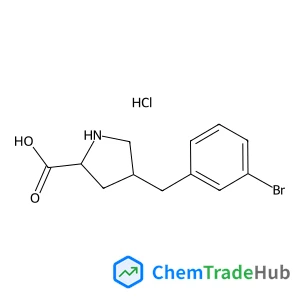
(2S,4R)-4-(3-Bromobenzyl)pyrrolidine-2-carboxylic acid hydrochloride
CAS Number:
1049734-10-2
Molecular Formula:
C12H15BrClNO2

1-(5-Bromo-2-fluorophenyl)-2,2,2-trifluoroethanol
CAS Number:
1039827-16-1
Molecular Formula:
C8H5BrF4O
Recommended Suppliers





Disclaimer
This page provides academic journal information for reference and research purposes only. We are not affiliated with any journal publishers and do not handle publication submissions. For publication-related inquiries, please contact the respective journal publishers directly.
If you notice any inaccuracies in the information displayed, please contact us at support@chemtradehub.com. We will promptly review and address your concerns.