












Unraveling multiple binding modes of acridine orange to DNA using a multispectroscopic approach
Literature Information
Publication Date
2016-07-25
DOI
10.1039/C6CP03716J
Impact Factor
3.676
Authors
Mhejabeen Sayed, Bhavana Krishnamurthy, Haridas Pal
View Original
Abstract
The interaction of acridine orange (AOH+) with calf thymus DNA (ct-DNA) under different dye–DNA conditions has been investigated in detail using multispectroscopic techniques, unraveling a number of hitherto unexplored intricacies of dye–DNA binding. The observed results intriguingly show contrasting binding features when low (2.4 μM) and significantly high (23 μM) dye concentrations are used. It is conclusively inferred from absorption, steady-state fluorescence, circular dichroism, fluorescence decay and anisotropy decay studies that at low [DNA] to [dye] ratio, especially with higher dye concentration, dimeric AOH+ predominantly binds externally to DNA surfaces through electrostatic interactions. At sufficiently high [DNA] to [dye] ratios, however, the interaction intriguingly changes to monomeric AOH+ bound to DNA, predominantly in the intercalative mode between DNA base pairs, with partly an electrostatic binding on DNA surfaces. With very low initial dye concentration, monomeric (AOH+) mostly binds to DNA through intercalative and electrostatic modes for most DNA to dye ratios. The present study demonstrates a systematic correlation of the striking changes in the photophysical properties of the dye upon multimode binding with DNA. The observed results are of great significance in understanding the fundamental insights of dye/drug binding to DNA hosts, of use in the design of effective therapeutic agents.
Related Literature
Thermoresponsive block copolymers containing reactive azlactone groups and their bioconjugation with lysozyme
Hien The Ho, Martin E. Levere, Sagrario Pascual, Véronique Montembault, Nathalie Casse, Aurore Caruso, Laurent Fontaine
2012-09-28
Paper
DOI: 10.1039/C2PY20714A
Coupled stochastic simulation of the chain length and particle size distribution in miniemulsion radical copolymerization of styrene and N-vinylcaprolactam
Paul H. M. Van Steenberge
2019-08-22
Paper
DOI: 10.1039/C9RE00218A
From self-assembled toroids to dynamic nanotubules
Yongju Kim, Taehoon Kim, Myongsoo Lee
2012-11-12
Minireview
DOI: 10.1039/C2PY20868G
Rapid CO2 capture-to-mineralisation in a scalable reactor
Rafael M. Santos, Lidija Šiller
2020-01-21
Paper
DOI: 10.1039/C9RE00446G
Living lamellar crystal initiating polymerization and brittleness mechanism investigations based on crystallization during the ring-opening of cyclic butylene terephthalate oligomers
Zongbao Wang, Bingjie Wang, Quting Gou, Junwu Zhang, Jian Zhou, Peng Chen, Qun Gu
2012-12-03
Paper
DOI: 10.1039/C2PY20847D
Insights into membrane-separated organic electrosynthesis: the case of adiponitrile electrochemical production
Daniela E. Blanco, Purnima A. Prasad, Kaylee Dunningan, Miguel A. Modestino
2019-11-13
Paper
DOI: 10.1039/C9RE00389D
Cerium oxide encapsulation by emulsion polymerization using hydrophilic macroRAFT agents
Nancy Zgheib, Jean-Luc Putaux, Antoine Thill, Elodie Bourgeat-Lami, Franck D'Agosto, Muriel Lansalot
2012-09-21
Paper
DOI: 10.1039/C2PY20548C
Jet-mixing reactor for the production of monodisperse silver nanoparticles using a reduced amount of capping agent
Pinaki Ranadive, Aamena Parulkar, Nicholas A. Brunelli
2019-05-14
Paper
DOI: 10.1039/C9RE00152B
Biodegradable alanine and phenylalanine alkyl ester polyphosphazenes as potential ligament and tendon tissue scaffolds
Jessica L. Nichol, Nicole L. Morozowich, Harry R. Allcock
2012-10-08
Paper
DOI: 10.1039/C2PY20631E
You might also like
Compound Q&A
Is 2-(2-chloroacetamido)-3-phenylpropanoic acid (CAS: 7765-11-9) safe?
2-(2-Chloroacetamido)-3-phenylpropanoic acid (CAS: 7765-11-9) is generally consi...
7765-11-92-(2-chloroacetamido...
Compound Q&A
Is 2-(Benzyloxy)-5-bromobenzoic acid (CAS: 62176-31-2) safe?
2-(Benzyloxy)-5-bromobenzoic acid can be handled safely if appropriate precautio...
62176-31-22-(Benzyloxy)-5-brom...
Compound Q&A
What is (4-Methyl-1,2,5-oxadiazol-3-yl)methanamine hydrochloride (CAS: 1159825-48-5)?
(4-Methyl-1,2,5-oxadiazol-3-yl)methanamine hydrochloride is a chemical compound ...
1159825-48-5(4-Methyl-1,2,5-oxad...
Compound Q&A
What is 2-(5-Hexylthiophen-2-yl)-4,4,5,5-tetramethyl-1,3,2-dioxaborolane (CAS: 917985-54-7)?
2-(5-Hexylthiophen-2-yl)-4,4,5,5-tetramethyl-1,3,2-dioxaborolane (CAS: 917985-54...
917985-54-72-(5-Hexylthiophen-2...
Compound Q&A
Are there alternatives to 4-(8-Methyl-9H-1,3-dioxolo[4,5-h][2,3]benzodiazepin-5-yl)benzenamine (CAS: 102771-26-6) in synthesis?
While 4-(8-Methyl-9H-1,3-dioxolo[4,5-h][2,3]benzodiazepin-5-yl)benzenamine (CAS:...
102771-26-64-(8-Methyl-9H-1,3-d...
Compound Q&A
What is the market or research trend for tert-butyl 3-hydroxy-4,5,7,8-tetrahydro-2H-pyrazolo[3,4-d]azepine-6-carboxylate (CAS: 851376-80-2)?
The market for tert-butyl 3-hydroxy-4,5,7,8-tetrahydro-2H-pyrazolo[3,4-d]azepine...
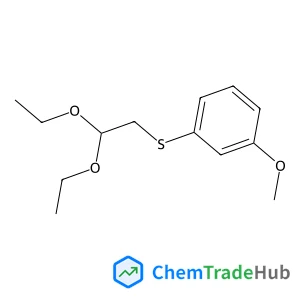
851376-80-2tert-butyl 3-hydroxy...
Compound Q&A
How should waste containing 3,5-Diamino-1H-pyrazole-4-carbonitrile (CAS: 6844-58-2) be handled?
Waste containing 3,5-Diamino-1H-pyrazole-4-carbonitrile (CAS: 6844-58-2) should ...
6844-58-23,5-Diamino-1H-pyraz...
Compound Q&A
How is (6-Fluoro-3-pyridinyl)boronic acid (CAS: 351019-18-6) typically synthesized?
(6-Fluoro-3-pyridinyl)boronic acid can be synthesized through the reaction of 6-...
351019-18-6(6-Fluoro-3-pyridiny...
Compound Q&A
What industries use Dibenzyl carbonimidoylbiscarbamate (CAS: 10065-79-9)?
Dibenzyl carbonimidoylbiscarbamate (CAS: 10065-79-9) finds applications in vario...
10065-79-9Dibenzyl carbonimido...
Compound Q&A
What is the market or research trend for (beta,beta,2,3,4,5,6-~2~H_7_)Phenylalanine (CAS: 74228-83-4)?
The market for (beta,beta,2,3,4,5,6-~2~H_7_)Phenylalanine (CAS: 74228-83-4) is g...
74228-83-4(beta,beta,2,3,4,5,6...
Source Journal
Physical Chemistry Chemical Physics

CiteScore:
5.5
Self-citation Rate:
10.3%
Articles per Year:
3036
Physical Chemistry Chemical Physics (PCCP) is an international journal co-owned by 19 physical chemistry and physics societies from around the world. This journal publishes original, cutting-edge research in physical chemistry, chemical physics and biophysical chemistry. To be suitable for publication in PCCP, articles must include significant innovation and/or insight into physical chemistry; this is the most important criterion that reviewers and Editors will judge against when evaluating submissions. The journal has a broad scope and welcomes contributions spanning experiment, theory, computation and data science. Topical coverage includes spectroscopy, dynamics, kinetics, statistical mechanics, thermodynamics, electrochemistry, catalysis, surface science, quantum mechanics, quantum computing and machine learning. Interdisciplinary research areas such as polymers and soft matter, materials, nanoscience, energy, surfaces/interfaces, and biophysical chemistry are welcomed if they demonstrate significant innovation and/or insight into physical chemistry. Joined experimental/theoretical studies are particularly appreciated when complementary and based on up-to-date approaches.
Recommended Compounds
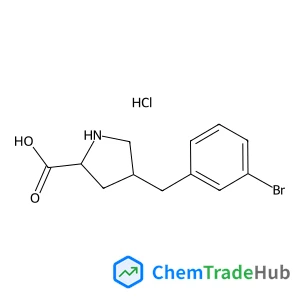
(2S,4R)-4-(3-Bromobenzyl)pyrrolidine-2-carboxylic acid hydrochloride
CAS Number:
1049734-10-2
Molecular Formula:
C12H15BrClNO2
Recommended Suppliers






Disclaimer
This page provides academic journal information for reference and research purposes only. We are not affiliated with any journal publishers and do not handle publication submissions. For publication-related inquiries, please contact the respective journal publishers directly.
If you notice any inaccuracies in the information displayed, please contact us at support@chemtradehub.com. We will promptly review and address your concerns.