












Exploring volume, compressibility and hydration changes of folded proteins upon compression
Literature Information
Publication Date
2015-02-09
DOI
10.1039/C5CP00251F
Impact Factor
3.676
Authors
Vladimir P. Voloshin, Nikolai Smolin, Alfons Geiger, Roland Winter
View Original
Abstract
Understanding the physical basis of the structure, stability and function of proteins in solution, including extreme environmental conditions, requires knowledge of their temperature and pressure dependent volumetric properties. One physical–chemical property of proteins that is still little understood is their partial molar volume and its dependence on temperature and pressure. We used molecular dynamics simulations of aqueous solutions of a typical monomeric folded protein, staphylococcal nuclease (SNase), to study and analyze the pressure dependence of the apparent volume, Vapp, and its components by the Voronoi–Delaunay method. We show that the strong decrease of Vapp with pressure (βT = 0.95 × 10⁻⁵ bar−1, in very good agreement with the experimental value) is essentially due to the compression of the molecular volume, VM, ultimately, of its internal voids, VemptyM. Changes of the intrinsic volume (defined as the Voronoi volume of the molecule), the contribution of the solvent to the apparent volume, and of the contribution of the boundary voids between the protein and the solvent have also been studied and quantified in detail. The pressure dependences of the volumetric characteristics obtained are compared with the temperature dependent behavior of these quantities and with corresponding results for a natively unfolded polypeptide.
Related Literature
Alteration of room temperature phosphorescence lifetimes of quinine and quinidine by chiral additives
Yanli Wei, Wing-Hong Chan, Albert W. M. Lee, Carmen W. Huie
2003-12-18
Communication
DOI: 10.1039/B311667K
Interactions between a surfactant and cavitand in water blur distinctions between host and guest
Laurent Trembleau, Julius Rebek Jr
2003-11-28
Communication
DOI: 10.1039/B311424D
Living cationic polymerisation of styrene in an ionic liquid
R. Vijayaraghavan, D. R. MacFarlane
2004-02-13
Communication
DOI: 10.1039/B315100J
First three examples of taxane-derived di-propellanes in Taxus canadensis needles
Qing Wen Shi, Françoise Sauriol, Alain Lesimple, Lolita O. Zamir
2004-02-04
Communication
DOI: 10.1039/B316051C
Template-free synthesis of single-crystalline cadmium nanotubes
Pingàn Hu, Yunqi Liu, Lei Fu, Lingchao Cao, Daoben Zhu
2004-02-04
Communication
DOI: 10.1039/B312708G
Two contrasting ethynyl hydroboration pathways in the formation of a novel tris-hydroboration product from reaction of dimesitylborane with 2,5-diethynylpyridine
Christopher D. Entwistle, Andrei S. Batsanov, Judith A. K. Howard, Mark A. Fox, Todd B. Marder
2004-02-13
Communication
DOI: 10.1039/B316250H
A new method of solvent free O- and N-glycosylation using activated carbon fiber (ACF) as a promoter. Application to the synthesis of saponin and nucleoside analogues
Sophie Lautrette, Robert Granet, Pierre Krausz
2004-02-03
Communication
DOI: 10.1039/B315699K
Mixed halo/hydroxy carborane anions: thermally stable platforms for hydronium ion isolation
Daniel J. Stasko, Kevin J. Perzynski, Mark A. Wasil
2004-02-16
Communication
DOI: 10.1039/B314475E
Fabrication of two-dimensionally ordered macroporous silica materials with controllable dimensions
Mandakini Kanungo, Maryanne M. Collinson
2004-02-04
Communication
DOI: 10.1039/B311936J
Amine elimination synthesis of a titanium(IV) N-heterocyclic carbene complex with short intramolecular Cl⋯Ccarbene contacts
Colin D. Abernethy
2004-01-15
Communication
DOI: 10.1039/B314558A
You might also like
Compound Q&A
How should waste containing 2-Ethyl-4-Methyl-1H-Imidazole-5-Carbaldehyde (CAS: 88634-80-4) be handled?
Waste containing 2-Ethyl-4-Methyl-1H-Imidazole-5-Carbaldehyde (CAS: 88634-80-4) ...
88634-80-42-Ethyl-4-Methyl-1H-...
Compound Q&A
What industries use Triethoxy(octyl)silane (CAS: 1385031-14-0)?
Triethoxy(octyl)silane (CAS: 1385031-14-0) is widely used in the pharmaceuticals...
1385031-14-0Triethoxy(octyl)sila...
Compound Q&A
Are there alternatives to 3-iodo-7-nitro-1H-indazole (CAS: 864724-64-1) in synthesis?
Several alternatives to 3-iodo-7-nitro-1H-indazole (CAS: 864724-64-1) exist in t...
864724-64-13-iodo-7-nitro-1H-in...
Compound Q&A
Are there alternatives to Benzene, bis[(trimethoxysilyl)ethyl] (CAS: 266317-71-9) in synthesis?
Yes, there are alternatives to Benzene, bis[(trimethoxysilyl)ethyl] (CAS: 266317...
266317-71-9Benzene, bis[(trimet...
Compound Q&A
Is Isothiazole-3-carbonitrile (CAS: 1452-17-1) safe?
Isothiazole-3-carbonitrile (CAS: 1452-17-1) is generally considered safe when us...
1452-17-1Isothiazole-3-carbon...
Compound Q&A
Is (3-Chlorophenyl)methanol (CAS: 873-63-2) safe?
(3-Chlorophenyl)methanol (CAS: 873-63-2) is considered low to moderately toxic. ...
873-63-2(3-Chlorophenyl)meth...
Compound Q&A
How is (2S,3S)-2-Hydroxy-3-({[(2-methyl-2-propanyl)oxy]carbonyl}amino)-3-(2-naphthyl)propanoic acid (CAS: 959583-98-3) typically synthesized?
(2S,3S)-2-Hydroxy-3-({[(2-methyl-2-propanyl)oxy]carbonyl}amino)-3-(2-naphthyl)pr...
959583-98-3(2S,3S)-2-Hydroxy-3-...
Compound Q&A
What precautions should be taken when handling Methyl 2-(bromomethyl)-5-methoxybenzoate (CAS: 788081-99-2)?
Proper handling of methyl 2-(bromomethyl)-5-methoxybenzoate requires the use of ...
788081-99-2Methyl 2-(bromomethy...
Compound Q&A
What is 6,8-Dibromoimidazo[1,2-a]pyridine-2-carboxylic acid (CAS: 904805-36-3)?
6,8-Dibromoimidazo[1,2-a]pyridine-2-carboxylic acid (CAS: 904805-36-3) is an aro...
904805-36-36,8-Dibromoimidazo[1...
Compound Q&A
Is 3-Amino-5-bromo-2-pyridinecarbonitrile (CAS: 573675-27-1) safe?
3-Amino-5-bromo-2-pyridinecarbonitrile is considered safe when handled under pro...
573675-27-13-Amino-5-bromo-2-py...
Source Journal
Physical Chemistry Chemical Physics

CiteScore:
5.5
Self-citation Rate:
10.3%
Articles per Year:
3036
Physical Chemistry Chemical Physics (PCCP) is an international journal co-owned by 19 physical chemistry and physics societies from around the world. This journal publishes original, cutting-edge research in physical chemistry, chemical physics and biophysical chemistry. To be suitable for publication in PCCP, articles must include significant innovation and/or insight into physical chemistry; this is the most important criterion that reviewers and Editors will judge against when evaluating submissions. The journal has a broad scope and welcomes contributions spanning experiment, theory, computation and data science. Topical coverage includes spectroscopy, dynamics, kinetics, statistical mechanics, thermodynamics, electrochemistry, catalysis, surface science, quantum mechanics, quantum computing and machine learning. Interdisciplinary research areas such as polymers and soft matter, materials, nanoscience, energy, surfaces/interfaces, and biophysical chemistry are welcomed if they demonstrate significant innovation and/or insight into physical chemistry. Joined experimental/theoretical studies are particularly appreciated when complementary and based on up-to-date approaches.
Recommended Compounds
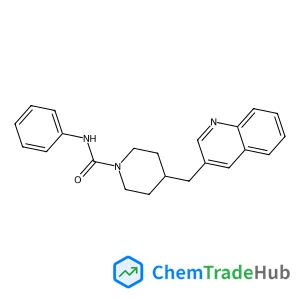
N-phenyl-4-(quinolin-3-ylmethyl)piperidine-1-carboxamide
CAS Number:
959151-50-9
Molecular Formula:
C22H23N3O
![2,2'-[(Abieta-8,11,13-trien-18-ylimino)bis(2,1-ethanediyloxy)]diethanol structure](https://static.chemtradehub.com/structs/513/51344-62-8-8518.webp "2,2'-[(Abieta-8,11,13-trien-18-ylimino)bis(2,1-ethanediyloxy)]diethanol structure")
2,2'-[(Abieta-8,11,13-trien-18-ylimino)bis(2,1-ethanediyloxy)]diethanol
CAS Number:
51344-62-8
Molecular Formula:
C28H47NO4
![[3-Chloro-5-(diethylcarbamoyl)phenyl]boronic acid structure](https://static.chemtradehub.com/structs/957/957120-59-1-febc.webp "[3-Chloro-5-(diethylcarbamoyl)phenyl]boronic acid structure")
[3-Chloro-5-(diethylcarbamoyl)phenyl]boronic acid
CAS Number:
957120-59-1
Molecular Formula:
C11H15BClNO3
Recommended Suppliers





Disclaimer
This page provides academic journal information for reference and research purposes only. We are not affiliated with any journal publishers and do not handle publication submissions. For publication-related inquiries, please contact the respective journal publishers directly.
If you notice any inaccuracies in the information displayed, please contact us at support@chemtradehub.com. We will promptly review and address your concerns.