












Understanding the ionic liquid [NC4111][NTf2] from individual building blocks: an IR-spectroscopic study
Literature Information
Publication Date
2015-02-12
DOI
10.1039/C5CP00116A
Impact Factor
3.676
Authors
Kenny Hanke, Matin Kaufmann, Gerhard Schwaab, Martina Havenith, Conrad T. Wolke, Olga Gorlova, Mark A. Johnson, Bishnu Prasad Kar, Wolfram Sander, Elsa Sanchez-Garcia
View Original
Abstract
This study explores the interactions underlying the IR spectra of the ionic liquid [NC4111][NTf2] and its deuterated isotopomer [d9-NC4111][NTf2] by first isolating the spectra of charged ionic building blocks using mass-selective CIVP spectroscopy and then following the evolution of these bands upon sequential assembly of the ionic constituents. The spectra of the (1,1) and (2,2) neutral ion pairs are recorded using superfluid helium droplets as well as a solid neon matrix, while those of the larger charged aggregates are again obtained with CIVP. In general, the cluster spectra are similar to that of the bulk, with the (2,2) system displaying the closest resemblance. Analysis of the polarization-dependent band intensities of the neutral ion pairs in liquid droplets as a function of external electric field yields dipole moments of the neutral aggregates. This information allows a coarse assessment of the packing structure of the neutral pairs to be antiparallel at 0.37 K, in contrast to the parallel arrangement found for the assembly of small, high-dipole neutral molecules with large rotational constants (e.g., HCN). The role of an extra anion or cation attached to both the (1,1) and the (2,2) ion pairs to form the charged clusters is discussed in the context of an additional remote, more unfavorable binding site intrinsic to the nature of the charged IL clusters and as such not anticipated in the bulk phase. Whereas for the anion itself only the lowest energy trans conformer was observed, the higher clusters showed an additional population of the cis conformer. The interactions are found to be consistent with a minimal role of hydrogen bonding.
Related Literature
Gallium(iii) hydration in aqueous solution of perchlorate, nitrate and sulfate. Raman and 71-Ga NMR spectroscopic studies and ab initio molecular orbital calculations of gallium(iii) water clusters
Wolfram W. Rudolph, Cory C. Pye
2002-08-12
Paper
DOI: 10.1039/B202567C
Relating multicomponent mutual diffusion and intradiffusion for associating solutes. Application to coupled diffusion in water-in-oil microemulsions
2002-08-30
Paper
DOI: 10.1039/B205281B
Computational studies of gas–carbon nanotube collision dynamics
Kim Bolton, Arne Rosén
2002-08-07
Paper
DOI: 10.1039/B200581F
Competition between alkyl radical addition to carbonyl bonds and H-atom abstraction reactions
Horst Hippler, Béla Viskolcz
2002-09-04
Paper
DOI: 10.1039/B201883G
The structure of a zinc metaphosphate glass. A reverse Monte Carlo study
G. Navarra, A. Falqui, G. Piccaluga, G. Pinna
2002-08-28
Paper
DOI: 10.1039/B204964C
Temperature dependence of isotope fractionation in N2O photolysis
Jan Kaiser, Thomas Röckmann, Carl A. M. Brenninkmeijer
2002-08-02
Paper
DOI: 10.1039/B204837J
Anharmonicity and guest–host coupling in clathrate hydrates
B. Chazallon, H. Itoh, M. Koza, W. F. Kuhs, H. Schober
2002-08-28
Paper
DOI: 10.1039/B202464K
Ultrafast energy relaxation in bacteriorhodopsin studied by time-integrated fluorescence
S. Schenkl, E. Portuondo, G. Zgrablić, M. Chergui, S. Haacke, N. Friedman, M. Sheves
2002-09-19
Paper
DOI: 10.1039/B205453A
Rotational quantum dynamics in a non-activated adsorption system
Arezoo Dianat, Axel Groß
2002-07-25
Paper
DOI: 10.1039/B203310K
Photochromism and solvatochromism of push–pull or pull–push spiroindolinenaphthoxazines
A. V. Metelitsa, V. Lokshin, J. C. Micheau, A. Samat, R. Guglielmetti, V. I. Minkin
2002-08-09
Paper
DOI: 10.1039/B204603B
You might also like
Compound Q&A
How should waste containing 2-Ethyl-4-Methyl-1H-Imidazole-5-Carbaldehyde (CAS: 88634-80-4) be handled?
Waste containing 2-Ethyl-4-Methyl-1H-Imidazole-5-Carbaldehyde (CAS: 88634-80-4) ...
88634-80-42-Ethyl-4-Methyl-1H-...
Compound Q&A
What industries use Triethoxy(octyl)silane (CAS: 1385031-14-0)?
Triethoxy(octyl)silane (CAS: 1385031-14-0) is widely used in the pharmaceuticals...
1385031-14-0Triethoxy(octyl)sila...
Compound Q&A
Are there alternatives to 3-iodo-7-nitro-1H-indazole (CAS: 864724-64-1) in synthesis?
Several alternatives to 3-iodo-7-nitro-1H-indazole (CAS: 864724-64-1) exist in t...
864724-64-13-iodo-7-nitro-1H-in...
Compound Q&A
Are there alternatives to Benzene, bis[(trimethoxysilyl)ethyl] (CAS: 266317-71-9) in synthesis?
Yes, there are alternatives to Benzene, bis[(trimethoxysilyl)ethyl] (CAS: 266317...
266317-71-9Benzene, bis[(trimet...
Compound Q&A
Is Isothiazole-3-carbonitrile (CAS: 1452-17-1) safe?
Isothiazole-3-carbonitrile (CAS: 1452-17-1) is generally considered safe when us...
1452-17-1Isothiazole-3-carbon...
Compound Q&A
Is (3-Chlorophenyl)methanol (CAS: 873-63-2) safe?
(3-Chlorophenyl)methanol (CAS: 873-63-2) is considered low to moderately toxic. ...
873-63-2(3-Chlorophenyl)meth...
Compound Q&A
How is (2S,3S)-2-Hydroxy-3-({[(2-methyl-2-propanyl)oxy]carbonyl}amino)-3-(2-naphthyl)propanoic acid (CAS: 959583-98-3) typically synthesized?
(2S,3S)-2-Hydroxy-3-({[(2-methyl-2-propanyl)oxy]carbonyl}amino)-3-(2-naphthyl)pr...
959583-98-3(2S,3S)-2-Hydroxy-3-...
Compound Q&A
What precautions should be taken when handling Methyl 2-(bromomethyl)-5-methoxybenzoate (CAS: 788081-99-2)?
Proper handling of methyl 2-(bromomethyl)-5-methoxybenzoate requires the use of ...
788081-99-2Methyl 2-(bromomethy...
Compound Q&A
What is 6,8-Dibromoimidazo[1,2-a]pyridine-2-carboxylic acid (CAS: 904805-36-3)?
6,8-Dibromoimidazo[1,2-a]pyridine-2-carboxylic acid (CAS: 904805-36-3) is an aro...
904805-36-36,8-Dibromoimidazo[1...
Compound Q&A
Is 3-Amino-5-bromo-2-pyridinecarbonitrile (CAS: 573675-27-1) safe?
3-Amino-5-bromo-2-pyridinecarbonitrile is considered safe when handled under pro...
573675-27-13-Amino-5-bromo-2-py...
Source Journal
Physical Chemistry Chemical Physics

CiteScore:
5.5
Self-citation Rate:
10.3%
Articles per Year:
3036
Physical Chemistry Chemical Physics (PCCP) is an international journal co-owned by 19 physical chemistry and physics societies from around the world. This journal publishes original, cutting-edge research in physical chemistry, chemical physics and biophysical chemistry. To be suitable for publication in PCCP, articles must include significant innovation and/or insight into physical chemistry; this is the most important criterion that reviewers and Editors will judge against when evaluating submissions. The journal has a broad scope and welcomes contributions spanning experiment, theory, computation and data science. Topical coverage includes spectroscopy, dynamics, kinetics, statistical mechanics, thermodynamics, electrochemistry, catalysis, surface science, quantum mechanics, quantum computing and machine learning. Interdisciplinary research areas such as polymers and soft matter, materials, nanoscience, energy, surfaces/interfaces, and biophysical chemistry are welcomed if they demonstrate significant innovation and/or insight into physical chemistry. Joined experimental/theoretical studies are particularly appreciated when complementary and based on up-to-date approaches.
Recommended Compounds

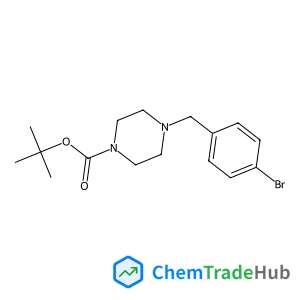
2-Methyl-2-propanyl 4-(4-bromobenzyl)-1-piperazinecarboxylate
CAS Number:
844891-10-7
Molecular Formula:
C16H23BrN2O2

![2,2'-[(Abieta-8,11,13-trien-18-ylimino)bis(2,1-ethanediyloxy)]diethanol structure](https://static.chemtradehub.com/structs/513/51344-62-8-8518.webp "2,2'-[(Abieta-8,11,13-trien-18-ylimino)bis(2,1-ethanediyloxy)]diethanol structure")
2,2'-[(Abieta-8,11,13-trien-18-ylimino)bis(2,1-ethanediyloxy)]diethanol
CAS Number:
51344-62-8
Molecular Formula:
C28H47NO4
Recommended Suppliers






Disclaimer
This page provides academic journal information for reference and research purposes only. We are not affiliated with any journal publishers and do not handle publication submissions. For publication-related inquiries, please contact the respective journal publishers directly.
If you notice any inaccuracies in the information displayed, please contact us at support@chemtradehub.com. We will promptly review and address your concerns.