


Rotational quantum dynamics in a non-activated adsorption system
Literature Information
Publication Date
2002-07-25
DOI
10.1039/B203310K
Impact Factor
3.676
Authors
Arezoo Dianat, Axel Groß
View Original
Abstract
The effect of the rotational dynamics on the dissociation of hydrogen on Pd(100) has been studied by three- and five-dimensional quantum dynamical coupled-channel calculations. We have used a model potential energy surface with features derived from ab initio calculations. In particular, we have focused on the effect of the change of the hydrogen bond length upon adsorption and desorption which leads to a non-monotonic behaviour both in the sticking probability as well as in the rotational alignment in desorption as a function of the rotational quantum number, thus explaining recent experimental results. In addition, we have analysed the effect of the surface corrugation and the influence of the isotope on the rotational alignment in desorption.
Recommended Journals

Journal of Catalysis

Nature

Journal of Heterocyclic Chemistry

Journal of Physics and Chemistry of Solids

European Journal of Wood and Wood Products

Russian Chemical Reviews

Kinetics and Catalysis

Israel Journal of Chemistry

Pure and Applied Chemistry

Proceedings of the National Academy of Sciences of the United States of America
Related Literature
Xe⋯chalcogen aerogen bond. Effect of substituents and size of chalcogen atom
Ruijing Wang, Haojie Liu, Qingzhong Li, Steve Scheiner
2020-02-03
Paper
DOI: 10.1039/C9CP06648A
Effects of electrospray mechanisms and structural relaxation on polylactide ion conformations in the gas phase: insights from ion mobility spectrometry and molecular dynamics simulations
Haidy Metwally, Vincent Lemaur, Jérôme Cornil, Julien De Winter, Lars Konermann, Pascal Gerbaux
2020-02-04
Paper
DOI: 10.1039/C9CP06391A
Symmetry and 1H NMR chemical shifts of short hydrogen bonds: impact of electronic and nuclear quantum effects
Shengmin Zhou, Lu Wang
2020-01-08
Paper
DOI: 10.1039/C9CP06840F
First-principles comparative study of perfect and defective CsPbX3 (X = Br, I) crystals
R. A. Evarestov, A. Senocrate, R. K. Kremer, J. Maier
2020-01-27
Paper
DOI: 10.1039/C9CP06322F
Terpenoids: shape and non-covalent interactions. The rotational spectrum of cis-verbenol and its 1 : 1 water complex
Susana Blanco, Juan Carlos López, Assimo Maris
2020-02-18
Paper
DOI: 10.1039/D0CP00086H
Impact of the reaction pathway on the final product in on-surface synthesis
Antje Kutz, Md Taibur Rahman, Ville Haapasilta, Chiara Venturini, Ralf Bechstein, André Gordon, Angelika Kühnle
2020-02-03
Paper
DOI: 10.1039/C9CP06044H
The antibacterial activity of p-tert-butylcalix[6]arene and its effect on a membrane model: molecular dynamics and Langmuir film studies
Ellen C. Wrobel, Lucas S. de Lara, Taiza A. S. do Carmo, Patrícia Castellen, Márcio Lazzarotto, Sérgio R. de Lázaro, Alexandre Camilo, Jr, Luciano Caseli, Rolf Schmidt, Christine E. DeWolf, Karen Wohnrath
2020-02-20
Paper
DOI: 10.1039/D0CP00432D
Rapid improvements in charge carrier mobility at ionic liquid/pentacene single crystal interfaces by self-cleaning
Yusuke Morino, Hisaya Hara, Ken-ichi Bando, Sakurako Ono, Akihito Imanishi, Yugo Okada, Hiroyuki Matsui, Takafumi Uemura, Jun Takeya
2020-02-24
Paper
DOI: 10.1039/D0CP00149J
First principles study on hydrogen doping induced metal-to-insulator transition in rare earth nickelates RNiO3 (R = Pr, Nd, Sm, Eu, Gd, Tb, Dy, Yb)
Pilsun Yoo, Peilin Liao
2020-03-10
Paper
DOI: 10.1039/C9CP06522A
A new non-diffusional gas bubble production route in used nuclear fuel: implications for fission gas release, cladding corrosion, and next generation fuel design
Jon M. Schwantes, Jacob L. Bair, Edgar C. Buck, Ram Devanathan, Sean H. Kessler, Timothy G. Lach, Jason M. Lonergan, Bruce K. McNamara, Camille J. Palmer, Richard A. Clark
2020-01-28
Paper
DOI: 10.1039/C9CP05363H
You might also like
Compound Q&A
How should waste containing 2-Ethyl-4-Methyl-1H-Imidazole-5-Carbaldehyde (CAS: 88634-80-4) be handled?
Waste containing 2-Ethyl-4-Methyl-1H-Imidazole-5-Carbaldehyde (CAS: 88634-80-4) ...
88634-80-42-Ethyl-4-Methyl-1H-...
Compound Q&A
What industries use Triethoxy(octyl)silane (CAS: 1385031-14-0)?
Triethoxy(octyl)silane (CAS: 1385031-14-0) is widely used in the pharmaceuticals...
1385031-14-0Triethoxy(octyl)sila...
Compound Q&A
Are there alternatives to 3-iodo-7-nitro-1H-indazole (CAS: 864724-64-1) in synthesis?
Several alternatives to 3-iodo-7-nitro-1H-indazole (CAS: 864724-64-1) exist in t...
864724-64-13-iodo-7-nitro-1H-in...
Compound Q&A
Are there alternatives to Benzene, bis[(trimethoxysilyl)ethyl] (CAS: 266317-71-9) in synthesis?
Yes, there are alternatives to Benzene, bis[(trimethoxysilyl)ethyl] (CAS: 266317...
266317-71-9Benzene, bis[(trimet...
Compound Q&A
Is Isothiazole-3-carbonitrile (CAS: 1452-17-1) safe?
Isothiazole-3-carbonitrile (CAS: 1452-17-1) is generally considered safe when us...
1452-17-1Isothiazole-3-carbon...
Compound Q&A
Is (3-Chlorophenyl)methanol (CAS: 873-63-2) safe?
(3-Chlorophenyl)methanol (CAS: 873-63-2) is considered low to moderately toxic. ...
873-63-2(3-Chlorophenyl)meth...
Compound Q&A
How is (2S,3S)-2-Hydroxy-3-({[(2-methyl-2-propanyl)oxy]carbonyl}amino)-3-(2-naphthyl)propanoic acid (CAS: 959583-98-3) typically synthesized?
(2S,3S)-2-Hydroxy-3-({[(2-methyl-2-propanyl)oxy]carbonyl}amino)-3-(2-naphthyl)pr...
959583-98-3(2S,3S)-2-Hydroxy-3-...
Compound Q&A
What precautions should be taken when handling Methyl 2-(bromomethyl)-5-methoxybenzoate (CAS: 788081-99-2)?
Proper handling of methyl 2-(bromomethyl)-5-methoxybenzoate requires the use of ...
788081-99-2Methyl 2-(bromomethy...
Compound Q&A
What is 6,8-Dibromoimidazo[1,2-a]pyridine-2-carboxylic acid (CAS: 904805-36-3)?
6,8-Dibromoimidazo[1,2-a]pyridine-2-carboxylic acid (CAS: 904805-36-3) is an aro...
904805-36-36,8-Dibromoimidazo[1...
Compound Q&A
Is 3-Amino-5-bromo-2-pyridinecarbonitrile (CAS: 573675-27-1) safe?
3-Amino-5-bromo-2-pyridinecarbonitrile is considered safe when handled under pro...
573675-27-13-Amino-5-bromo-2-py...
Source Journal
Physical Chemistry Chemical Physics

CiteScore:
5.5
Self-citation Rate:
10.3%
Articles per Year:
3036
Physical Chemistry Chemical Physics (PCCP) is an international journal co-owned by 19 physical chemistry and physics societies from around the world. This journal publishes original, cutting-edge research in physical chemistry, chemical physics and biophysical chemistry. To be suitable for publication in PCCP, articles must include significant innovation and/or insight into physical chemistry; this is the most important criterion that reviewers and Editors will judge against when evaluating submissions. The journal has a broad scope and welcomes contributions spanning experiment, theory, computation and data science. Topical coverage includes spectroscopy, dynamics, kinetics, statistical mechanics, thermodynamics, electrochemistry, catalysis, surface science, quantum mechanics, quantum computing and machine learning. Interdisciplinary research areas such as polymers and soft matter, materials, nanoscience, energy, surfaces/interfaces, and biophysical chemistry are welcomed if they demonstrate significant innovation and/or insight into physical chemistry. Joined experimental/theoretical studies are particularly appreciated when complementary and based on up-to-date approaches.
Recommended Compounds
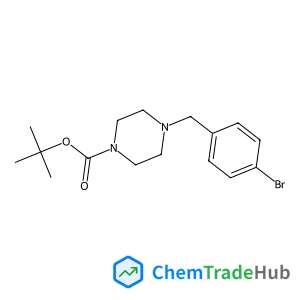
2-Methyl-2-propanyl 4-(4-bromobenzyl)-1-piperazinecarboxylate
CAS Number:
844891-10-7
Molecular Formula:
C16H23BrN2O2
![Methyl 8-azabicyclo[3.2.1]octane-3-carboxylate hydrochloride structure](https://static.chemtradehub.com/structs/179/179022-43-6-77f5.webp "Methyl 8-azabicyclo[3.2.1]octane-3-carboxylate hydrochloride structure")
Methyl 8-azabicyclo[3.2.1]octane-3-carboxylate hydrochloride
CAS Number:
179022-43-6
Molecular Formula:
C9H16ClNO2
![[3-Chloro-5-(diethylcarbamoyl)phenyl]boronic acid structure](https://static.chemtradehub.com/structs/957/957120-59-1-febc.webp "[3-Chloro-5-(diethylcarbamoyl)phenyl]boronic acid structure")
[3-Chloro-5-(diethylcarbamoyl)phenyl]boronic acid
CAS Number:
957120-59-1
Molecular Formula:
C11H15BClNO3
Recommended Suppliers




Disclaimer
This page provides academic journal information for reference and research purposes only. We are not affiliated with any journal publishers and do not handle publication submissions. For publication-related inquiries, please contact the respective journal publishers directly.
If you notice any inaccuracies in the information displayed, please contact us at support@chemtradehub.com. We will promptly review and address your concerns.