











Investigating changes in the gas-phase conformation of Antithrombin III upon binding of Arixtra using traveling wave ion mobility spectrometry (TWIMS)
Literature Information
Publication Date
2015-06-19
DOI
10.1039/C5AN00908A
Impact Factor
4.616
Authors
Yuejie Zhao, Arunima Singh, Lingyun Li, Robert J. Linhardt, Yongmei Xu, Jian Liu, Robert J. Woods, I. Jonathan Amster
View Original
Abstract
We validate the utility of ion mobility to measure protein conformational changes induced by the binding of glycosaminoglycan ligands, using the well characterized system of Antithrombin III (ATIII) and Arixtra, a pharmaceutical agent with heparin (Hp) activity. Heparin has been used as a therapeutic anticoagulant drug for several decades through its interaction with ATIII, a serine protease inhibitor that plays a central role in the blood coagulation cascade. This interaction induces conformational changes within ATIII that dramatically enhance the ATIII-mediated inhibition rate. Arixtra is the smallest synthetic Hp containing the specific pentasaccharide sequence required to bind with ATIII. Here we report the first travelling wave ion mobility mass spectrometry (TWIMS) investigation of the conformational changes in ATIII induced by its interaction with Arixtra. Native electrospray ionization mass spectrometry allowed the gentle transfer of the native topology of ATIII and ATIII–Arixtra complex. IM measurements of ATIII and ATIII–Arixtra complex showed a single structure, with well-defined collisional cross section (CCS) values. An average 3.6% increase in CCS of ATIII occurred as a result of its interaction with Arixtra, which agrees closely with the theoretical estimation of the change in CCS based on protein crystal structures. A comparison of the binding behavior of ATIII under both denaturing and non-denaturing conditions confirmed the significance of a folded tertiary structure of ATIII for its biological activity. A Hp oligosaccharide whose structure is similar to Arixtra but missing the 3-O sulfo group on the central glucosamine residue showed a dramatic decrease in binding affinity towards ATIII, but no change in the mobility behavior of the complex, consistent with prior studies that suggested that 3-O sulfation affects the equilibrium constant for binding to ATIII, but not the mode of interaction. In contrast, nonspecific binding by a Hp tetrasaccharide showed more complex mobility behavior, suggesting more promiscuous interactions with ATIII. The effect of collisional activation of ATIII and ATIII–Arixtra complex were also assessed, revealing that the binding of Arixtra provided ATIII with additional stability against unfolding. Overall, our results validate the capability of TWIMS to retain the significant features of the solution structure of a protein–carbohydrate complex so that it can be used to study protein conformational changes induced by the binding of glycosaminoglycan ligands.
Related Literature
Visible-light photocatalytic preparation of alkenyl thioethers from 1,2,3-thiadiazoles and Hantzsch esters: synthetic and mechanistic investigations
Zhanqun Liang, Shaofang Zhou, Changlei Zhu, Xiaoguang Bao
2021-10-05
Research Article
DOI: 10.1039/D1QO01076J
Synthesis of near-infrared absorbing and fluorescent bis(pyrrol-2-yl)squaraines and their halochromic properties
Yasuhiro Kubota, Masato Nakazawa, Junheon Lee, Ryoma Naoi, Motoki Tachikawa, Toshiyasu Inuzuka, Kazumasa Funabiki, Masaki Matsui, Taekyeong Kim
2021-09-10
Research Article
DOI: 10.1039/D1QO01169C
Asymmetric organocatalytic synthesis of chiral 3,3-disubstituted oxindoles via a 1,6-conjugate addition reaction
Abdul Rahman, Qiaoxia Zhou, Xufeng Lin
2018-06-28
Paper
DOI: 10.1039/C8OB01169A
Carbenium ion formation by fragmentation of electrochemically generated oxonium ions
Anna Lielpetere, Aigars Jirgensons
2018-06-27
Communication
DOI: 10.1039/C8OB01339J
Base-promoted diastereoselective α-alkylation of borane N-((S)-1′-phenylethyl)azetidine-2-carboxylic acid ester complexes
Eiji Tayama, Ryotaro Nishio, Yoshiaki Kobayashi
2018-07-27
Paper
DOI: 10.1039/C8OB01395K
Phenolate anion-catalyzed direct activation of inert alkyl chlorides driven by visible light
Delian Wei, Xipan Li, Lei Shen, Yuzhen Ding, Kangjiang Liang, Chengfeng Xia
2021-09-17
Research Article
DOI: 10.1039/D1QO01128F
An MeSeSO3Na reagent for oxidative aminoselenomethylation of maleimides
Yujing Yao, Wenliang Zhang
2021-09-14
Research Article
DOI: 10.1039/D1QO01252E
Heteroaryl-linked norbornadiene dimers with redshifted absorptions
Behabitu Ergette Tebikachew, Kasper Moth-Poulsen, Mogens Brøndsted Nielsen
2018-07-19
Paper
DOI: 10.1039/C8OB01470A
Metal-free, base promoted sp2 C–H functionalization in the sulfonamidation of 1,4-naphthoquinones
Ramanathan Devenderan
2018-06-30
Paper
DOI: 10.1039/C8OB00818C
You might also like
Compound Q&A
What are the main uses of 4-Nitrophenyl phosphate disodium salt hexahydrate (CAS: 333338-18-4)?
4-Nitrophenyl phosphate disodium salt hexahydrate is primarily used as a substra...
333338-18-44-Nitrophenyl phosph...
Compound Q&A
What are the main uses of 2-(Trifluoromethyl)-1,3-oxazole-4-carboxylic Acid (CAS: 1060816-01-4)?
2-(Trifluoromethyl)-1,3-oxazole-4-carboxylic Acid (CAS: 1060816-01-4) is widely ...
1060816-01-42-(Trifluoromethyl)-...
Compound Q&A
How should 2-Fluoro-4-biphenylcarboxylic acid (CAS: 137045-30-8) be stored?
2-Fluoro-4-biphenylcarboxylic acid should be stored in a cool, dry place at room...
137045-30-82-Fluoro-4-biphenylc...
Compound Q&A
What industries use Prednisolone-21-Carboxylic Acid (CAS: 61549-70-0)?
Prednisolone-21-Carboxylic Acid is primarily used in the pharmaceutical industry...
61549-70-0Prednisolone-21-Carb...
Compound Q&A
How should 4-(Hydrazinomethyl)-1,2,3-benzenetriol (CAS: 3614-72-0) be stored?
4-(Hydrazinomethyl)-1,2,3-benzenetriol (CAS: 3614-72-0) should be stored in a co...
3614-72-04-(Hydrazinomethyl)-...
Compound Q&A
What industries use 4-Amino-1-methyl-1H-pyrazole-5-carboxylic acid hydrochloride (CAS: 92534-70-8)?
4-Amino-1-methyl-1H-pyrazole-5-carboxylic acid hydrochloride (CAS: 92534-70-8) i...
92534-70-84-Amino-1-methyl-1H-...
Compound Q&A
What regulatory guidelines apply to dehydropachymic acid (CAS: 77012-31-8)?
Dehydropachymic acid (CAS: 77012-31-8) is regulated by various agencies. It fall...
77012-31-8Dehydropachymic acid
Compound Q&A
What is the market or research trend for 6-[(2,2-Dimethylpropanoyl)amino]nicotinic acid (CAS: 898561-66-5)?
The market and research trends for 6-[(2,2-Dimethylpropanoyl)amino]nicotinic aci...
898561-66-56-[(2,2-Dimethylprop...
Compound Q&A
How should 1,10-Phenanthroline-2,9-dicarbaldehyde (CAS: 57709-62-3) be stored?
1,10-Phenanthroline-2,9-dicarbaldehyde should be stored in a cool, dry place awa...
57709-62-31,10-Phenanthroline-...
Compound Q&A
How is 5-Carbamoyl-11-oxo-10,11-dihydro-5H-dibenzo[b,f]azepin-10-yl acetate (CAS: 113952-21-9) typically synthesized?
5-Carbamoyl-11-oxo-10,11-dihydro-5H-dibenzo[b,f]azepin-10-yl acetate can be synt...
113952-21-95-Carbamoyl-11-oxo-1...
Source Journal
Analyst

CiteScore:
7.8
Self-citation Rate:
5.6%
Articles per Year:
653
Analyst publishes analytical and bioanalytical research that reports premier fundamental discoveries and inventions, and the applications of those discoveries, unconfined by traditional discipline barriers.
Recommended Compounds
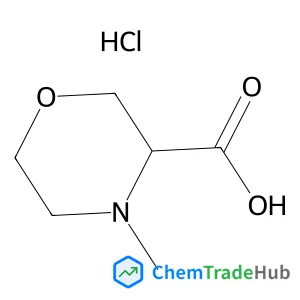
4-Methyl-3-morpholinecarboxylic acid hydrochloride (1:1)
CAS Number:
1240518-90-4
Molecular Formula:
C6H12ClNO3

6-Bromo-3,4-dihydro-2H-1,4-benzoxazine hydrochloride (1:1)
CAS Number:
1260803-10-8
Molecular Formula:
C8H9BrClNO
Recommended Suppliers






Disclaimer
This page provides academic journal information for reference and research purposes only. We are not affiliated with any journal publishers and do not handle publication submissions. For publication-related inquiries, please contact the respective journal publishers directly.
If you notice any inaccuracies in the information displayed, please contact us at support@chemtradehub.com. We will promptly review and address your concerns.