












Non-enzymatic glucose sensing by enhanced Raman spectroscopy on flexible ‘as-grown’ CVD graphene
Literature Information
Publication Date
2015-04-24
DOI
10.1039/C5AN00546A
Impact Factor
4.616
Authors
Mau-Shiun Li, Pradip Kumar Roy, C. T. Wu
View Original
Abstract
Unmodified, as-grown few layered graphene on copper substrates have been used for glucose sensing using Raman spectroscopy. Graphene with a stronger 2D band is a better Raman enhancer with significant fluorescence suppression and finer line widths of the Raman signals. The origin of the graphene enhanced Raman spectroscopy (GERS) signal of glucose is attributed to a fractional charge transfer (calculated to be 0.006 using electrochemical parameters) between glucose and graphene aided by a possible π–π interaction. Physiological concentrations of glucose (10–500 mg dl−1) in PBS have been used for the study. For each glucose concentration, the spectral reproducibility is within 5–25% as calculated by the relative standard deviation of several measurements. The intensity ratio of the 1122 cm−1 peak of glucose and the 2D peak of graphene varied linearly with the glucose concentration and can be used as a calibration curve for unknown sample measurements.
Related Literature
Atomistic dewetting mechanics of Wenzel and monostable Cassie–Baxter states
Senbo Xiao, Zhiliang Zhang, Jianying He
2018-08-24
Paper
DOI: 10.1039/C8CP03256D
Reply to the ‘Comment on “Spectroscopic properties and location of the Ce3+ energy levels in Y3Al2Ga3O12 and Y3Ga5O12 at ambient and high hydrostatic pressure”’ by Y. Wang, M. Głowacki, M. Berkowski, A. Kamińska and A. Suchocki, Phys. Chem. Chem. Phys., 2019, 21, DOI: 10.1039/C8CP06154H
Sebastian Mahlik, Agata Lazarowska, Jumpei Ueda, Setsuhisa Tanabe, Marek Grinberg
2019-01-21
Comment
DOI: 10.1039/C8CP07122E
Fluctuations near the liquid–liquid transition in a model of silica
Jingxiang Guo, Jeremy C. Palmer
2018-09-11
Paper
DOI: 10.1039/C8CP04237C
Li+-Induced fluorescent metallogel: a case of ESIPT-CHEF and ICT phenomenon
Manish Kumar Dixit, Mrigendra Dubey
2018-08-10
Paper
DOI: 10.1039/C8CP04579H
The stabilization mechanism and size effect of nonpolar-to-polar crystallography facet tailored ZnO nano/micro rods via a top-down strategy
Xiangyang Duan, Chao Ma, Wentao Jin, Xiaoman Ma, Su-Huai Wei, Jinying Yu
2018-06-13
Paper
DOI: 10.1039/C8CP02494D
Enhancement of field electron emission in topological insulator Bi2Se3 by Ni doping
Kushal Mazumder, Alfa Sharma, Yogendra Kumar, Mahendra A. More, Rupesh Devan
2018-06-08
Paper
DOI: 10.1039/C8CP01982G
Mechanism and modeling of poly[vinylpyrrolidone] (PVP) facilitated synthesis of silver nanoplates
Neethu Thomas, Ethayaraja Mani
2018-05-16
Paper
DOI: 10.1039/C8CP01610K
A vacuum ultraviolet photoionization study on the formation of methanimine (CH2NH) and ethylenediamine (NH2CH2CH2NH2) in low temperature interstellar model ices exposed to ionizing radiation
Bing-Jian Sun, Yue-Lin Chen, Agnes H. H. Chang
2018-12-20
Paper
DOI: 10.1039/C8CP06002A
Quantitative structure–property relationship approach to predicting xylene separation with diverse exchanged faujasites
Y. Khabzina, C. Laroche, J. Pérez-Pellitero, D. Farrusseng
2018-08-28
Paper
DOI: 10.1039/C8CP04042G
The double exciton state of conjugated chromophores with strong diradical character: insights from TDDFT calculations
Juan Casado
2018-08-29
Paper
DOI: 10.1039/C8CP04008G
You might also like
Compound Q&A
Is 2-(2-chloroacetamido)-3-phenylpropanoic acid (CAS: 7765-11-9) safe?
2-(2-Chloroacetamido)-3-phenylpropanoic acid (CAS: 7765-11-9) is generally consi...
7765-11-92-(2-chloroacetamido...
Compound Q&A
Is 2-(Benzyloxy)-5-bromobenzoic acid (CAS: 62176-31-2) safe?
2-(Benzyloxy)-5-bromobenzoic acid can be handled safely if appropriate precautio...
62176-31-22-(Benzyloxy)-5-brom...
Compound Q&A
What is (4-Methyl-1,2,5-oxadiazol-3-yl)methanamine hydrochloride (CAS: 1159825-48-5)?
(4-Methyl-1,2,5-oxadiazol-3-yl)methanamine hydrochloride is a chemical compound ...
1159825-48-5(4-Methyl-1,2,5-oxad...
Compound Q&A
What is 2-(5-Hexylthiophen-2-yl)-4,4,5,5-tetramethyl-1,3,2-dioxaborolane (CAS: 917985-54-7)?
2-(5-Hexylthiophen-2-yl)-4,4,5,5-tetramethyl-1,3,2-dioxaborolane (CAS: 917985-54...
917985-54-72-(5-Hexylthiophen-2...
Compound Q&A
Are there alternatives to 4-(8-Methyl-9H-1,3-dioxolo[4,5-h][2,3]benzodiazepin-5-yl)benzenamine (CAS: 102771-26-6) in synthesis?
While 4-(8-Methyl-9H-1,3-dioxolo[4,5-h][2,3]benzodiazepin-5-yl)benzenamine (CAS:...
102771-26-64-(8-Methyl-9H-1,3-d...
Compound Q&A
What is the market or research trend for tert-butyl 3-hydroxy-4,5,7,8-tetrahydro-2H-pyrazolo[3,4-d]azepine-6-carboxylate (CAS: 851376-80-2)?
The market for tert-butyl 3-hydroxy-4,5,7,8-tetrahydro-2H-pyrazolo[3,4-d]azepine...
851376-80-2tert-butyl 3-hydroxy...
Compound Q&A
How should waste containing 3,5-Diamino-1H-pyrazole-4-carbonitrile (CAS: 6844-58-2) be handled?
Waste containing 3,5-Diamino-1H-pyrazole-4-carbonitrile (CAS: 6844-58-2) should ...
6844-58-23,5-Diamino-1H-pyraz...
Compound Q&A
How is (6-Fluoro-3-pyridinyl)boronic acid (CAS: 351019-18-6) typically synthesized?
(6-Fluoro-3-pyridinyl)boronic acid can be synthesized through the reaction of 6-...
351019-18-6(6-Fluoro-3-pyridiny...
Compound Q&A
What industries use Dibenzyl carbonimidoylbiscarbamate (CAS: 10065-79-9)?
Dibenzyl carbonimidoylbiscarbamate (CAS: 10065-79-9) finds applications in vario...
10065-79-9Dibenzyl carbonimido...
Compound Q&A
What is the market or research trend for (beta,beta,2,3,4,5,6-~2~H_7_)Phenylalanine (CAS: 74228-83-4)?
The market for (beta,beta,2,3,4,5,6-~2~H_7_)Phenylalanine (CAS: 74228-83-4) is g...
74228-83-4(beta,beta,2,3,4,5,6...
Source Journal
Analyst

CiteScore:
7.8
Self-citation Rate:
5.6%
Articles per Year:
653
Analyst publishes analytical and bioanalytical research that reports premier fundamental discoveries and inventions, and the applications of those discoveries, unconfined by traditional discipline barriers.
Recommended Compounds
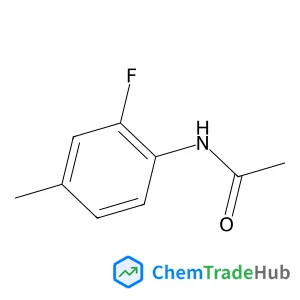
![4,10-Dihydroxy-3H-pyrano[3,4,5-kl]xanthen-3-one structure](https://static.chemtradehub.com/structs/125/1259330-61-4-de48.webp "4,10-Dihydroxy-3H-pyrano[3,4,5-kl]xanthen-3-one structure")
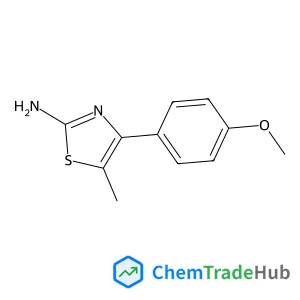
4-(4-Methoxyphenyl)-5-methyl-1,3-thiazol-2-amine
CAS Number:
105512-88-7
Molecular Formula:
C11H12N2OS
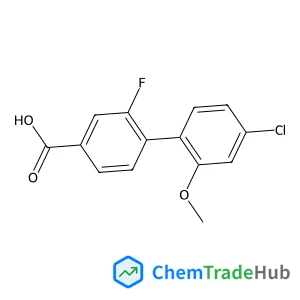
4-(4-Chloro-2-methoxyphenyl)-3-fluorobenzoic acid
CAS Number:
1261970-23-3
Molecular Formula:
C14H10ClFO3
Recommended Suppliers






Disclaimer
This page provides academic journal information for reference and research purposes only. We are not affiliated with any journal publishers and do not handle publication submissions. For publication-related inquiries, please contact the respective journal publishers directly.
If you notice any inaccuracies in the information displayed, please contact us at support@chemtradehub.com. We will promptly review and address your concerns.