












Patterning of individual Staphylococcus aureus bacteria onto photogenerated polymeric surface structures
Literature Information
Publication Date
2015-02-04
DOI
10.1039/C4PY01629G
Impact Factor
5.582
Authors
Marta Palacios-Cuesta, Aitziber L. Cortajarena, Olga García, Juan Rodríguez-Hernández
View Original
Abstract
This manuscript describes the fabrication of bacterial surface arrays by using photolithographic techniques having in addition some particularly interesting features. The methodology employed is based on the crosslinking and degradation processes occurring in polystyrene upon exposure to UV light. As a result of both processes, this approach produced different patterns depending not only on the mask but also on the experimental conditions employed. Patterns with nanoscale resolution were formed without the requirement of expensive fine focalization settings. More interestingly, the feasibility of this strategy to incorporate functional groups to modulate the affinity between the bacteria and the surface is demonstrated. In particular, hydrophilic segments, i.e. poly(acrylic acid) that favor bacterial immobilization were introduced. The strategy employed allows not only the incorporation of functional groups but also permits us to fine tune the amount of hydrophilic functional groups. This unique feature has been used to determine the role of surface hydrophilicity on the adhesion of Staphylococcus aureus (S. aureus) onto the different surface patterns. Finally, those surfaces on which both photodegradation and photocrosslinking occurred produced thin patterns largely below the micrometer that have been employed to prepare arrays of isolated S. aureus bacteria. The formation of bacterial arrays of S. aureus on the single-cell level has been a challenge since they exhibit a large tendency to grow in clusters. This technology has great potential for the isolation of single bacteria for diagnosis, and the study of bacterial populations at the single cell level.
Related Literature
A cocatalyst-free Eosin Y-sensitized p-type of Co3O4 quantum dot for highly efficient and stable visible-light-driven water reduction and hydrogen production
Ning Zhang, Jinwen Shi, Fujun Niu, Jian Wang, Liejin Guo
2015-07-20
Communication
DOI: 10.1039/C5CP02983J
Vibrational mode assignment of finite temperature infrared spectra using the AMOEBA polarizable force field
Florian Thaunay, Jean-Pierre Dognon, Gilles Ohanessian, Carine Clavaguéra
2015-07-20
Paper
DOI: 10.1039/C5CP02270C
CTAB micelles assisted rGO–AgNP hybrids for SERS detection of polycyclic aromatic hydrocarbons
Meng Jiang, Zhijiang Qian, Xufeng Zhou, Xing Xin, Jinghua Wu, Chao Chen, Gongjun Zhang, Gaojie Xu, Yuchuan Cheng
2014-11-28
Paper
DOI: 10.1039/C4CP04888A
SERS activity of Ag decorated nanodiamond and nano-β-SiC, diamond-like-carbon and thermally annealed diamond thin film surfaces
Mohan Kumar Kuntumalla, Vadali Venkata Satya Siva Srikanth, Satyavathi Ravulapalli, Upender Gangadharini, Harish Ojha, Narayana Rao Desai, Chandrahas Bansal
2015-02-05
Paper
DOI: 10.1039/C4CP05236F
Direct formation of large-scale multi-layered germanene on Si substrate
Hsu-Sheng Tsai, Yu-Ze Chen, Henry Medina, Teng-Yu Su, Ta-Shun Chou, Yi-Hsuan Chen, Yu-Lun Chueh, Jenq-Horng Liang
2015-07-15
Communication
DOI: 10.1039/C5CP02469B
Waveguide-coupled directional Raman radiation for surface analysis
Chen Chen, Jin-Yang Li, Li Wang, Dan-Feng Lu, Zhi-Mei Qi
2015-01-30
Paper
DOI: 10.1039/C4CP05092D
Monitoring the intramolecular charge transfer process in the Z907 solar cell sensitizer: a transient Vis and IR spectroscopy and ab initio investigation
Nicolò Azzaroli, Maria Grazia Lobello, Laura Bussotti, Giuseppe Calogero, Mariachiara Pastore, Filippo De Angelis
2015-07-13
Paper
DOI: 10.1039/C5CP03314D
Molecular dynamics simulations and NMR spectroscopy studies of trehalose–lipid bilayer systems
Jon Kapla, Olof Engström, Baltzar Stevensson, Jakob Wohlert, Göran Widmalm, Arnold Maliniak
2015-07-22
Paper
DOI: 10.1039/C5CP02472B
Specific ion effects on the hydrophobic interaction of benzene self-assembled monolayers
S. Dobberschütz, M. Rimmen, T. Hassenkam, M. P. Andersson, S. L. S. Stipp
2015-07-22
Paper
DOI: 10.1039/C5CP01803J
β-Cyclodextrin coated SiO2@Au@Ag core–shell nanoparticles for SERS detection of PCBs
Yilin Lu, Guohua Yao, Kexi Sun
2014-11-28
Paper
DOI: 10.1039/C4CP04904G
You might also like
Compound Q&A
Is 2-(2-chloroacetamido)-3-phenylpropanoic acid (CAS: 7765-11-9) safe?
2-(2-Chloroacetamido)-3-phenylpropanoic acid (CAS: 7765-11-9) is generally consi...
7765-11-92-(2-chloroacetamido...
Compound Q&A
Is 2-(Benzyloxy)-5-bromobenzoic acid (CAS: 62176-31-2) safe?
2-(Benzyloxy)-5-bromobenzoic acid can be handled safely if appropriate precautio...
62176-31-22-(Benzyloxy)-5-brom...
Compound Q&A
What is (4-Methyl-1,2,5-oxadiazol-3-yl)methanamine hydrochloride (CAS: 1159825-48-5)?
(4-Methyl-1,2,5-oxadiazol-3-yl)methanamine hydrochloride is a chemical compound ...
1159825-48-5(4-Methyl-1,2,5-oxad...
Compound Q&A
What is 2-(5-Hexylthiophen-2-yl)-4,4,5,5-tetramethyl-1,3,2-dioxaborolane (CAS: 917985-54-7)?
2-(5-Hexylthiophen-2-yl)-4,4,5,5-tetramethyl-1,3,2-dioxaborolane (CAS: 917985-54...
917985-54-72-(5-Hexylthiophen-2...
Compound Q&A
Are there alternatives to 4-(8-Methyl-9H-1,3-dioxolo[4,5-h][2,3]benzodiazepin-5-yl)benzenamine (CAS: 102771-26-6) in synthesis?
While 4-(8-Methyl-9H-1,3-dioxolo[4,5-h][2,3]benzodiazepin-5-yl)benzenamine (CAS:...
102771-26-64-(8-Methyl-9H-1,3-d...
Compound Q&A
What is the market or research trend for tert-butyl 3-hydroxy-4,5,7,8-tetrahydro-2H-pyrazolo[3,4-d]azepine-6-carboxylate (CAS: 851376-80-2)?
The market for tert-butyl 3-hydroxy-4,5,7,8-tetrahydro-2H-pyrazolo[3,4-d]azepine...
851376-80-2tert-butyl 3-hydroxy...
Compound Q&A
How should waste containing 3,5-Diamino-1H-pyrazole-4-carbonitrile (CAS: 6844-58-2) be handled?
Waste containing 3,5-Diamino-1H-pyrazole-4-carbonitrile (CAS: 6844-58-2) should ...
6844-58-23,5-Diamino-1H-pyraz...
Compound Q&A
How is (6-Fluoro-3-pyridinyl)boronic acid (CAS: 351019-18-6) typically synthesized?
(6-Fluoro-3-pyridinyl)boronic acid can be synthesized through the reaction of 6-...
351019-18-6(6-Fluoro-3-pyridiny...
Compound Q&A
What industries use Dibenzyl carbonimidoylbiscarbamate (CAS: 10065-79-9)?
Dibenzyl carbonimidoylbiscarbamate (CAS: 10065-79-9) finds applications in vario...
10065-79-9Dibenzyl carbonimido...
Compound Q&A
What is the market or research trend for (beta,beta,2,3,4,5,6-~2~H_7_)Phenylalanine (CAS: 74228-83-4)?
The market for (beta,beta,2,3,4,5,6-~2~H_7_)Phenylalanine (CAS: 74228-83-4) is g...
74228-83-4(beta,beta,2,3,4,5,6...
Source Journal
Polymer Chemistry

CiteScore:
8.6
Self-citation Rate:
7.3%
Articles per Year:
457
Polymer Chemistry welcomes submissions in all areas of polymer science that have a strong focus on macromolecular chemistry. Manuscripts may cover a broad range of fields, yet no direct application focus is required.
Recommended Compounds
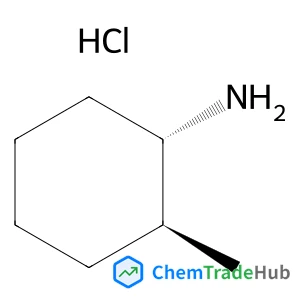
(1R,2R)-2-Methylcyclohexanamine hydrochloride (1:1)
CAS Number:
39558-31-1
Molecular Formula:
C7H16ClN
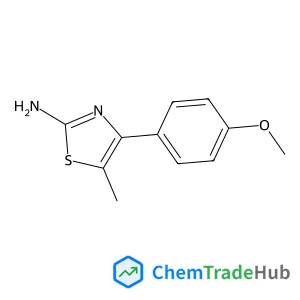
4-(4-Methoxyphenyl)-5-methyl-1,3-thiazol-2-amine
CAS Number:
105512-88-7
Molecular Formula:
C11H12N2OS
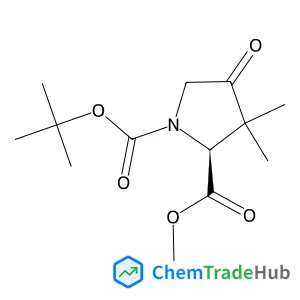
2-Methyl 1-(2-methyl-2-propanyl) (2S)-3,3-dimethyl-4-oxo-1,2-pyrrolidinedicarboxylate
CAS Number:
478698-30-5
Molecular Formula:
C13H21NO5
Recommended Suppliers






Disclaimer
This page provides academic journal information for reference and research purposes only. We are not affiliated with any journal publishers and do not handle publication submissions. For publication-related inquiries, please contact the respective journal publishers directly.
If you notice any inaccuracies in the information displayed, please contact us at support@chemtradehub.com. We will promptly review and address your concerns.